
6 Steps to Help Your Marketing Team Hit Revenue Targets

When businesses fall short of their revenue targets, the usual response is to put more resources into sales. However, this doesn’t address the root problem. What many companies overlook is that marketing is the key to unlocking sustainable revenue growth.
Sales teams can’t close the right number of deals if they don’t have enough MQLs to work with. Data-driven investment in marketing generates more high-quality leads for sales, which in turn leads to more closed-won deals and a higher ACV.
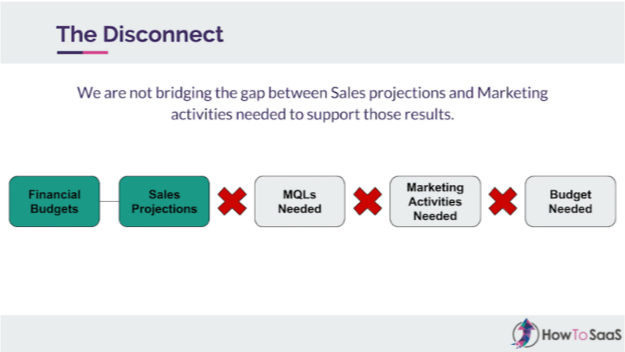
As a result, CEOs who see their marketing teams as revenue drivers, rather than cost centers, gain a competitive edge. They provide their marketing teams with the resources and strategies they need to drive more pipeline for sales and move the needle on high-level business outcomes.
Here are six steps you can take to equip your marketing team to deliver measurable revenue impact.
- Reposition marketing with revenue-focused metrics
- Align sales and marketing around shared targets
- Invest in data, insights, and attribution
- Upskill your marketing team
- Optimize budget allocation for revenue impact
- leverage marketing as a strategic growth partner
1. Reposition Marketing with Revenue-Focused Metrics
Too often, companies view marketing as a support function that generates brand awareness but lacks direct accountability for revenue. Instead, CEOs need to treat marketing as a revenue-generating function by setting clear revenue-aligned KPIs. These might include:
- Marketing-Sourced Pipeline (MSP)
- Customer Acquisition Cost (CAC)
- Payback Period
- ROI
- Full-funnel conversion rates
- ACV
You can learn more about essential marketing metrics and how to calculate them in our marketing glossary.
2. Align Sales and Marketing Around Shared Targets
Marketing and sales often operate in silos, leading to misaligned goals and wasted resources. To avoid this, CEOs need to ensure these functions share common revenue targets and incentives.
Start by implementing regular joint meetings between sales and marketing to establish unified processes and resources. This should include aligning on ideal customer profiles (ICPs) and the right messaging to engage them, clarifying funnel stage definitions, and refining the process for lead handoffs.
3. Invest in Data, Insights, and Attribution
Marketing teams can’t optimize what they can’t measure. Equip them with tools to track and attribute revenue impact effectively. This includes:
- CRM and Marketing Automation: Ensure marketing has access to CRM insights to track lead journeys.
- Multi-Touch Attribution Models: Move beyond last-click attribution to understand which campaigns truly drive revenue.
- Customer Insights: Leverage intent data, analytics, and feedback loops to refine targeting. A data-driven approach ensures that you’re making marketing investments based on what delivers actual revenue impact.
4. Upskill Your Marketing Team
A marketing team focused on brand and awareness may lack the skills required for revenue accountability. Invest in training that sharpens their ability to think strategically and connect marketing activities to overall business goals.
Key areas most marketing teams need training on include:
- Understanding C-level and board expectations
- TAM and segmentation
- Product marketing
- Budget and forecasting
- Pricing
5. Optimize Budget Allocation for Revenue Impact
CEOs must rethink marketing budgets as investments in revenue, not just expenses. This requires shifting budget allocation toward channels, campaigns, and strategies that drive measurable pipeline impact. Regularly assess:
- Which campaigns yield the highest customer acquisition?
- Where is marketing spend wasted with low conversion?
- What experiments can be run to improve ROI?
This level of financial discipline ensures every dollar you spend on marketing contributes to revenue growth.
6. Leverage Marketing as a Strategic Growth Partner
CEOs who integrate marketing into strategic business decisions see better results. Consider involving marketing leadership in key discussions, including:
- Revenue planning and forecasting
- Product positioning
- Customer experience strategies
- Pricing committees
- Product development roadmap
- Corporate development
The closer marketing is to the core business, the better your team can influence growth.
The Bottom Line
CEOs who enable their marketing teams with the right mindset, data, skills, and alignment are setting their business on the path to revenue growth. But transforming marketing into a revenue powerhouse requires expertise, C-level support, and the right training.