
SaaS Marketing Simplified · Chapter 10 of 10: Progressing in your Marketing Career
What does it take to grow from marketing leader to CMO or growth leader?
By Shiv Narayanan, Founder & CEO of How To SaaS
The path from marketing leader to CMO or growth leader depends on strategy, communication and business acumen as much as marketing skill. This chapter covers what changes at the C-level and how to earn the CEO’s buy-in.
Drawing 112
Value of Strategy vs. Tactics
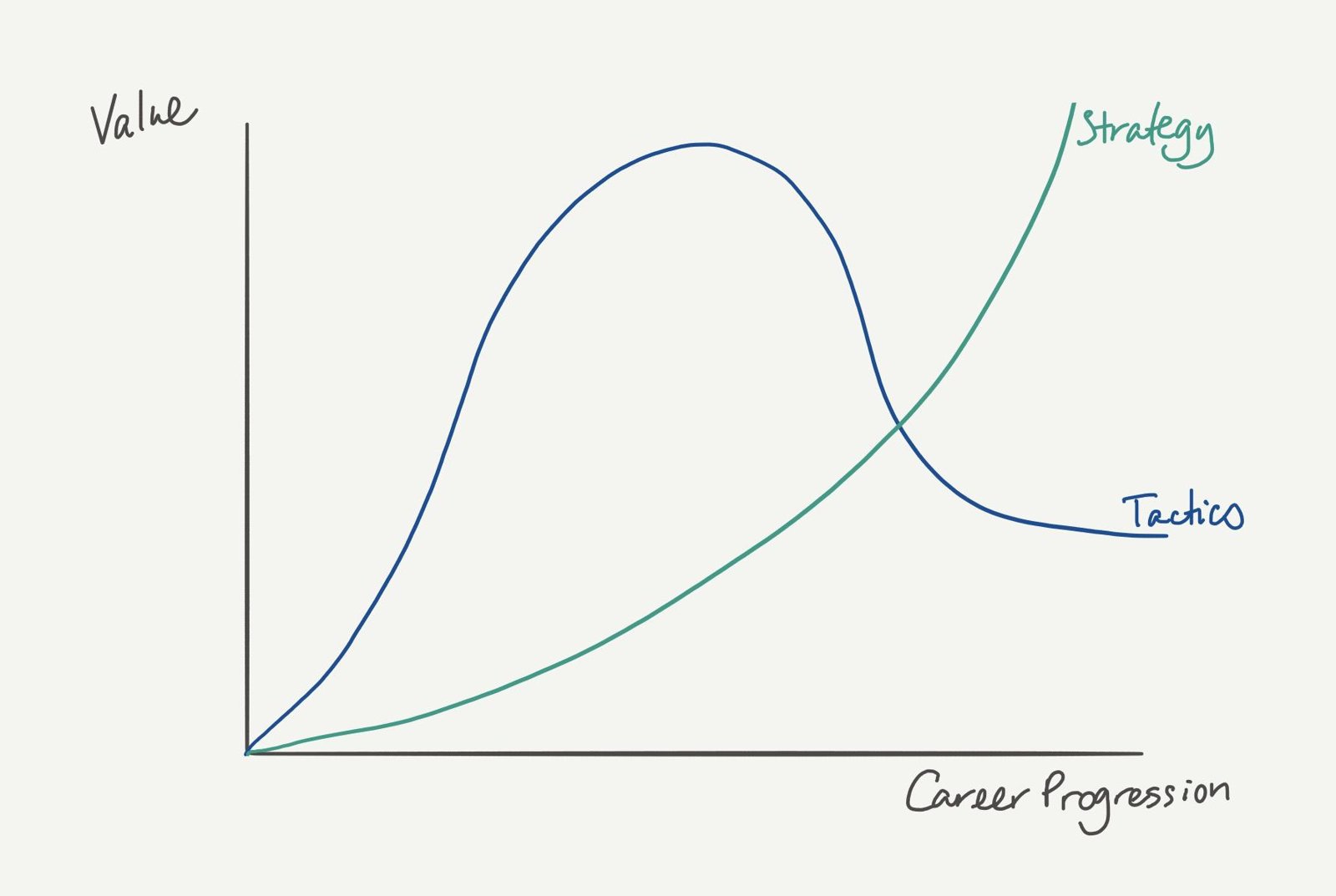
Tactics lose value as you progress in your career. Strategy gains value as you progress in your career.
Tactics peak in value at a certain stage and even begin to lose value as you move to higher-level conversations.
Meanwhile, strategy continues to gain momentum. Its value accelerates as you begin to see the matrix in what you do.
This is why at some point in your career you have to transition from obsessing over tactics towards obsessing over strategy and the big picture.
It’s not easy to do. But big picture work almost always moves the needle a lot more than individual plays.
Drawing 113
T-Shaped vs. C-Level
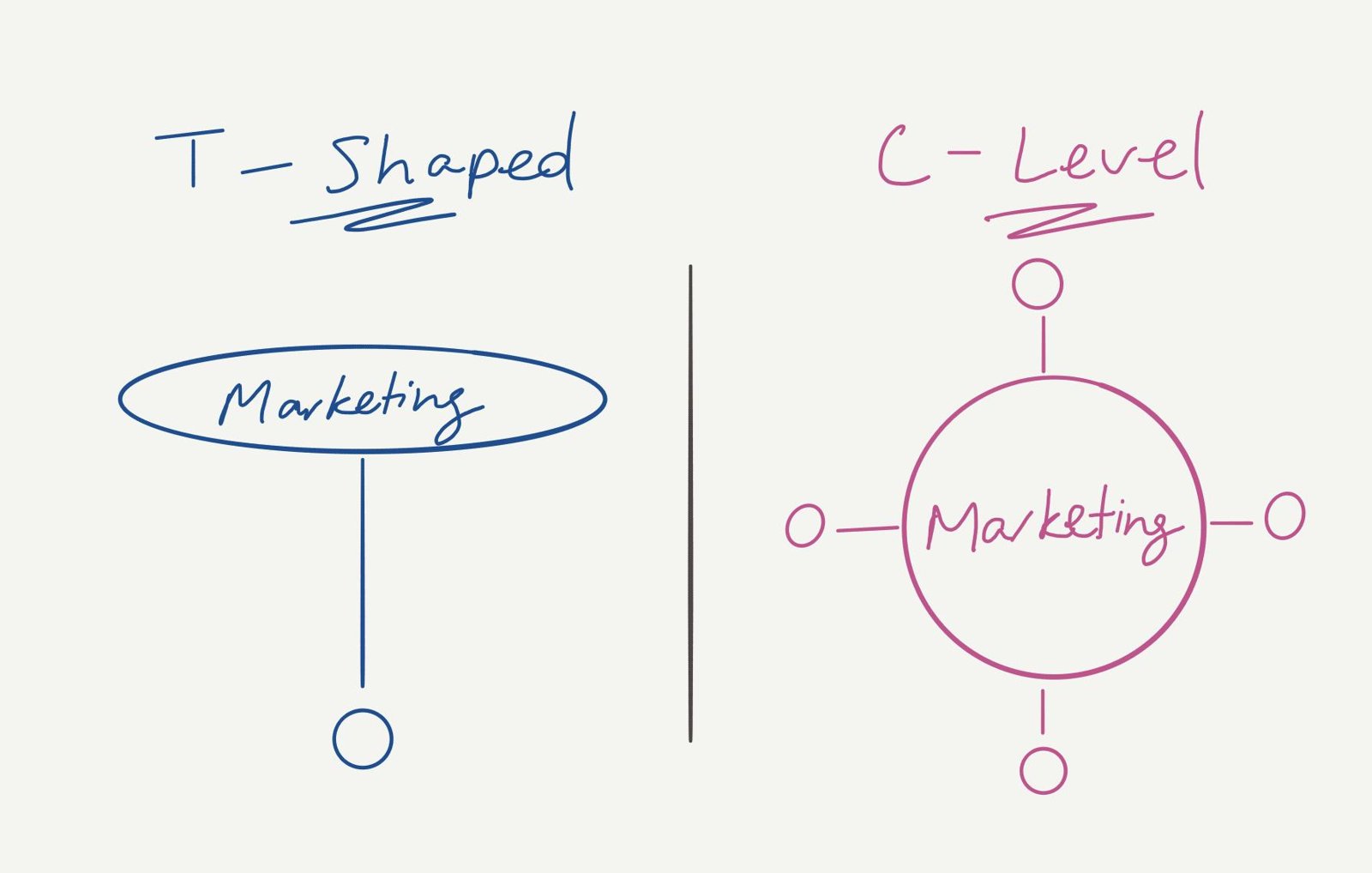
For people starting a career in marketing, it can be helpful to become a T-Shaped Marketer. But it can be destructive to marketers later in their careers.
T-Shaped marketers have a high-level understanding of multiple areas within the marketing function, but in-depth expertise in only one or two.
Being T-Shaped will help you get promoted to the level of specialist or manager. But then you will hit a wall.
On the flip side, if you begin connecting the dots between marketing and the other business functions right away, you dramatically increase your odds of getting to a much bigger marketing role in your career.
I call this type of marketer a "C-Level" marketer. It’s difficult to find these marketers because it’s difficult to see the full picture and understand Marketing's role across the business.
These C-Level marketers understand:
- How Marketing connects to Sales, Product, Support, Client Success, and Engineering
- Financials, and how to build a relationship with the CFO
- How to manage up in conversations with the CEO
- How to communicate expectations and connect the dots for the team
Drawing 114
The New CMO
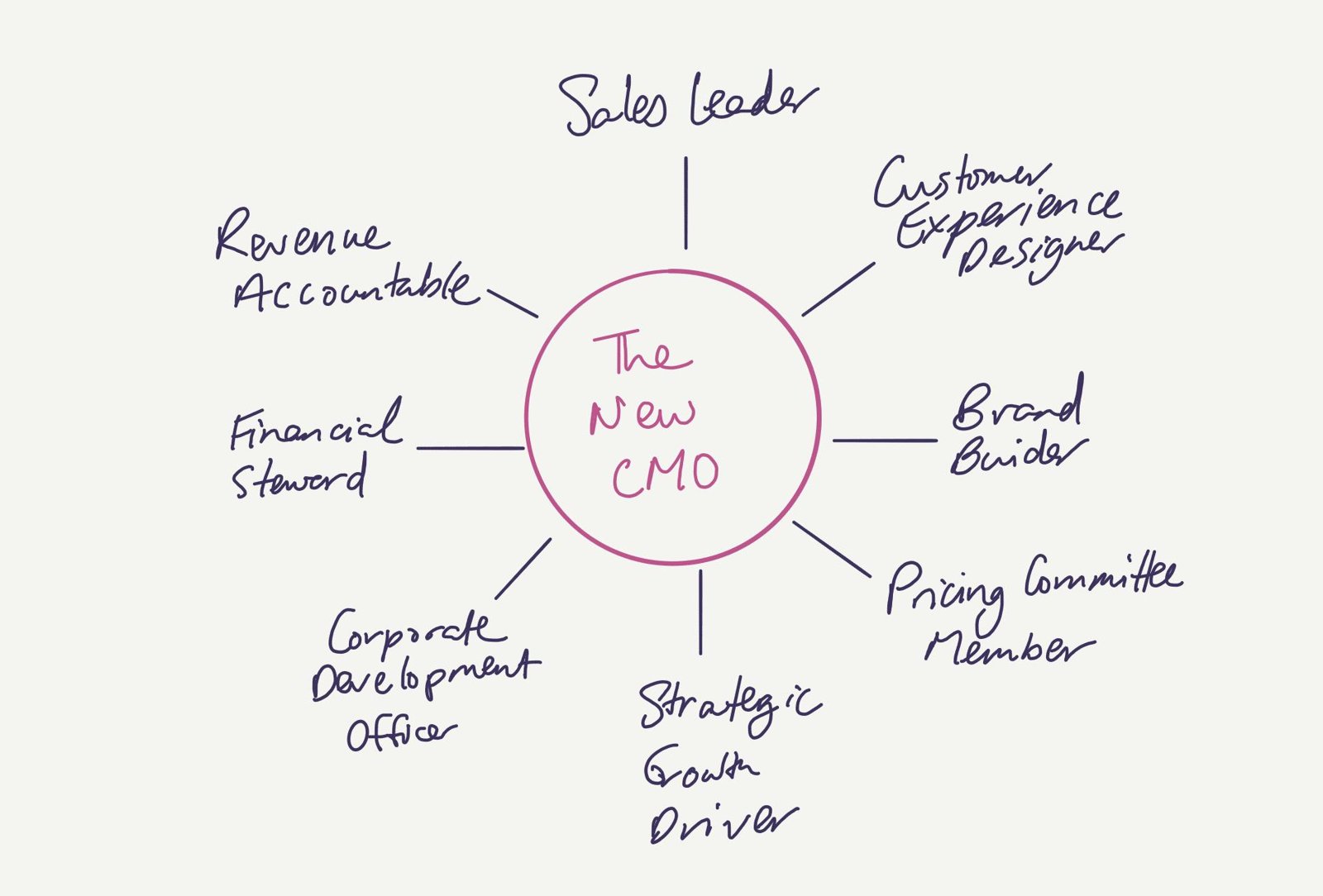
The best CMOs aren’t fixated on only working on traditional marketing activities. To really help the business succeed, there are 8 roles all new CMOs need to play:
- Be revenue accountable and tie all activities to revenue impact.
- Be a key leader on the sales side to understand how to impact revenue even more.
- Be the designer of customer experiences throughout the full journey.
- Be a brand builder and category creator.
- Be a member/leader of the pricing committee.
- Be a driver of strategic growth initiatives, which includes involvement in product management.
- Be a corporate development officer to support the company’s M&A activities.
- Be a financial steward who ensures delivery of growth and EBITDA.
Drawing 115
Marketing as PM
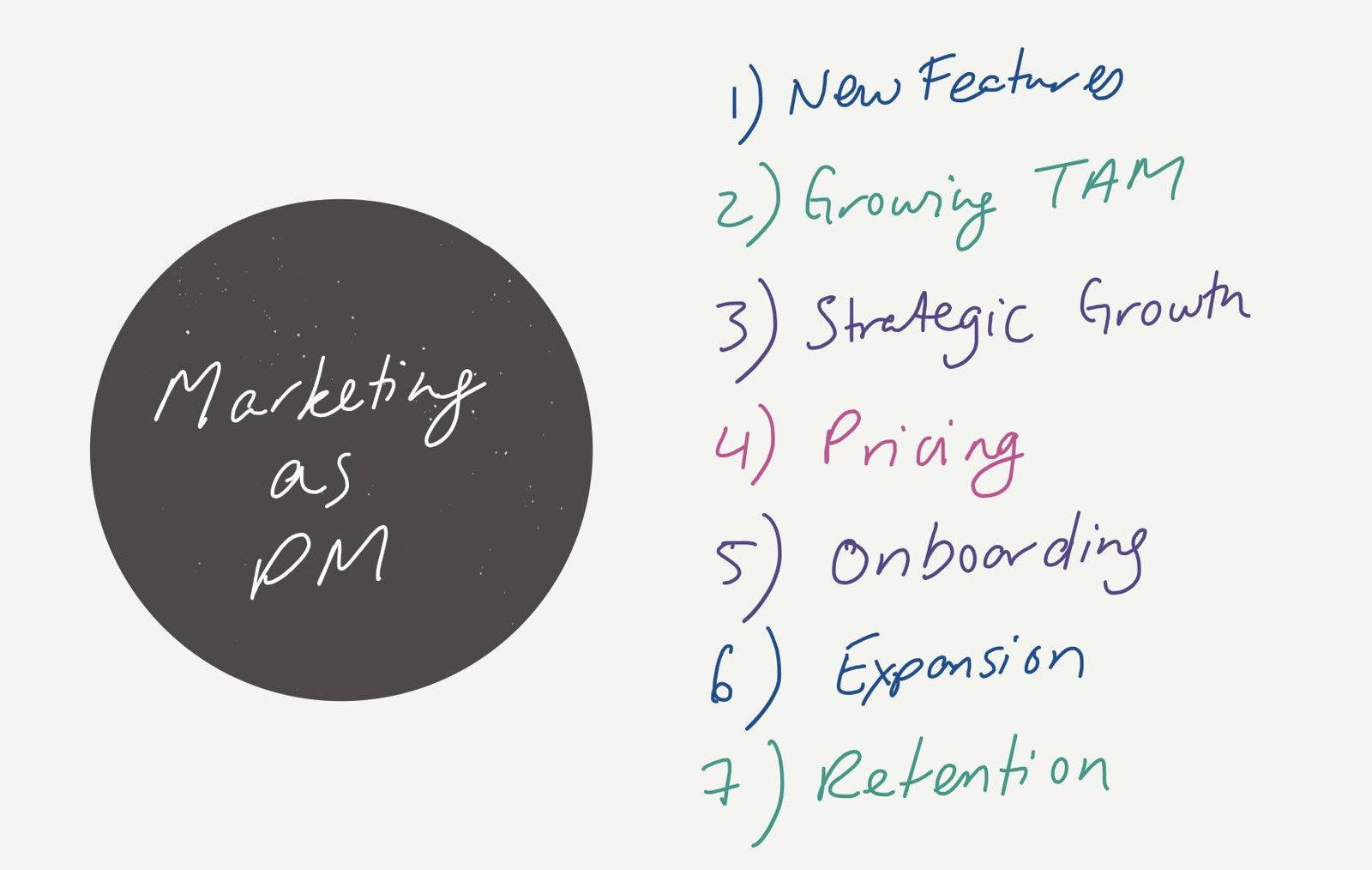
Marketers can be some of the best Product Managers inside organizations. They have unique context and understanding about Product Management’s most valuable asset: what customers and the market want.
Marketing is not just about net new acquisition. Sadly, this is the only role marketers play in some organizations.
If Marketing isn’t involved at the product level, the solution is much less likely to match up to customer needs. Perhaps the pricing structure can’t compete with other options on the market, or maybe the product is missing a key feature that would improve retention.
This is where it's on marketers to beat the drum. You have to be a real evangelist for customers to get a seat at the product management table.
This is also where some of the biggest growth levers inside a company exist.
The better marketers understand each of these levers and how they can contribute to it, the faster they can help grow the organization.
Drawing 116
CMO Communication
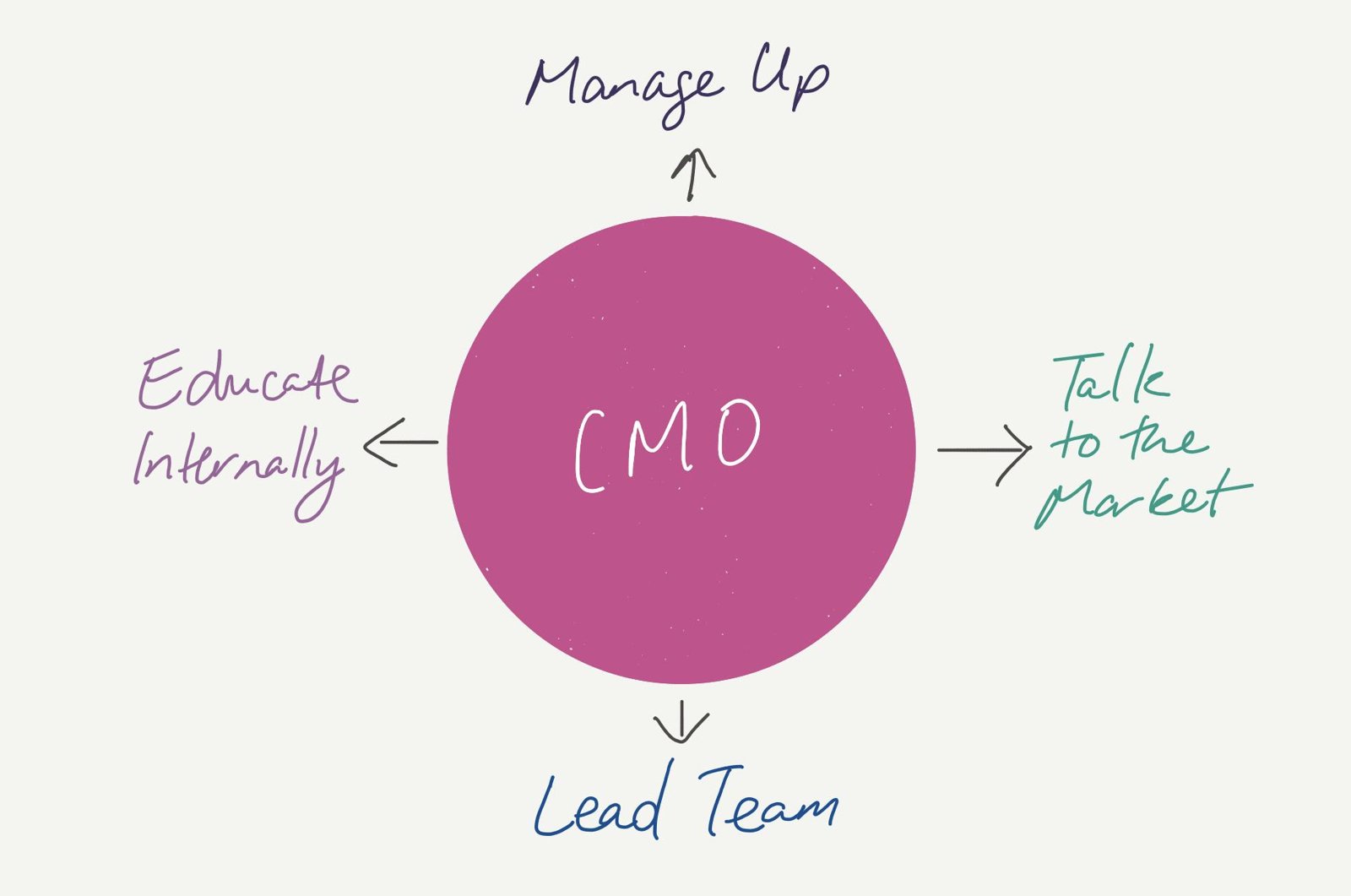
Communication is the single biggest skill set a marketing leader can possess. You have to:
- Lead your team, set goals and objectives, and bring people together.
- Talk to the market about the problem they're facing and how you solve it.
- Manage people above you (the CEO, the board) and set expectations on marketing performance.
- Educate the rest of the organization on Marketing's plan and how other functions are critical to that plan.
Communicate up, down, inward, and outward.
Do all four effectively and you’ll become a rockstar marketing leader.
Drawing 117
Growth Leader
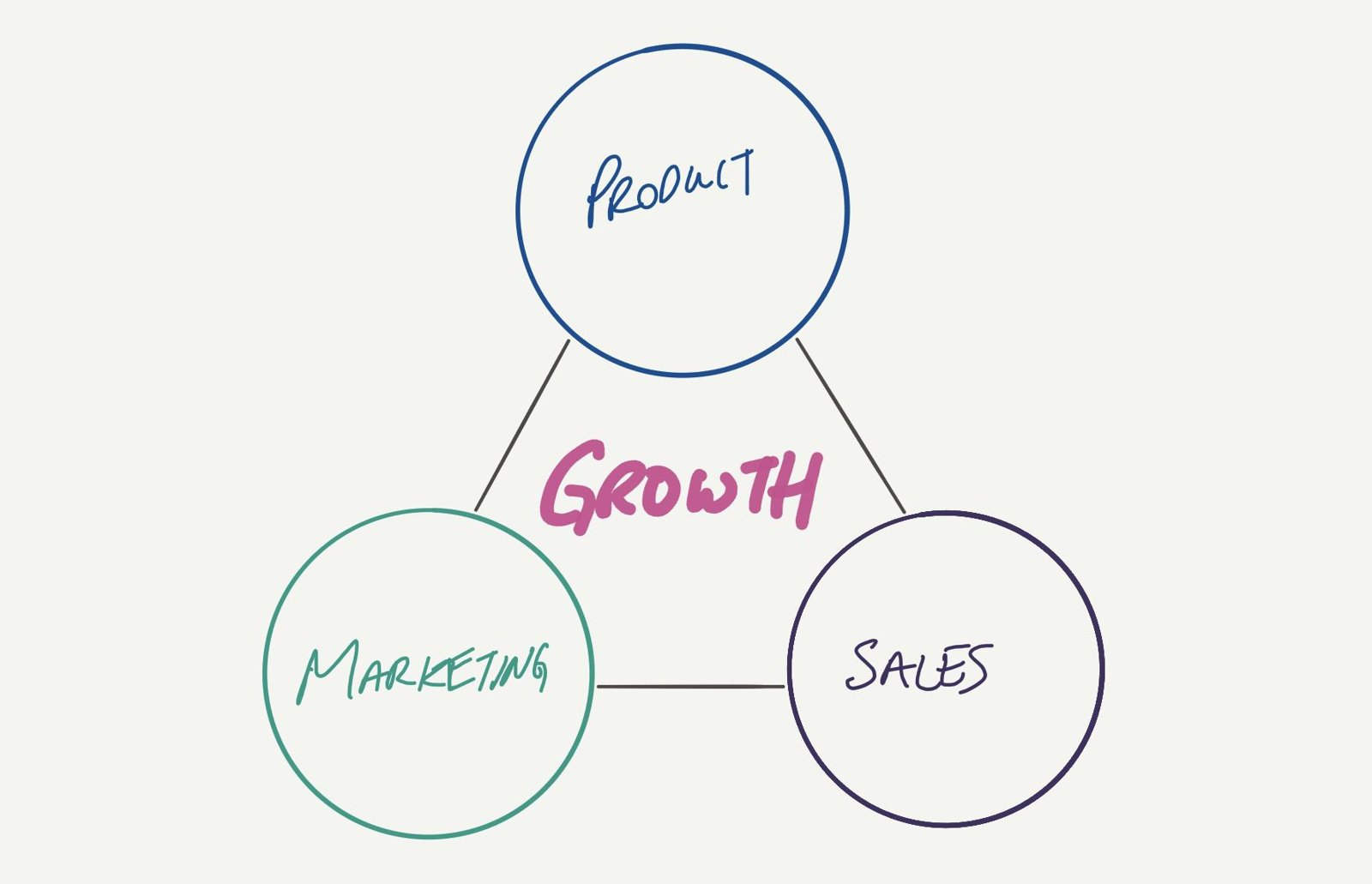
Product, Marketing and Sales collectively bring the overall growth plans of a company together.
None of these functions can lead growth for a business by themselves. They require alignment and orchestration to capture the value from the company's biggest growth levers.
In many cases, the CEO plays this role. But as companies get bigger, this orchestration role gets lost because the CEO's role also evolves.
Eventually, there are VPs and C-Level execs for all functions except Growth (!). Each function area works in a siloed way, and, inevitably, they end up missing critical opportunities to build on each other’s efforts and find scale.
This is why these companies require a growth team or growth leader. The role of this function is to bring Marketing, Sales and Product into alignment.
By the way, having a Chief Revenue Officer who primarily focuses on Sales doesn't count either.
The growth function requires a leader who understands data, UX, engineering, product and strategy, on top of marketing and sales.
Drawing 118
Immature vs. Mature Growth Org
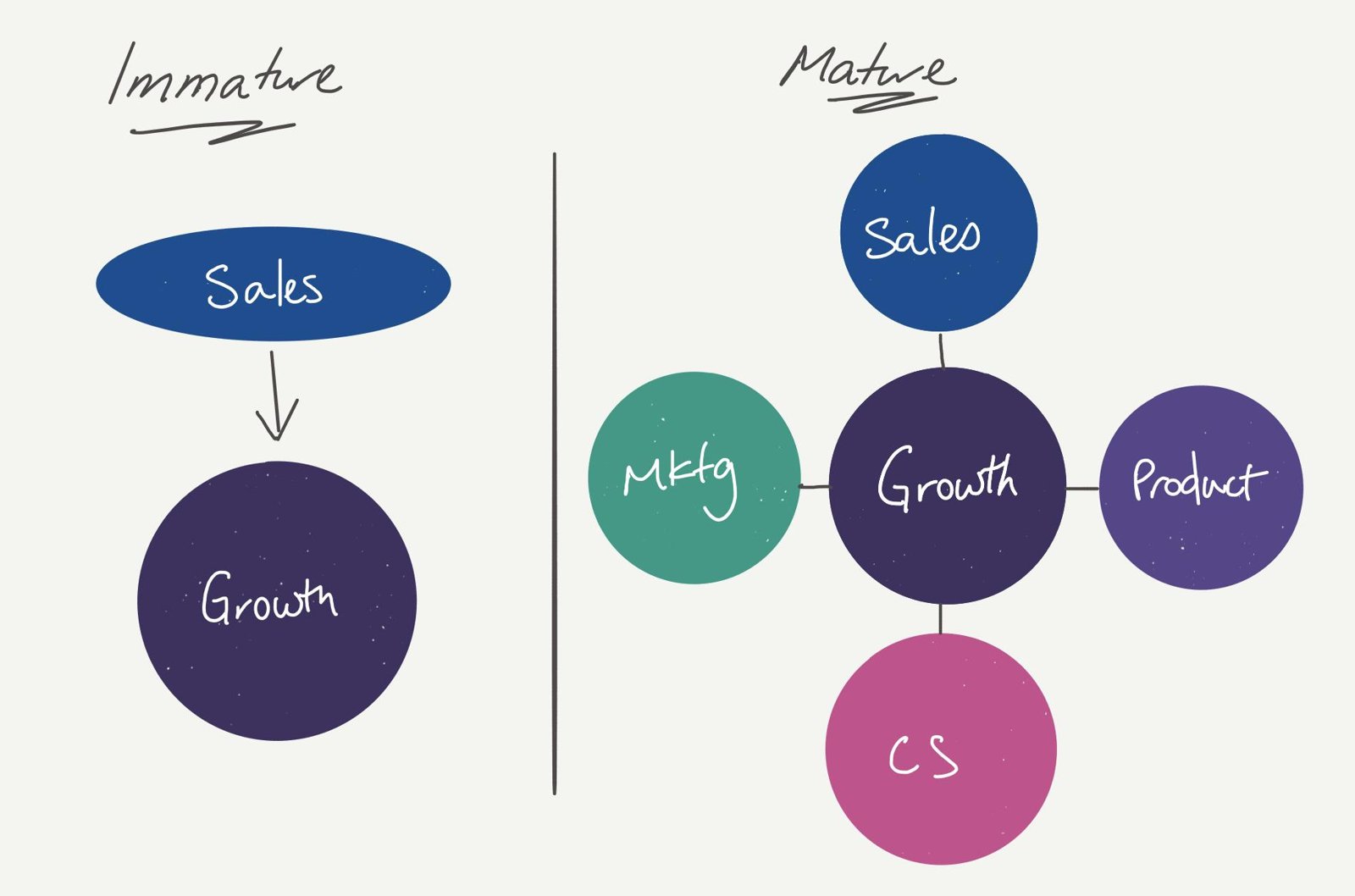
Immature organizations view growth as a Sales-only problem. These are the organizations where:
- VPs of Sales get fired constantly
- SKOs put all the pressure of growth on sales reps
- Marketing and Product have no revenue accountability
Mature organizations, by contrast, view growth as a holistic problem, owned by everyone in the organization. In order to scale, they ask themselves questions like:
- What value does our product need to provide the customer so we can increase conversions to Closed Won?
- How much budget does Marketing need to drive the pipeline required to ensure Sales is successful?
- What kind of onboarding and retention programs do we need to increase LTV and lower attrition?
- What is the optimal pricing strategy to maximize expansion revenue and net retention?
Immature organizations miss all these growth avenues because their conversations have a one-dimensional focus on Sales just working harder.
What these organizations don't realize is that putting less pressure on Sales and building a shared accountability structure for revenue growth increases the odds of closing more deals.
Drawing 119
CGO Career Path
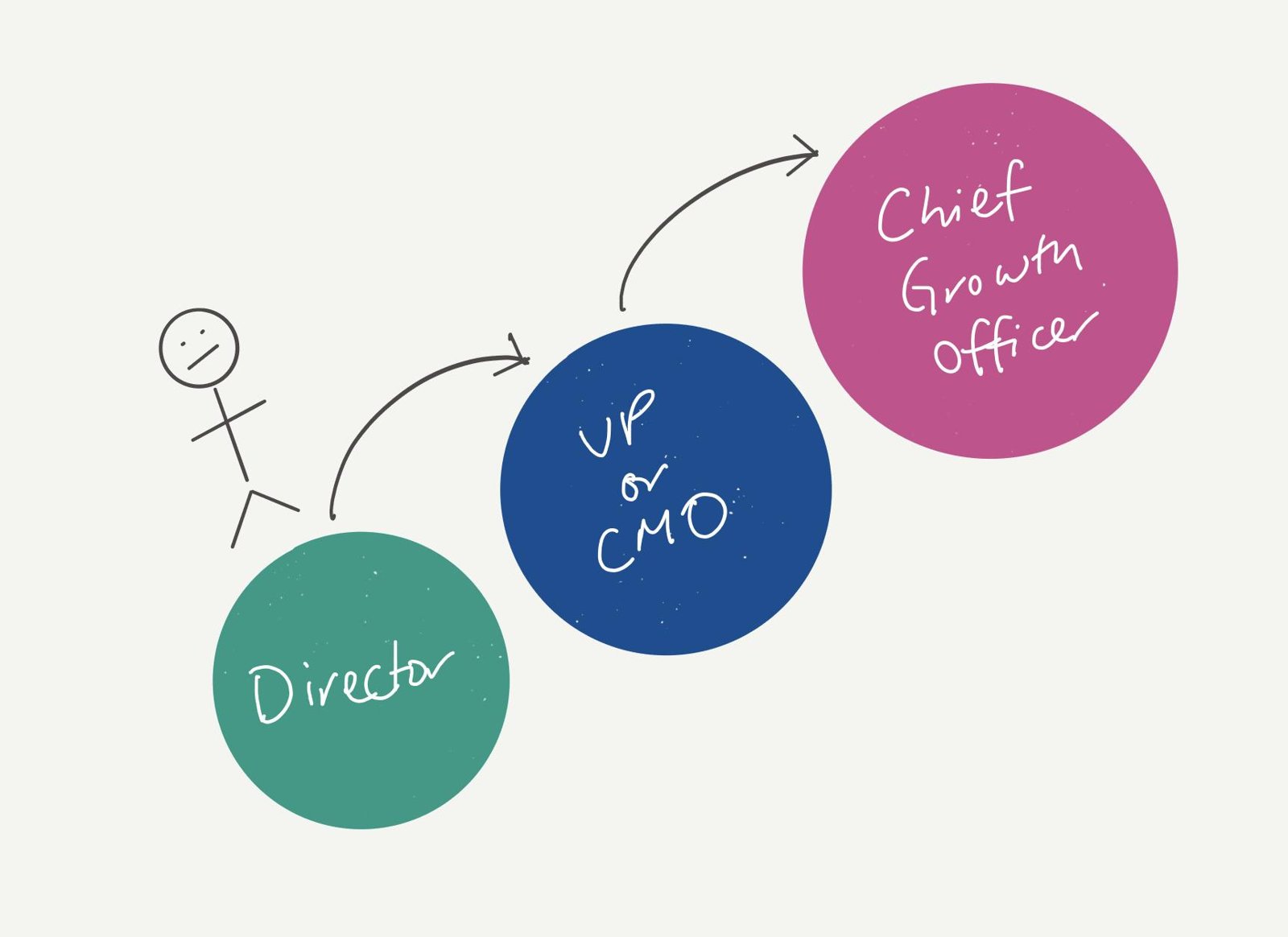
The most natural career path for marketers is to move from Director of Marketing to VP or a CMO position. This is the obvious path. Less obvious is what comes next. Where do you go from CMO?
The most natural path from here is to evolve into the Chief Growth Officer (Note: a Chief Growth Officer is not the same as a CRO).
Chief Growth Officers bring together Product, Marketing, Sales and Customer Success to work on the biggest growth levers of a business.
You could argue this is the role of the CEO. But as organizations grow, the CEO transitions to leading bigger picture items like vision, culture, M&A, investor relations and more. This typically happens as companies cross the $10M ARR mark.
This leaves a gap in the organization: whose responsibility is it to lead the overall growth strategy of the organization? The answer should be “the CGO”.
Drawing 120
CEO Buy-In
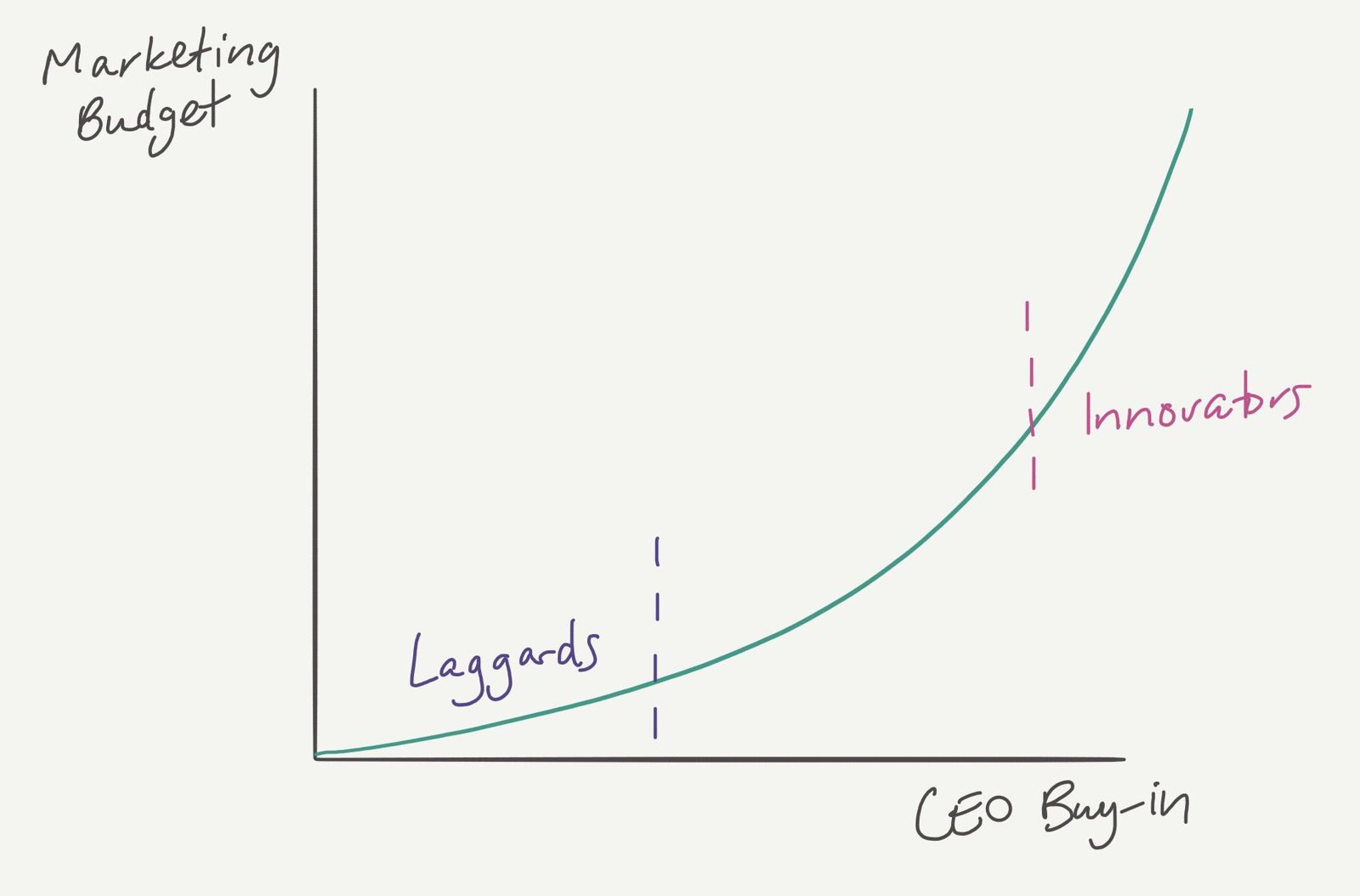
CEO buy-in is a very underrated variable when measuring marketing effectiveness.
There is a reason why some companies bet big on marketing: their CEO is willing to bet their job on investing in marketing.
If, on the other hand, the CEO dismisses marketing as a cost center, this becomes a self-fulfilling prophecy. Marketing gets limited resources, so they can only generate limited results, and the CEO justifies giving them even fewer resources.
Marketing leaders have a huge role to play here. You need to get your CEO on board by making the right case for why the CEO should invest more in Marketing.
Once you’ve made that case, however, it’s up to the CEO to take that recommendation and give marketing the support it needs in the form of money and time — including setting the right expectations with the board.
This is why the CMO-CEO relationship is so important. You partner together to invest in building the marketing engine and the business’s brand.
If you find a CEO who gets marketing, hang on to them.
Want to talk through how this applies to your business?
Book a time to speak with our team.