
SaaS Marketing Simplified · Chapter 6 of 10: Content
How does content drive pipeline and revenue for B2B SaaS?
By Shiv Narayanan, Founder & CEO of How To SaaS
Content builds the trust that turns an audience into pipeline. This chapter covers how content drives revenue, how to scale it through distribution and paid media, and how to build a content roadmap.
In this chapter
- Content is part of the product
- Content Trust Curve
- Authority Content
- Value-First Content
- Always be Helping
- Consistent Audience Building
- Videos vs. Website Visitors
- How Content Scales
- Good vs. Great Content
- Content Across the Customer Journey
- Old Nurture vs. New Nurture
- Educational vs. Sales Nurture
- Order of Content
- Creation vs. Distribution
- Scaling Content to Infinite Distribution
- Scaling Paid Media vs. Content
- Paid Media + Content
- Product Roadmap vs. Thought Leadership
- Content Roadmap
- Thought Leadership Impact on Hiring
Drawing 57
Content is part of the product
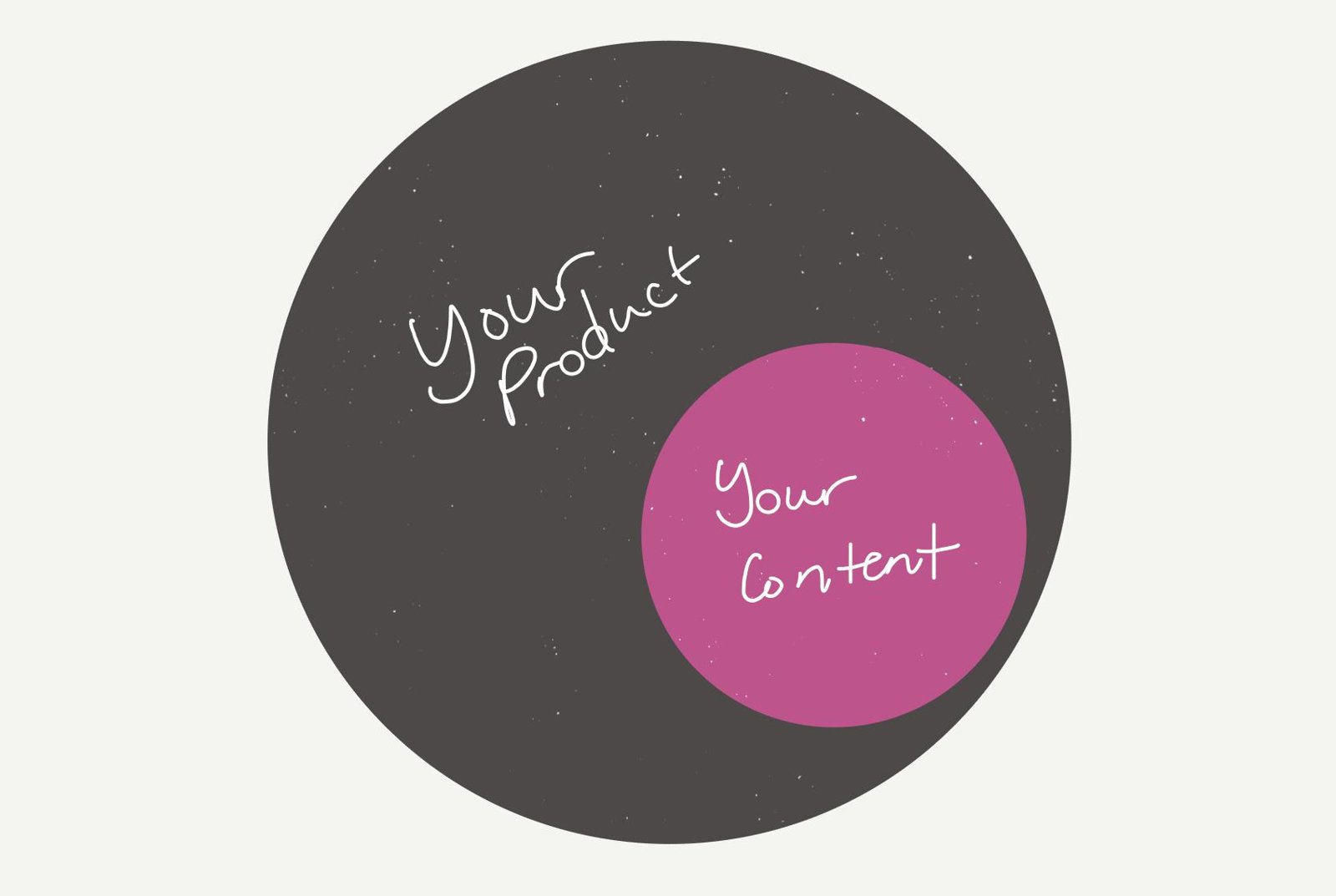
Your content is a part of your product. It is not just something you:
- Use to sell your product
- Create to rank for SEO purposes only
- Publish on your blog
Viewing content in this limited way almost guarantees you won’t invest enough resources and budget to harness its full potential. You’ll also likely focus on areas that don’t enhance customer experience.
Your content is a critical part of how your prospects and customers experience your brand, business and what you're selling.
Treat it as such and invest in it more.
Drawing 58
Content Trust Curve
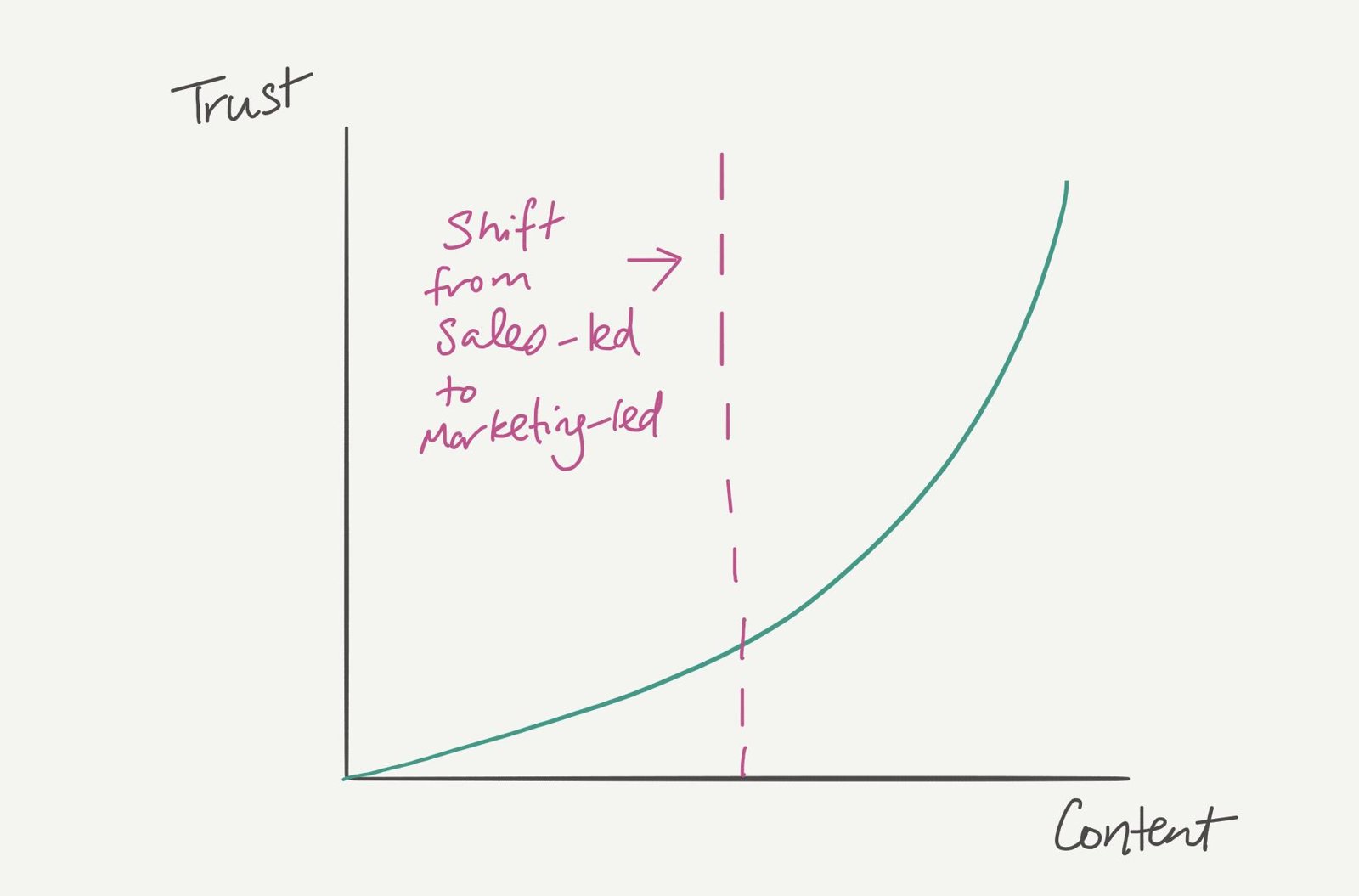
A lack of content creates a major objection for you to overcome during the sales cycle: should the customer trust that you will deliver?
The more content you create, the more trust you build. As the trust barrier is lowered, deals become a lot easier to close because you no longer have to convince customers that you can help them.
Instead, they find you because they have a pain point and your content signals that you likely have the antidote.
When organizations cross this trust barrier, they shift from being primarily sales-led to being marketing-led. They see:
- More referrals
- More inbound appointments
- Higher conversion rates at every funnel stage
When this shift happens, customer satisfaction increases. The organization has to spend far less time convincing more people to buy, so they can invest those additional resources into improving end solutions for the client and creating even more content at scale.
Over time, more leads come inbound and close at impressive rates because buyers are standing on a strong foundation of trust built with content.
Drawing 59
Authority Content
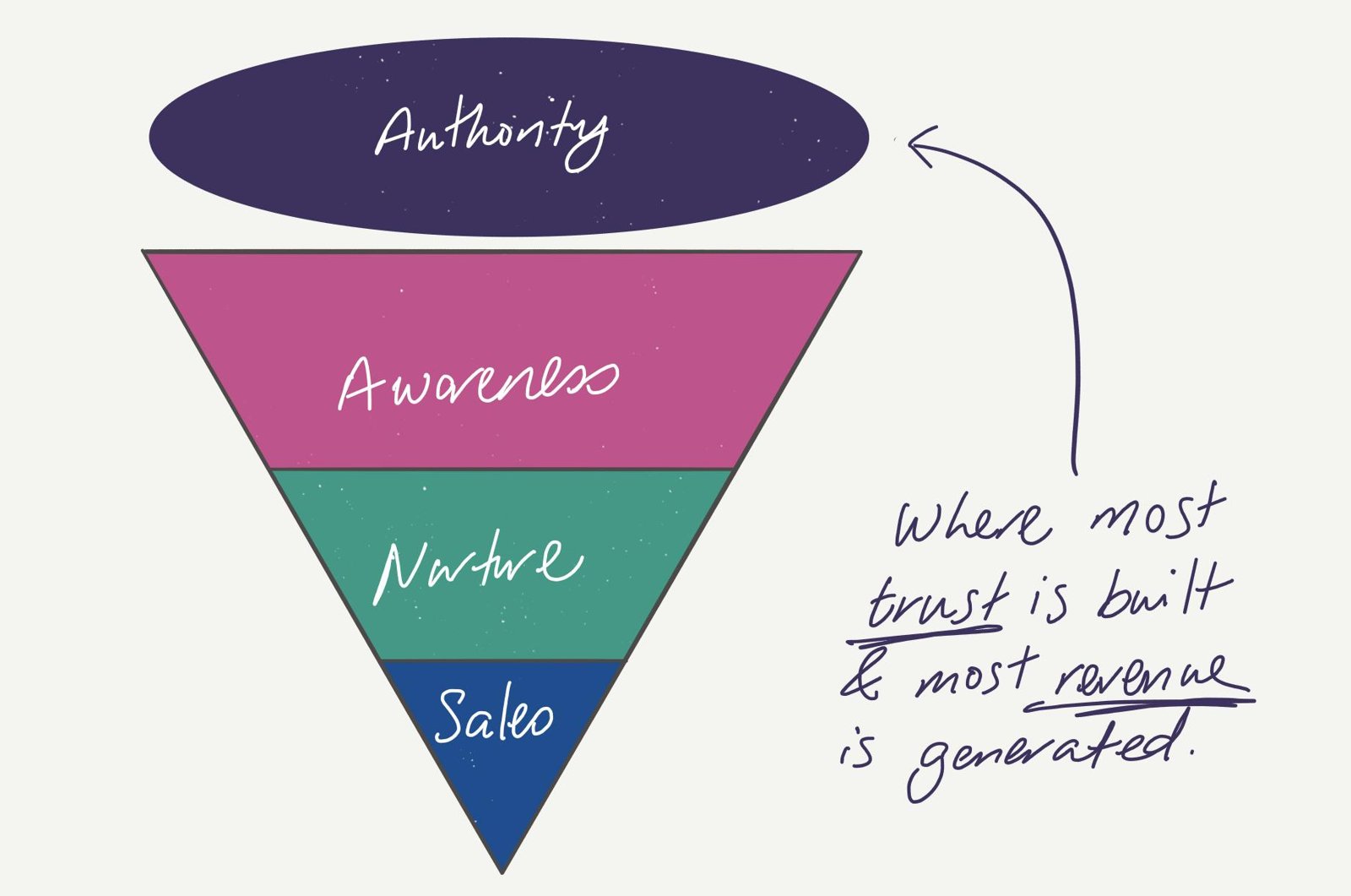
Most companies focus on creating content for the funnel. This includes:
- Awareness content to bring in more leads
- Nurture content to turn more leads into MQLs or MQLs into SQLs.
- Sales enablement content to close more MQLs
Very few companies focus on authority content. This is content that transcends the sales funnel — it has no interest in selling anything.
The primary purpose of authority content is to serve the audience and market by giving them solutions to pain they experience.
Authority content is not a "10 ways to do X" article. It is not a "Buyers guide for Y".
Authority content is true thought leadership. It builds a connection with the audience because they can see how much you understand them.
Types of content that create this effect:
- Podcasts
- Educational videos
- Books
- Speaking
It's the hardest kind of content to create because the barrier to entry is deep expertise and empathy.
The companies that succeed at creating this content end up greasing all stages of the funnel. Authority content grows the brand, and buyers gravitate towards brands that understand them.
Drawing 60
Value-First Content
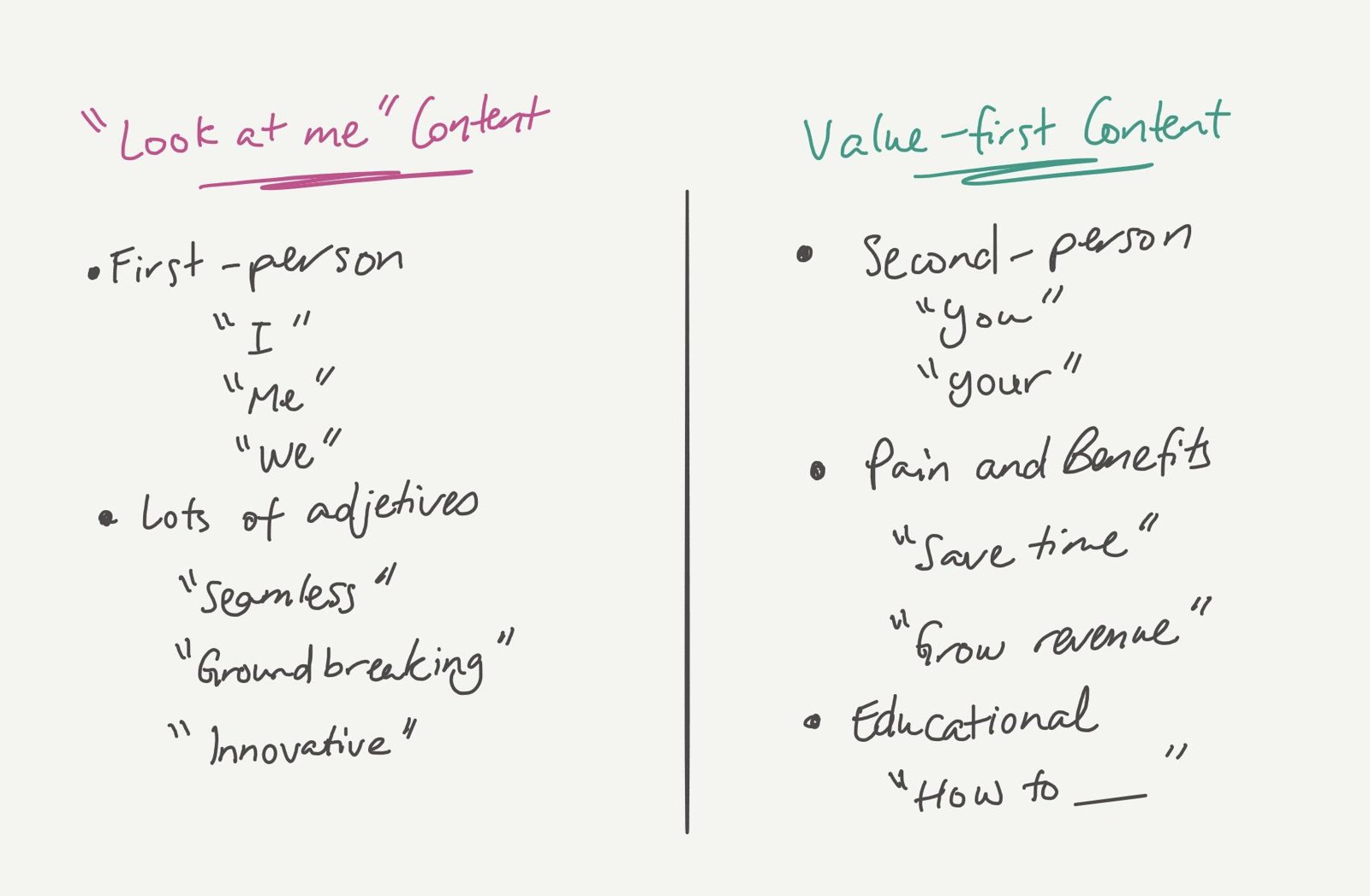
Too many companies out there are producing self-serving content — the kind of content that says “Look at me”. You’ve likely seen content like this.
This kind of content often talks about:
- How wonderful the company is
- How they recently won an award
- How their founder struggled and came out a better human being (LinkedIn is full of these stories)
- How fast the company is growing
- How revolutionary their technology is
- How much better their solution is than the competition
This kind of content can feel like brand-building work. But it’s not. It builds little affinity with customers for one big reason: it’s not about helping them.
Customers relate to brands that understand them — brands that use their content to fulfill the mission of helping them.
Companies that understand this create servant content that is all about the audience. This content instead focuses on:
- Talking in the second person
- Showing a deep understanding for the problem a person/group is facing
- Resolving real pain points with real solutions
- Educating customers and empowering them to achieve their objectives
Servant content is hard to come by because writing self-serving content is a lot easier. Servant content means taking a lot of time, effort and empathy to produce. This kind of content inevitably ends up building the brand.
It’s not a bait-and-switch either. There isn’t always a sales pitch to buy a software or product at the end. Those outcomes end up happening anyway.
Drawing 61
Always be Helping
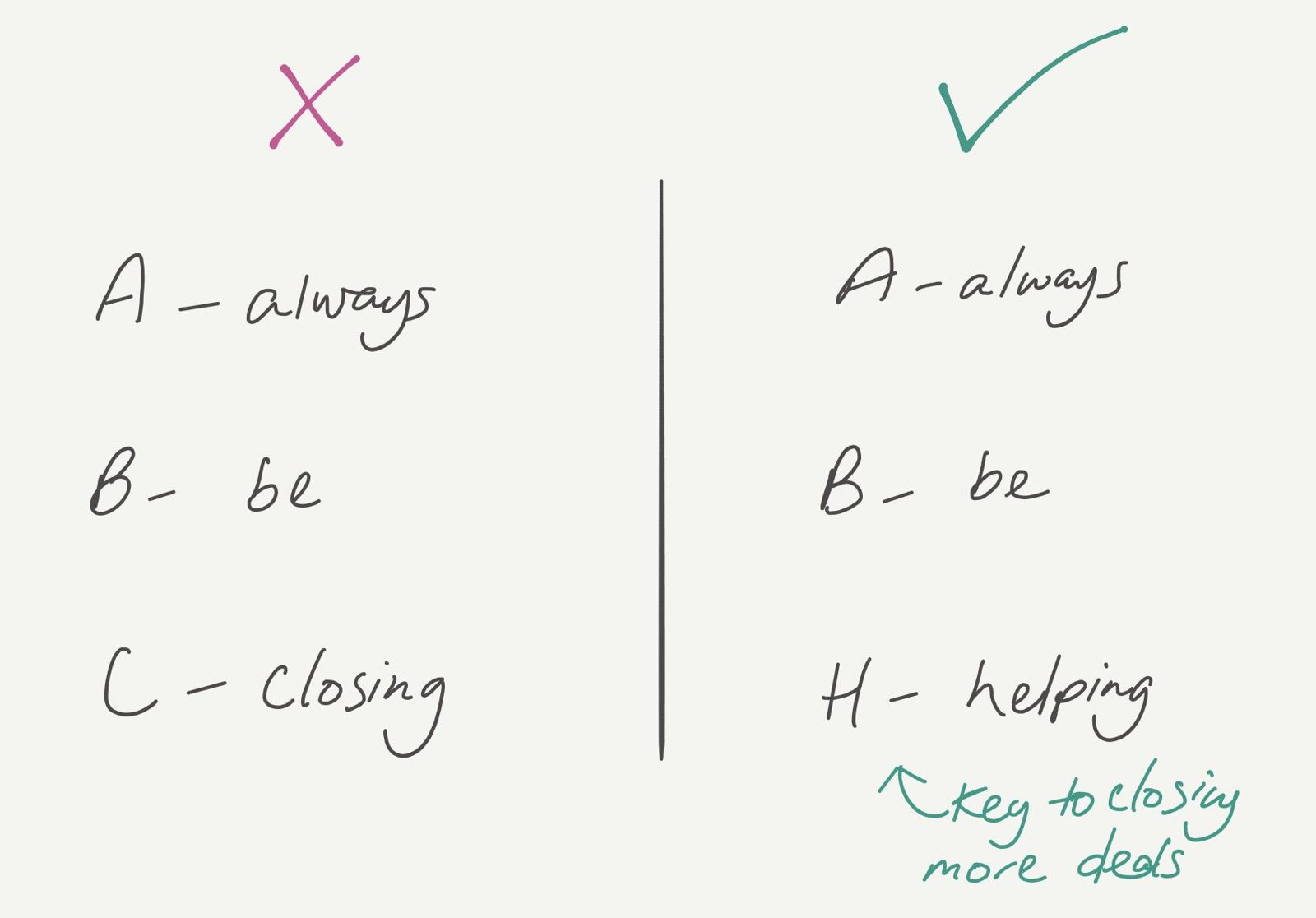
Always helping your prospect get closer to their stated and unstated goals has to be the simplest, most effective sales advice.
It means adopting principles like:
- Make it about them, not you.
- Act as a fiduciary in their best interests, even if it doesn't help you.
- Give them free content and advice to get them closer to their goals, even if they don't buy from you.
- Generate awareness around how customers with a specific pain point can alleviate that pain.
All four of these involve having Marketing play a major role. Marketing needs to:
- Position the customer as the hero. Showcase how the solution helps them on their hero's journey.
- Clearly articulate who the solution is best suited for. Also who it is not a fit for, so the organization knows who not to sell to.
- Build content that helps customers and prospects self-serve their way to a solution and establishes authority and trust within a market.
- Disseminate the message so more people with a specific pain can reach a resolution.
Marketing functions that understand this are best positioned to help effectively drive sales.
It’s also important to evangelize for this principle within your company. Organizations that understand this key role for Marketing will continue to fund Marketing's efforts as a sales necessity, not as a cost center.
Drawing 62
Consistent Audience Building
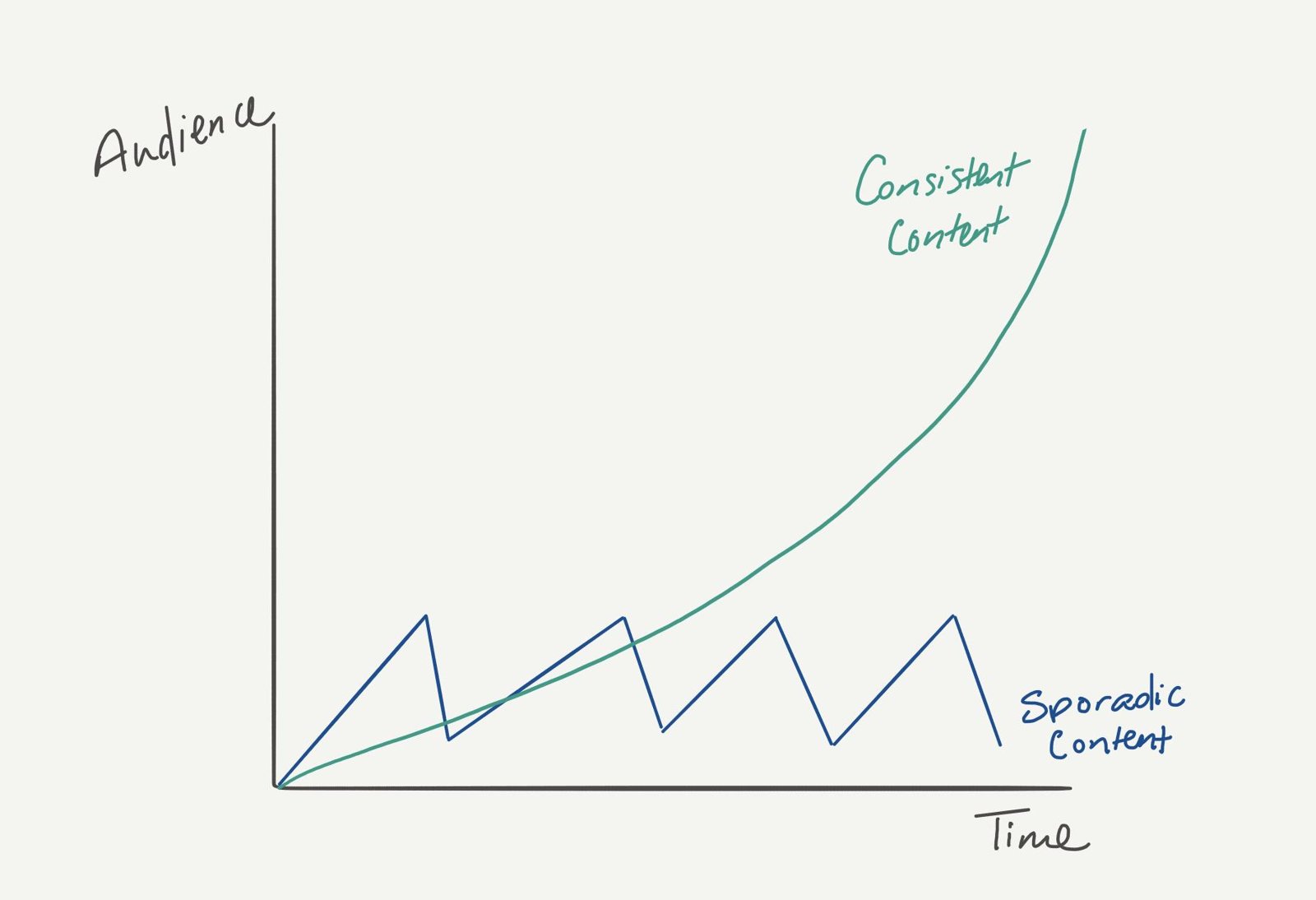
Building an audience takes time. Here are the biggest audience-building lessons I’ve learned through creating and sharing the SaaS Marketing Simplified drawings:
- Have something valuable to say. Don't just spew more bad content into the universe.
- Have a unique voice. Say it in a way that only you can say it.
- Always seek to add value. Make it about the audience, never about yourself.
- Produce evergreen content. Create content that can create long-term enterprise value. Otherwise, you'll be creating topical content forever.
- Create content that creates leverage. We use drawings from this series for our paid advertising to our ideal customer profiles.
- Build your own list with unique value. The SaaS Marketing Simplified newsletter has an open rate of over 50% at email number 70.
- Nurture with education. Consistent content will help your sales pipeline grow because you have pre-built trust.
- Don't take shortcuts. I've rejected multiple offers to join "engagement" groups etc. to boost the engagement on my posts.
- Build a relationship with your audience. Get to know the people who are actively supporting your content. A community is even better.
- Scale up your content as the audience grows. How To SaaS is working on more books, a podcast and a course.
Drawing 63
Videos vs. Website Visitors
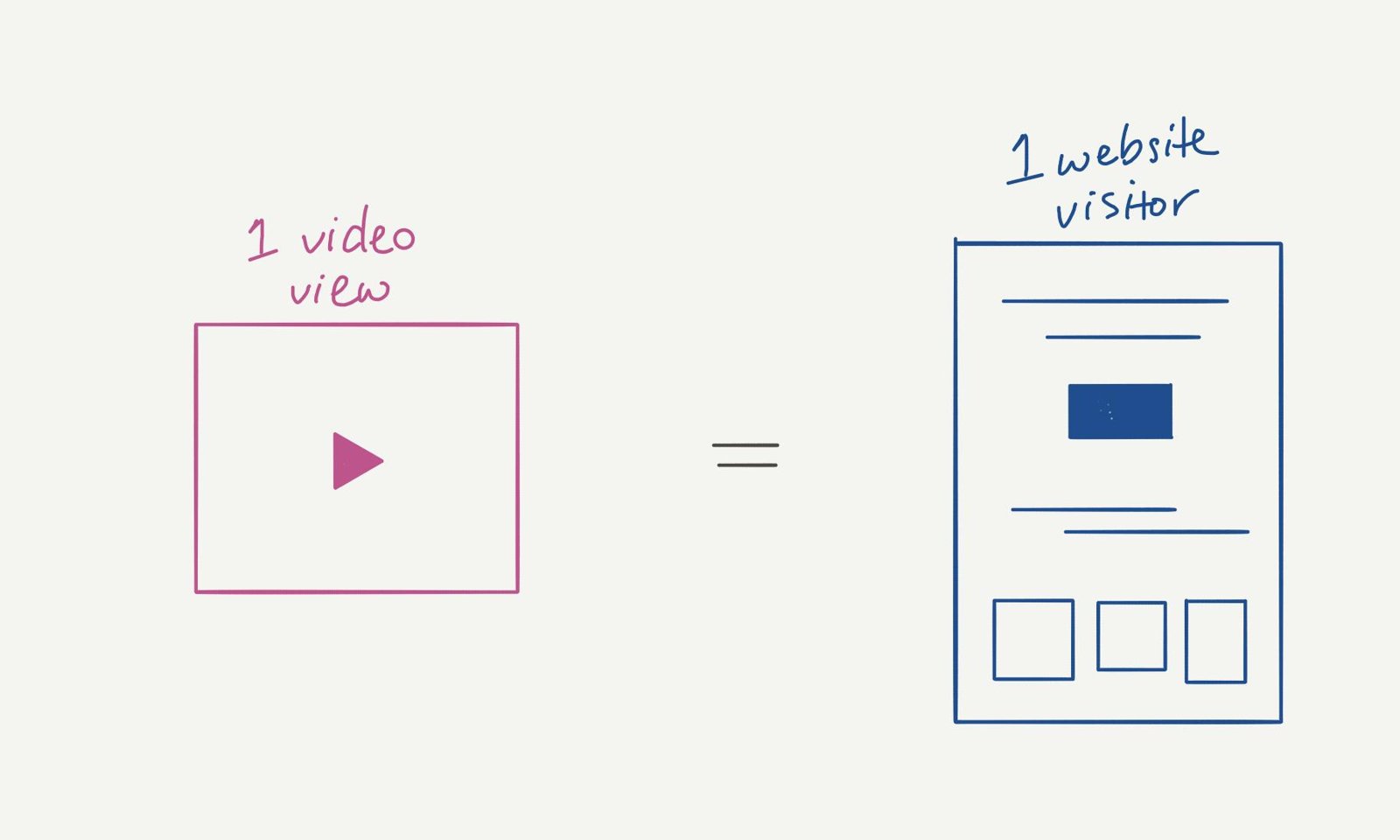
In a social-first world, driving everyone to your website by default is a big mistake.
A video view on YouTube/LinkedIn/Facebook is just as valuable as having someone read your blog post — or maybe even more so. A download of your podcast episode is just as valuable as a webinar attendee.
If your top of funnel metrics exclude the reach of your content on social platforms, you’ll get a distorted understanding of how Marketing is driving pipeline for the business.
The obsession with website funnel metrics leads to loads of missed opportunities. In many cases, your audience wants to see your content — just not on your website.
Distribute the content in the channel that has your audience's attention. You will generate more demand, which is the goal of increasing website traffic anyway.
Drawing 64
How Content Scales
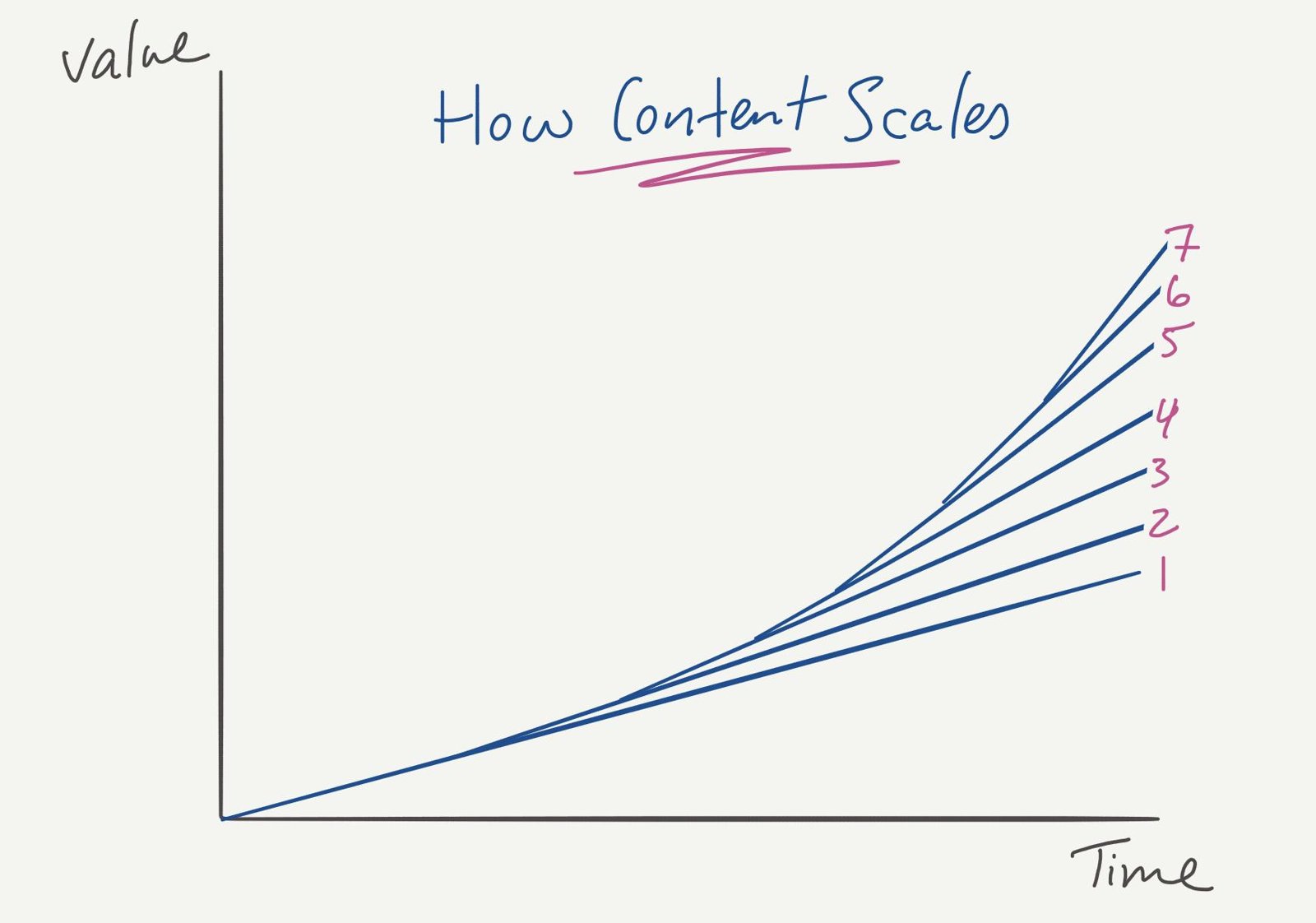
Content scales over time. On its own, each asset may not move the needle. But the great thing about content is that once you’ve created it, you can move on to create the next asset.
Meanwhile, the previous asset continues to generate returns. Each time you produce an asset, you layer on additional recurring value.
This process takes time and patience — two things most companies are not willing to give. If you give up on content too soon, you miss out on opportunities to generate, nurture and convert leads.
But, if a company is patient enough, a 12-month content strategy can build multiple assets that produce ongoing value for the business.
Oftentimes, this work produces enterprise value in a way other channels never can.
Drawing 65
Good vs. Great Content
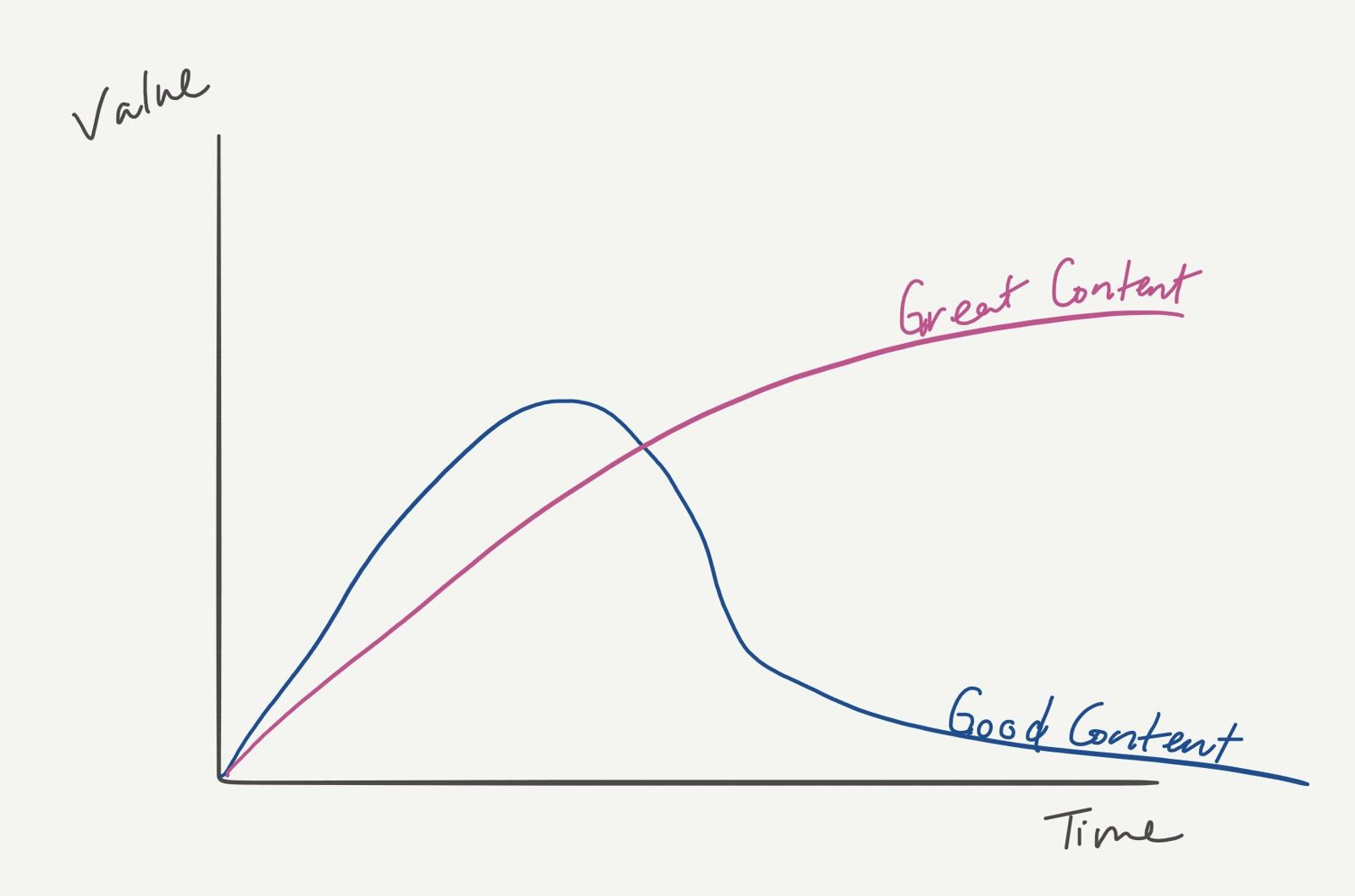
The difference between good content and great content is that great content continues to pay dividends as time goes on.
Some factors that impact long-term dividends on content:
- Quality
- Distribution
- Consistency
Producing more great content creates long-term enterprise value.
Drawing 66
Content Across the Customer Journey
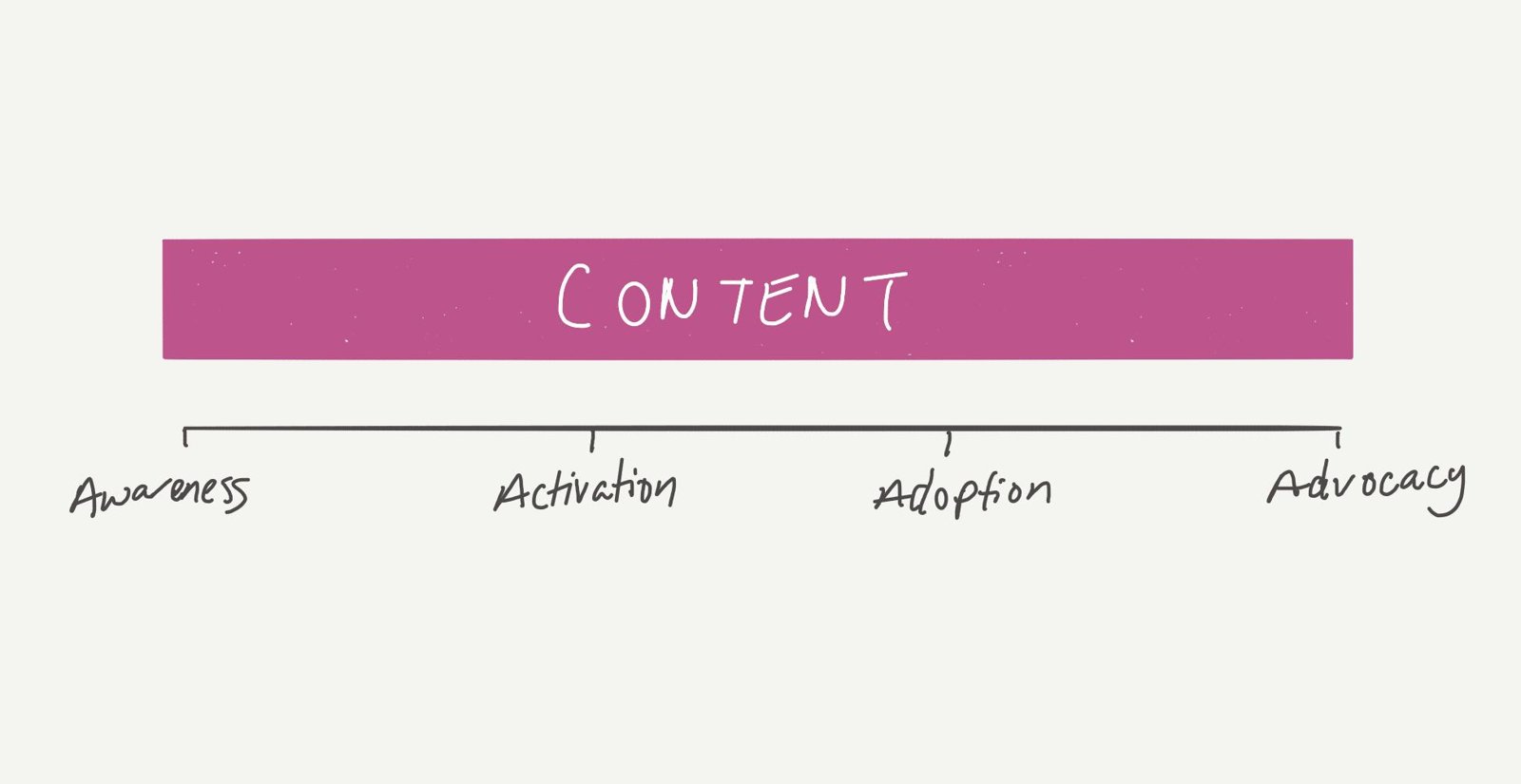
Content plays a role across the customer journey.
Content is not just an SEO post to rank on Google. That’s like defining sales as making some phone calls.
Too many companies view content as a one-dimensional activity. As a result, they over-index on one funnel stage or channel and leave huge gaps in other areas of the customer journey.
Content is a key part of how your customers move through their journey from Awareness to Activation to Adoption through to Advocacy.
Content needs to:
- Help prospects discover you
- Nurture prospects and customers
- Enable the sales team to have better conversations
- Help customers get on-boarded onto your platform
- Increase usage of your product
- Provide education to your customers to build loyalty, retention and advocacy
- Build your brand as a publisher and thought leader in the marketplace
Each of these pillars represents a huge opportunity for content to create value. You can invest infinitely in content because your market, prospects and customers will always want more.
Drawing 67
Old Nurture vs. New Nurture
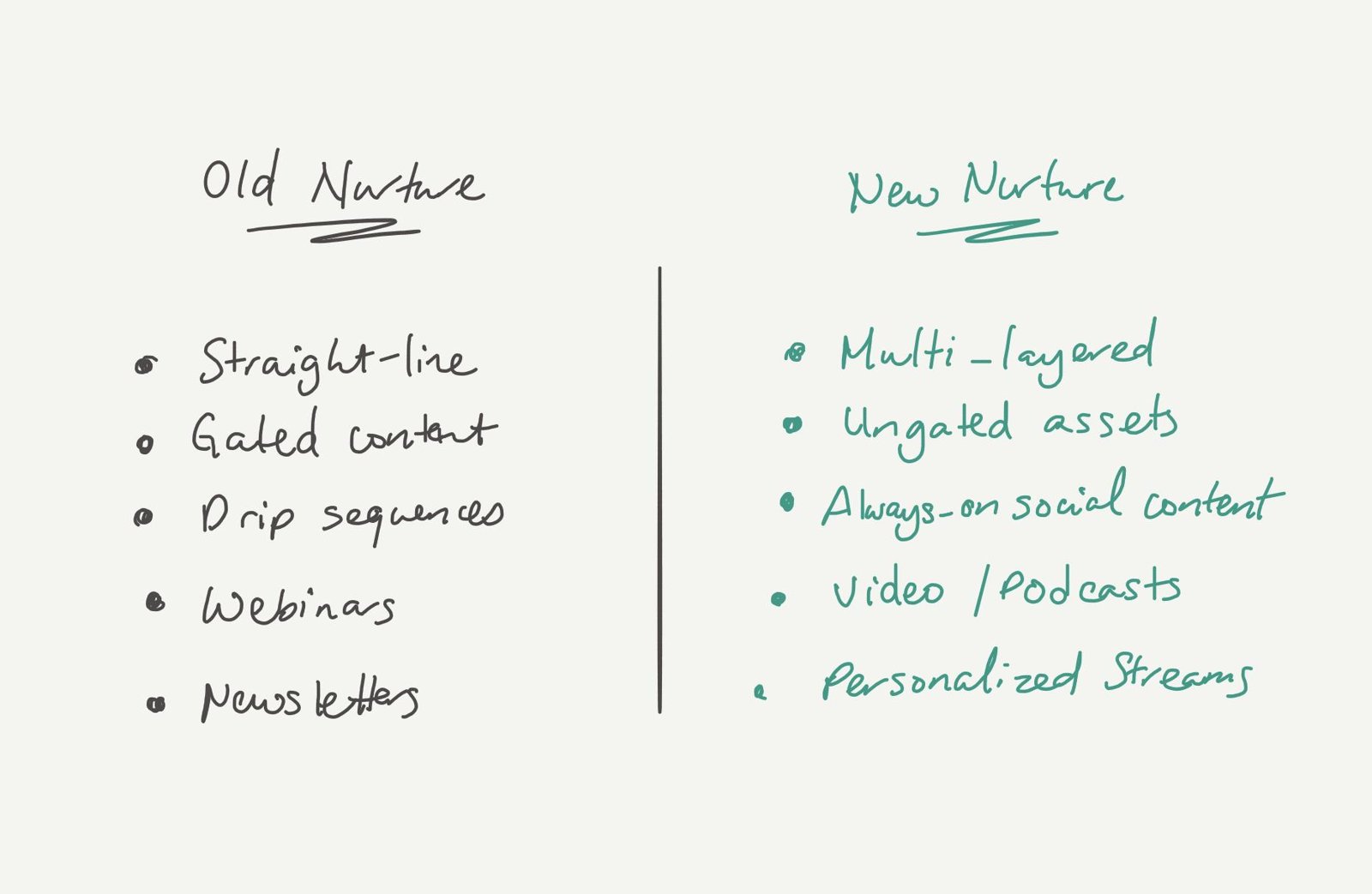
Nurture assets like gated content, newsletters, webinars and drip sequences do still have some value. But customers don't pay attention to these mediums like they used to.
Instead, customers will:
- Come to your website
- Watch a video on your YouTube channel
- Listen to a podcast with someone from your team
- Read a post on social that mentions your company/solution
All of these are nurture touch points that most companies don’t try to orchestrate enough.
Instead, the obsession with attribution leads marketers to create gated ebooks and downloads. These mediums make it easy to source a lead to a particular channel and add lead scoring as prospects take certain steps.
You may have better attribution metrics, but you lose the overall picture of what's actually driving revenue.
Your prospects want to be nurtured across multiple channels, mediums and formats. The brands that do that are the brands they end up trusting more.
Drawing 68
Educational vs. Sales Nurture
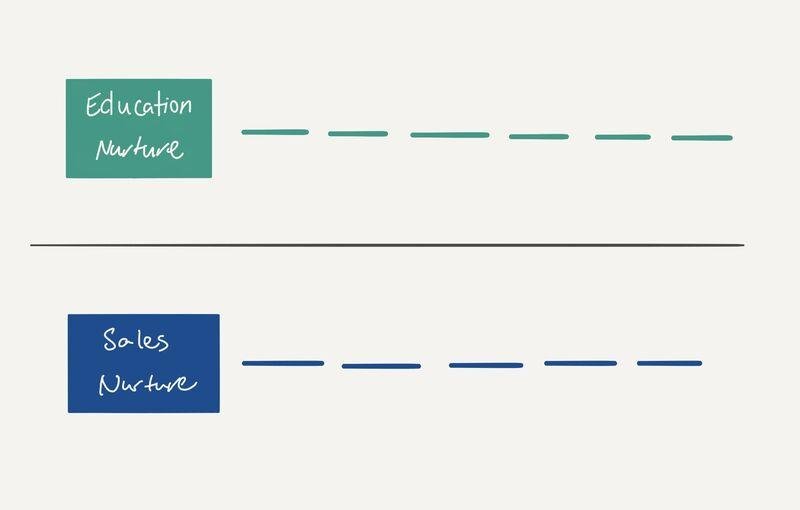
The problem with most nurture sequences is that they are linear.
A customer fills out a form for an educational asset and enters an indefinite nurture across email, social and paid channels.
Does a whitepaper download really warrant a 10-email sequence on all your features and benefits? Should a sales rep really follow up with anyone who attends a webinar?
This is where segmentation and context is critical. You need to meet customers where they are not where you want them to be. Nothing is more annoying than receiving sales emails when all you did was read an educational piece of content.
If someone only engaged with you at an educational level, keep your nurture educational. If someone engages with you at a sales level, only then should your cadences be sales-oriented.
This form of respect for the customer’s needs often breeds far more trust in a brand and product than non-contextual messaging. With this approach, customers are also far more likely to self-select into sales cadences.
To get it right, you need to commit to producing enough content to engage with customers when they are not ready to buy from you.
Drawing 69
Order of Content
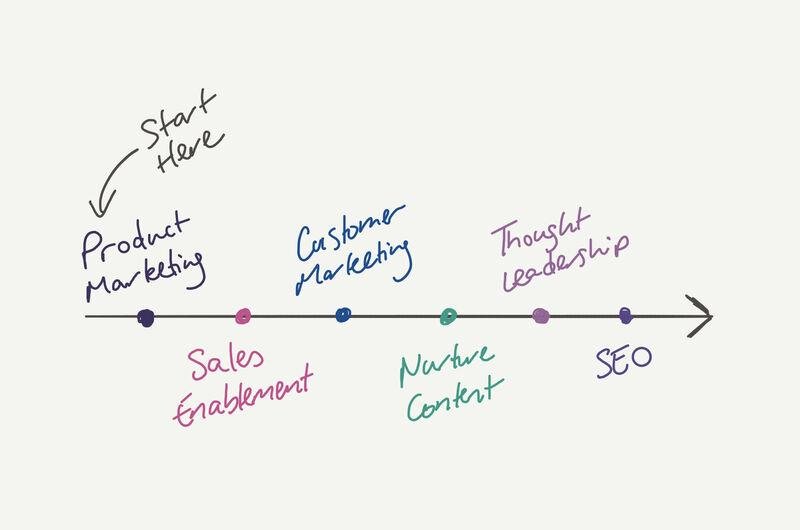
Too many companies get caught in producing content in the wrong order.
For example: what good is SEO content if you don’t have your core messaging and product marketing pillars figured out?
The right order of doing things:
- Sort out your product marketing (e.g. core messaging, value props).
- Enable and empower the Sales team with the right materials and assets.
- Run customer marketing campaigns to capture expansion opportunities from your existing base.
- Set up nurture campaigns to help prospects make their way through their buyer journey.
- Build thought leadership content with a unique perspective and story to differentiate yourself in the marketplace.
- Create content to rank for organic search.
Obsessing about number 6 when you haven’t figured out numbers 1-5 is a recipe for disaster. The visitors you draw to your website will be dropped there without any way to be nurtured or converted.
Don’t put all your efforts into top of funnel work before you have a way for it to generate a return.
Drawing 70
Creation vs. Distribution
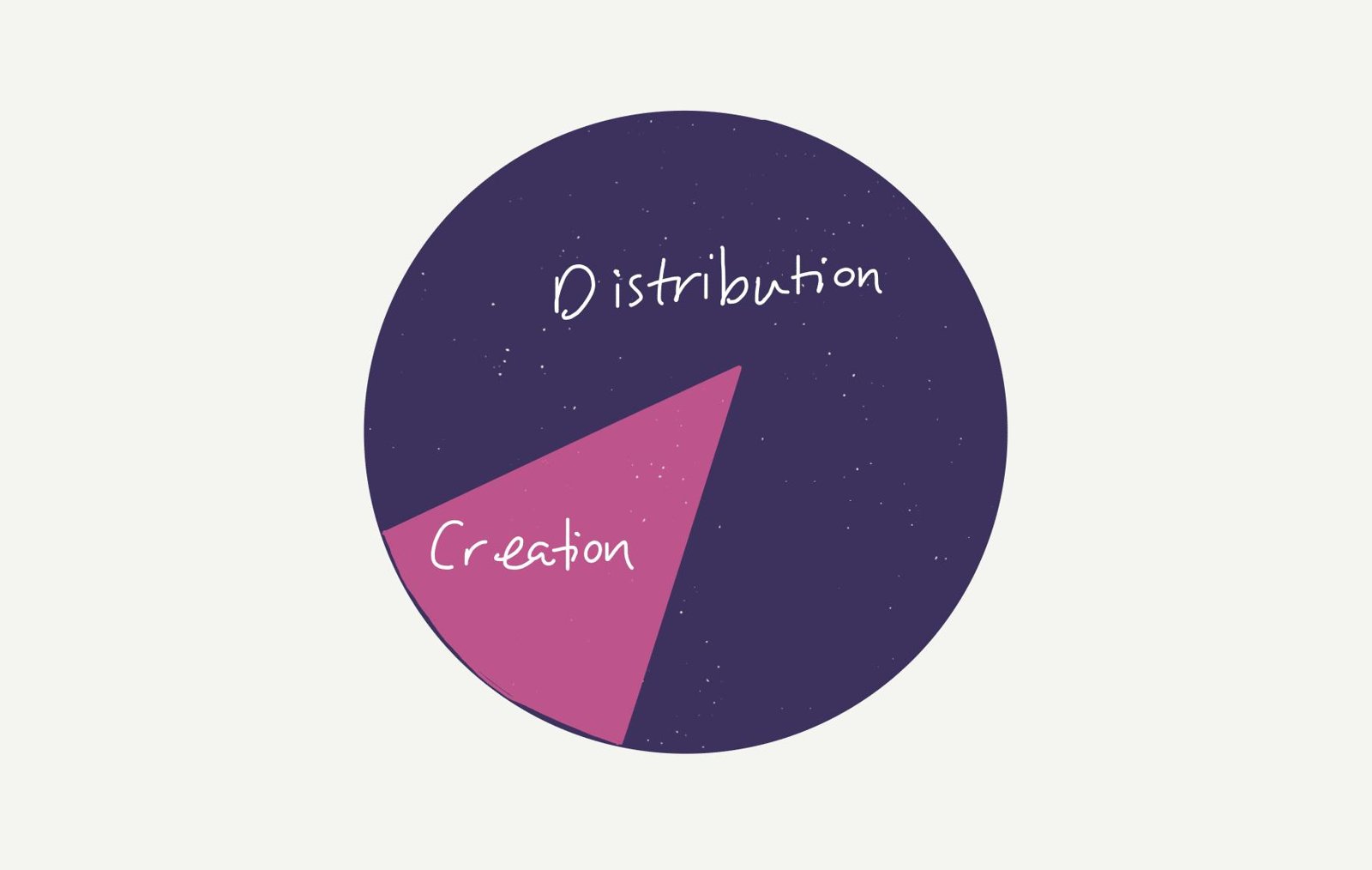
There's a school of thought that suggests creating a high volume of content is the key to building an audience.
There is some truth to that, but it also sets a false bar.
Creating unlimited content is valuable if you can find unlimited distribution.
You need to look beyond just posting 10 times a day on LinkedIn or Instagram. That approach will surely lead to burn out because you constantly have to create more content to stay relevant. You’ll also be hoping the algorithm helps you find more people who view your content — and hoping those people are your ideal customers.
This kind of strategy is pumped by proponents of hustle culture. “Post 10 times a day till someone notices you. Keep posting. Keep grinding. (Forget your mental health. Don't spend time with family. Over-index on content vs. other areas of the business like services or product, etc…)”
Instead, creating the right pieces of content and finding distribution at scale is the key.
There's a reason why platforms like LinkedIn sometimes sound like echo chambers of people in the industry sharing the same platitudes. Everyone is sharing content with the same audience.
Not enough people are distributing content to their audience. This is where the magic happens.
Drawing 71
Scaling Content to Infinite Distribution
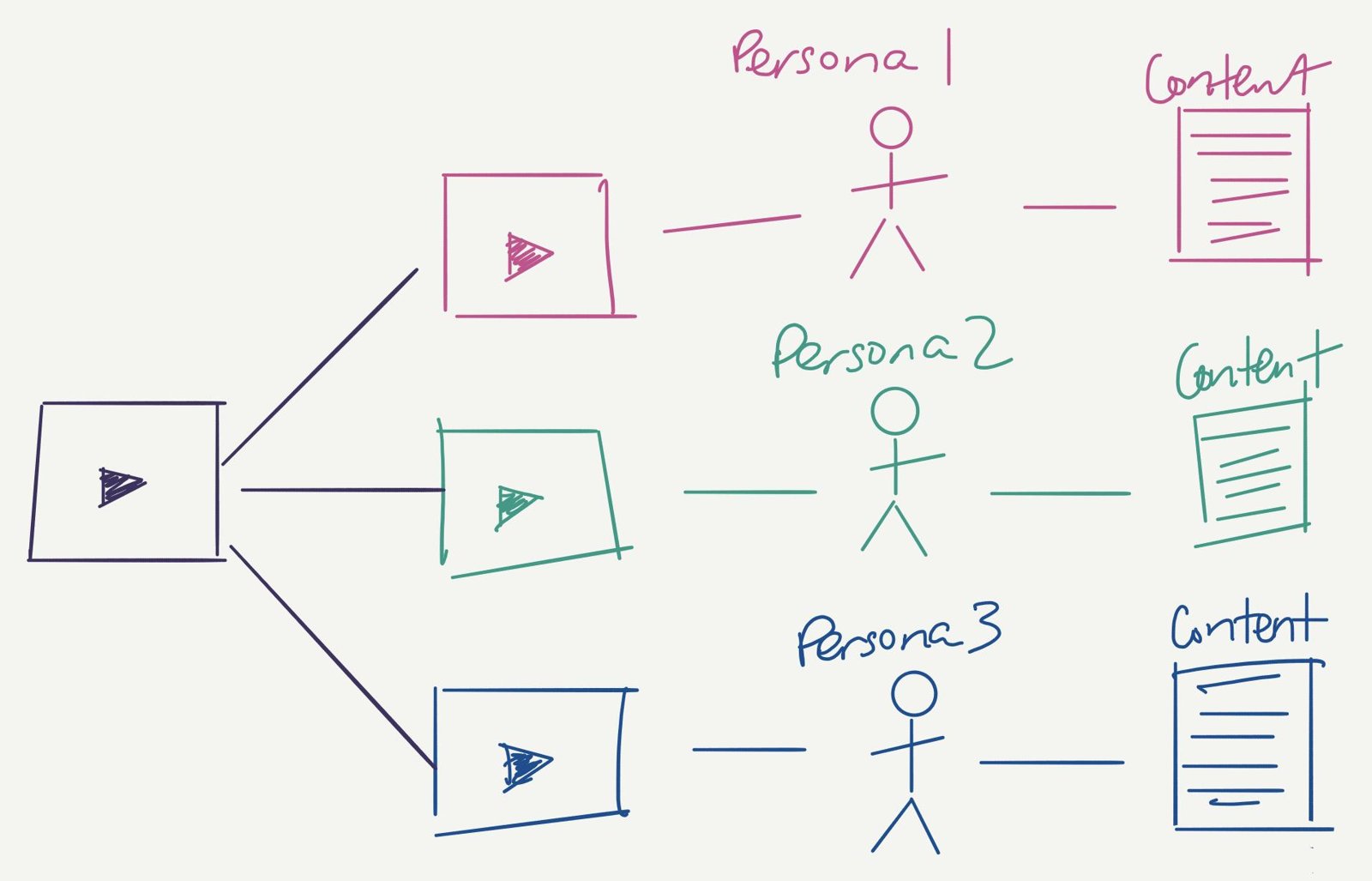
Here's how to scale content to infinite distribution:
- Create an anchor piece of content.
- Tailor it by persona, vertical, industry etc. that you want to target.
- Create audiences based on the same personas, verticals and industries.
- Run paid social campaigns to those audiences on Facebook, Instagram and LinkedIn.
Paid social gives you something Google Ads never can: unlimited distribution with customized content for the long tail because it's not based on how many people are searching for something.
Even better: the ad creative is a barrier to entry. It takes investment to create so many variations and most companies just aren't willing to invest.
You can actually run hundreds of pieces of the same content to different audiences at the same time, based on factors such as geography and language.
Paid social is not just for retargeting and lookalike audiences — it’s one of the most overlooked opportunities inside most B2B companies. Too many companies are missing out on a low effort, high ROI channel here.
The scale is there, you just have to build the content muscle to capture the value.
Drawing 72
Scaling Paid Media vs. Content
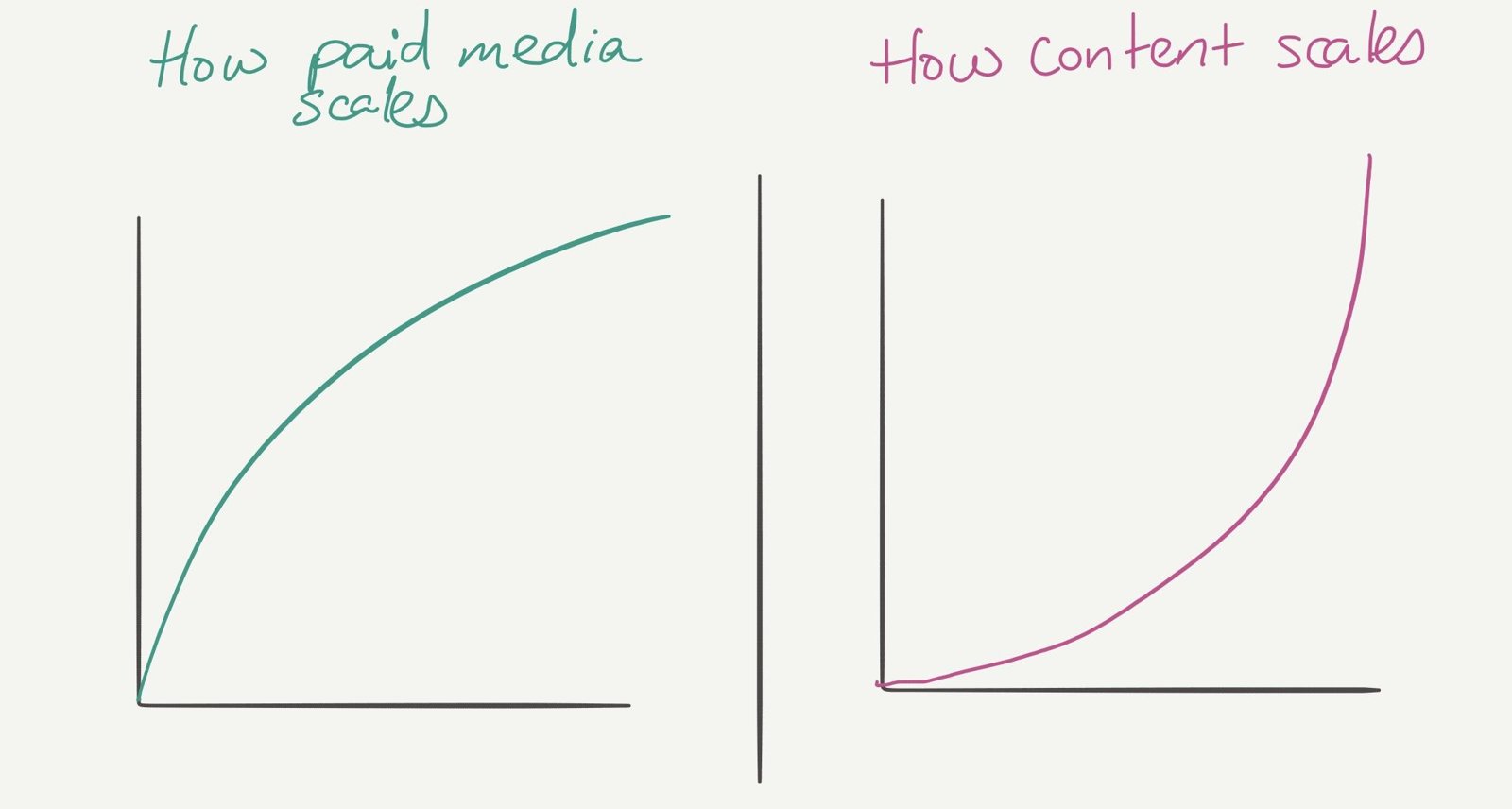
Paid media and content scale differently. That's the main reason why companies jump to invest in paid media while hesitating to invest in content. But if you’re doubling down on ads without the right content to support them, you’ll quickly find you’re having to spend more and more to outbid competitors.
One has a low-barrier to entry — money. The other has a high-barrier to entry — time, effort and creativity.
Building the content engine for a company takes patience — you have to play the long-game.
Content is also how you scale paid media faster. All kinds of possibilities open up beyond the usual campaigns that everyone else in your market is competing for.
Drawing 73
Paid Media + Content
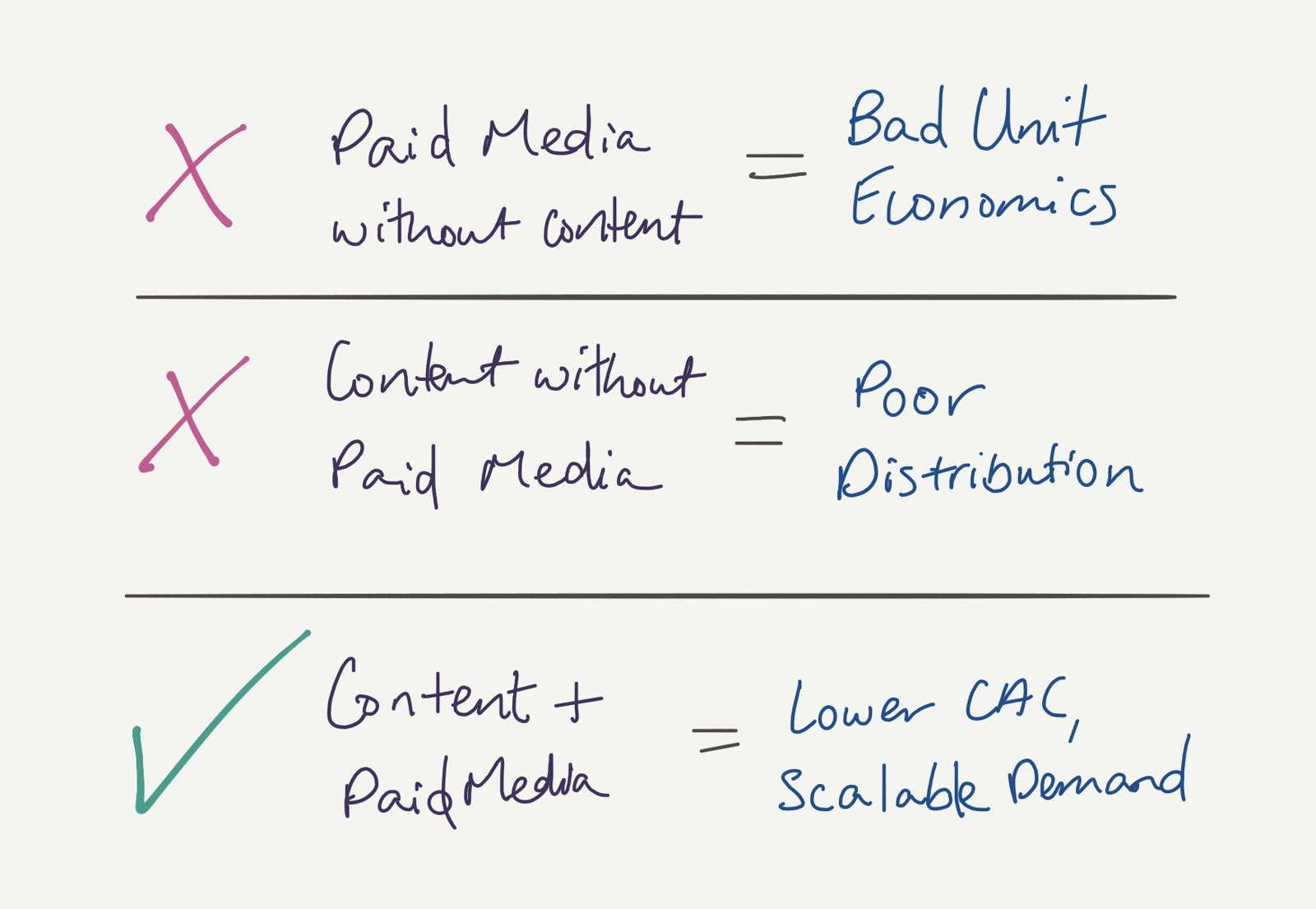
The room to spend on paid media is finite in most industries. You always hit a ceiling on spend after a while.
Similarly, if you’re creating content purely for SEO, you will hit a limit on how much traffic your content can drive.
It’s not that these plays are ineffective. They work, and most companies need to implement them.
But the real value available is when content and paid media work hand in hand to target ideal customers and create demand.
This kind of marketing takes a true understanding of customers, a belief in the power of content and a willingness to invest in paid media to build longer-term affinity within an industry.
In a demand engine driven by paid social, content + paid is how you get to infinite distribution. It’s also how you scale revenue significantly faster.
With content + paid, your competitors can’t just bid up in the same places you’re investing (like they can on finite, zero-sum channels like search) because you’re never playing the same game.
This also brings CAC down because the barrier to entry is creativity, not dollars.
Drawing 74
Product Roadmap vs. Thought Leadership
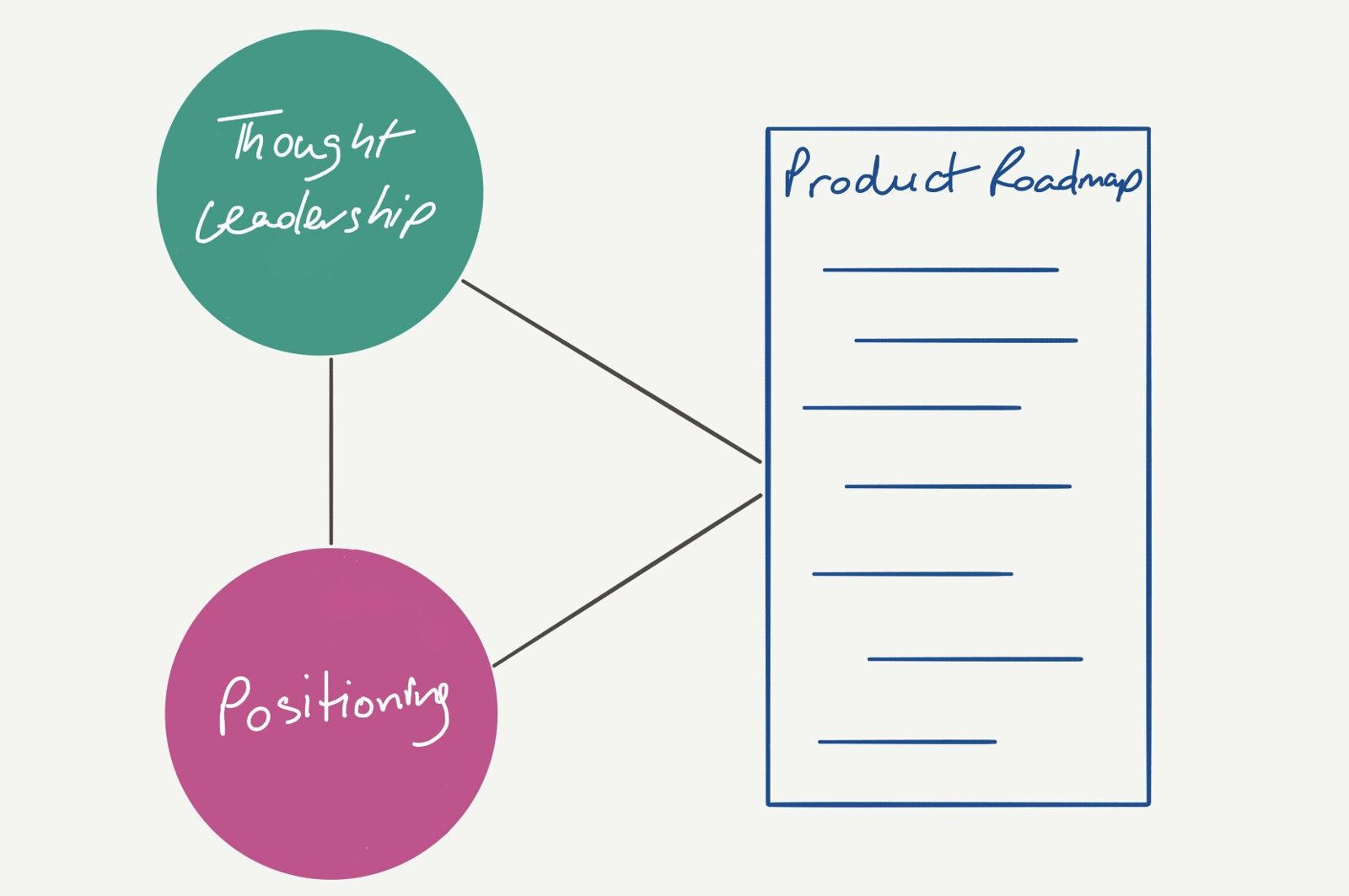
Your thought leadership content and your positioning/messaging should directly connect to your product roadmap.
What good is it to talk about the leading edge if your product can't deliver on that promise? You’ll surely only leave a potential customer frustrated and looking for a competitor who can deliver.
This is where Marketing and Product working together can create a significant amount of value for the business.
Marketers often don't spend enough time on this because near-term pipeline generation is always a priority.
But the more time that you spend aligning Product/Delivery and what the customer receives with what you promise/communicate on the front-end, the stronger the company's ability to scale.
Drawing 75
Content Roadmap
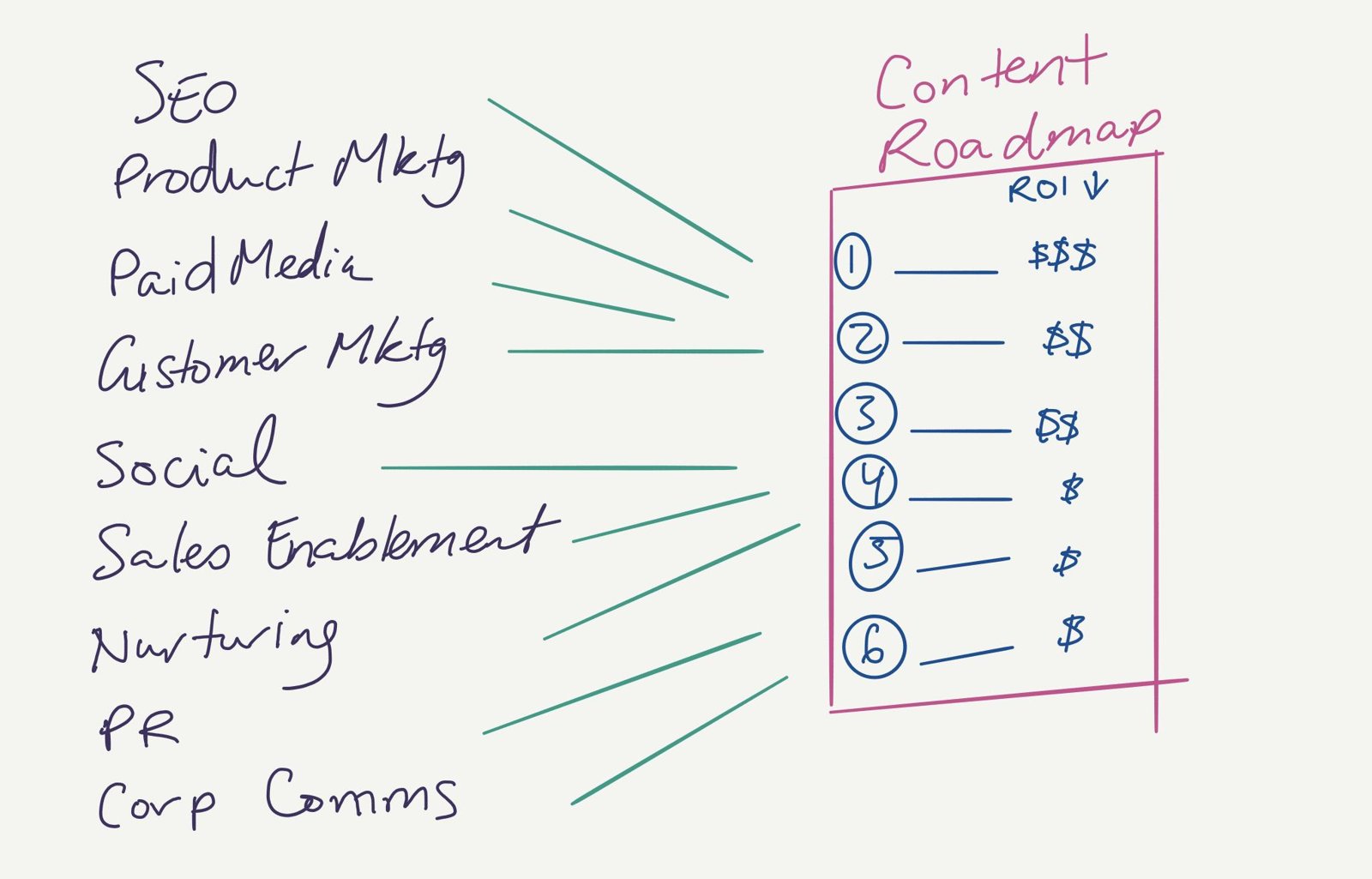
Too often, content marketing teams are reactive (responding to requests from the organization) or one-dimensional (e.g. only focused on SEO). Meanwhile, they’re working with limited resources.
Content plays a role across the customer journey and you need to produce it for multiple scenarios.
Requests come from all kinds of sources (salespeople, exec team, campaigns etc.) and content teams often have no way to prioritize. The team gets swamped, and the content that would actually make a difference to your customers and bottom line gets pushed to the bottom of the list.
Content leaders need to act like Product Managers and run a content roadmap process.
Prioritize the highest ROI items for the business against the limited resources available to produce content.
Don't just produce random content: build a content roadmap according to your priorities, then execute on that.
Drawing 76
Thought Leadership Impact on Hiring
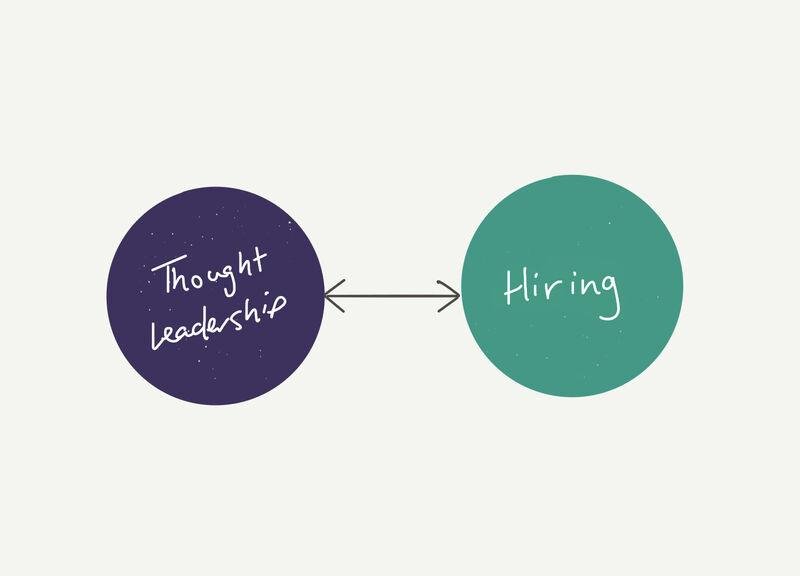
One of the most understated benefits of thought leadership content is its impact on hiring.
Yes, thought leadership content with a unique perspective can evangelize a new category and ramp up pipeline/sales.
But a secondary (and almost more important) benefit is that it helps grow the employer brand beyond just winning another "best place to work" or "fastest growing company" award.
The right kind of content signals to potential candidates what kind of world you are trying to build.
The more candidates that vision and perspective aligns with, the bigger the hiring pipeline it builds to help scale the company.
Your educational/thought leadership/category evangelism content doesn’t just help your market and customers to transform their lives. It also brings people into the mission and onto the team to help the market even more.
In a market where everyone is raising millions of dollars, more companies are hiring than ever before and compensation for roles has climbed 20-50%, using thought leadership content to attract the right candidates is a business priority that is critical to finding scale.
Keep reading SaaS Marketing Simplified
Want to talk through how this applies to your business?
Book a time to speak with our team.