
SaaS Marketing Simplified · Chapter 7 of 10: Sales
How should marketing and sales work together to win more deals?
By Shiv Narayanan, Founder & CEO of How To SaaS
Marketing only drives revenue when the handoff to Sales works. This chapter covers how buyers want to engage with Sales, why response time and the first call matter, and how marketing and sales can win more deals together.
Drawing 77
When Buyers Want to Talk to Sales
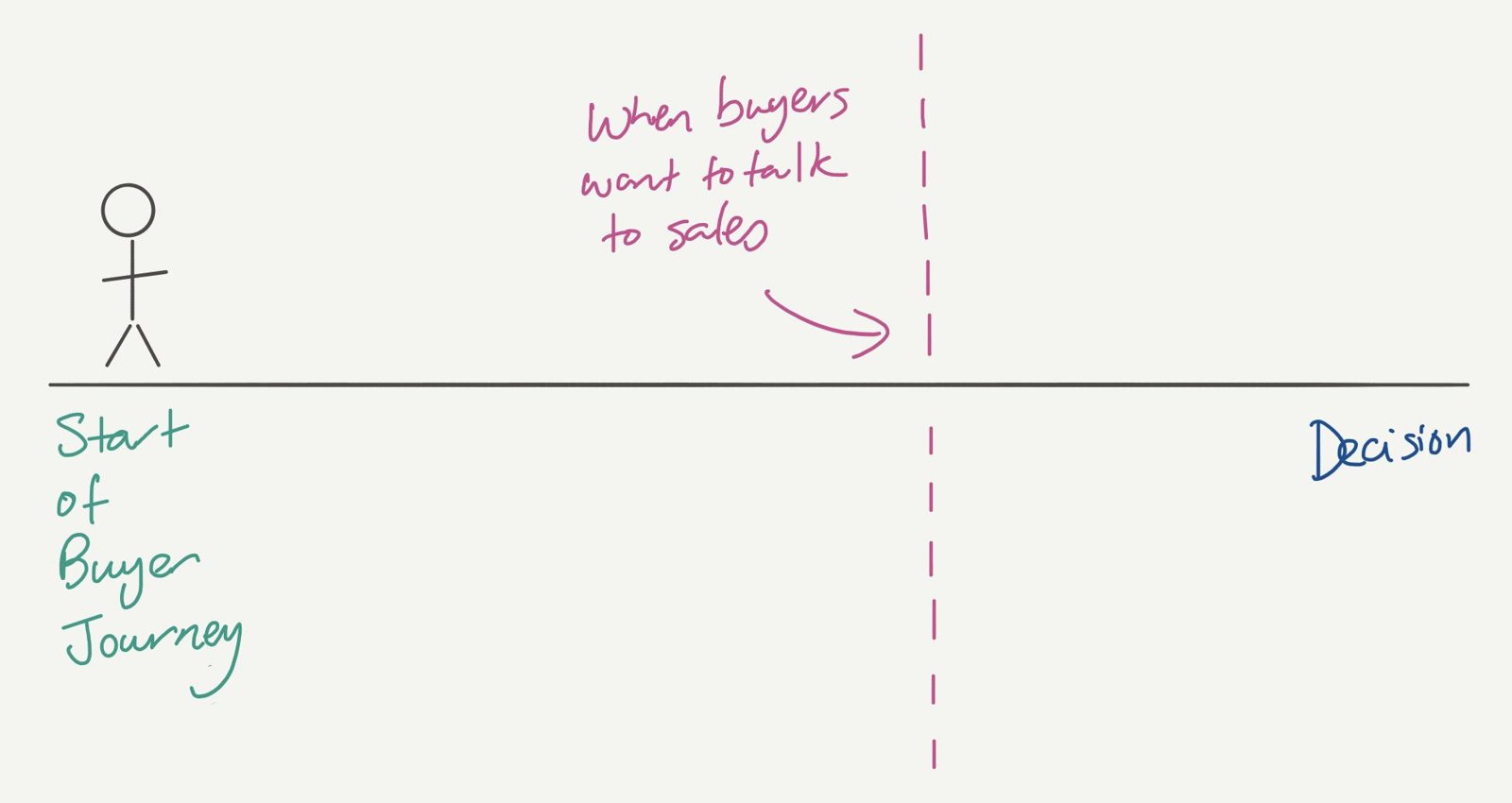
Buyers prefer to talk to Sales as late in their journey as possible. So what's happening in the time up until they fill out that demo form?
They are:
- Trying to understand their pain points and what their possible alternatives are
- Exploring solutions — yours and your competitors
- Building their requirements for an ideal solution
- Reading reviews and customer feedback of your product
- Trying to find as much content as possible to help them make their decision
In fact, 79% of buyers consume 3+ pieces of content before ever talking to a salesperson.
This is why Marketing needs to be focused on creating as much helpful content as possible, not just self-serving product marketing content.
The more content you create to help your buyer on their journey, the more likely you are to get them to a point where they know, like and trust you before they ever talk to a salesperson. If you try to force that sales conversation too early, you’re more likely to scare a potential buyer away.
Drawing 78
Parallel Organization
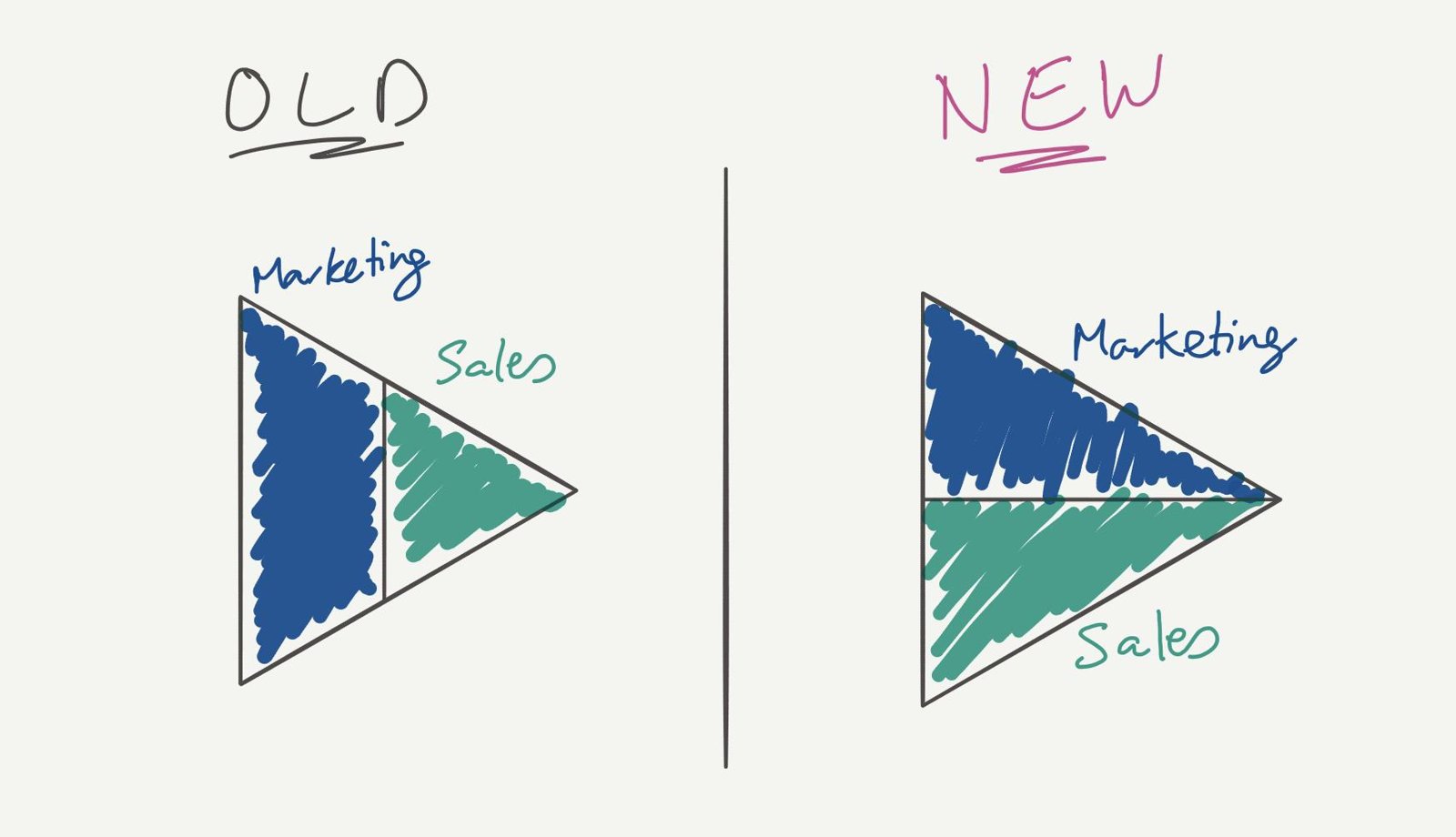
When you realize marketing needs to be revenue-accountable, you realize marketing needs to be involved at every stage of the sales process — not just until the hand-off.
Hand-offs are where Go-To-Market strategies break down. They’re why marketing organizations can hide behind MQLs or Leads as their core accountability when they are really accountable to revenue.
Did scanning 500 badges at that conference really matter? Ask a marketer in a hand-off environment and their answer will be very different from a marketer who is revenue accountable.
Revenue accountability is the only way to scale marketing's impact.
And, by the way, buyers want marketing to be more involved too. They want more content at every stage of their journey — and fewer interactions with sales people.
Listen to your buyers.
Drawing 79
Sales With Content
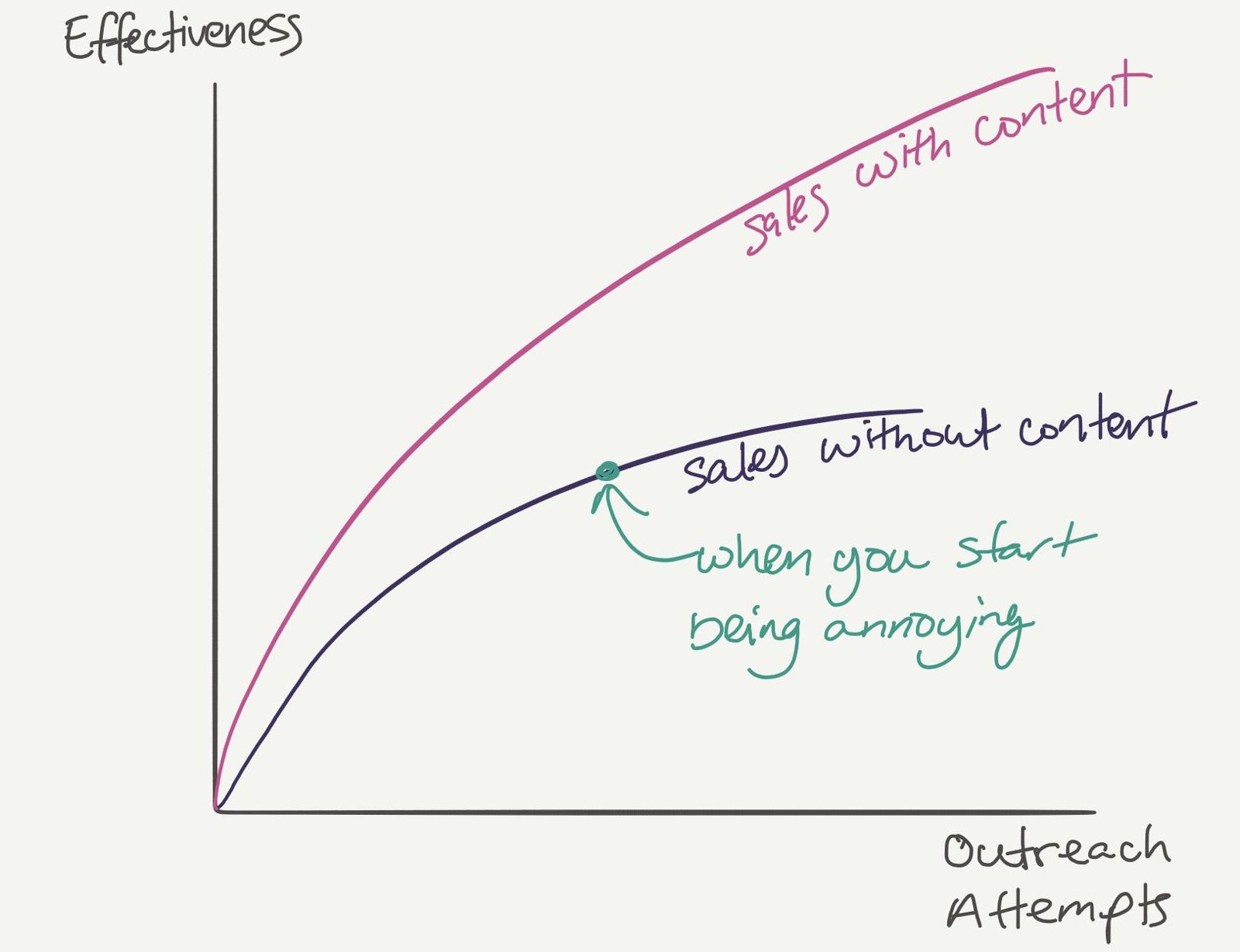
Content is heavily underutilized when it comes to improving sales results.
To equip sales to have better conversations, create content that helps:
- Educate the prospect (never a bad thing)
- Showcase that you understand their pain
- Build trust and credibility
When you do these three things, you earn the right to contact your prospect again. Plus, they look forward to hearing from you because you provide them with value. If you don’t educate, understand and build trust with customers, sales outreach can quickly start to feel like a nuisance.
Drawing 80
CX vs. 1 Rep
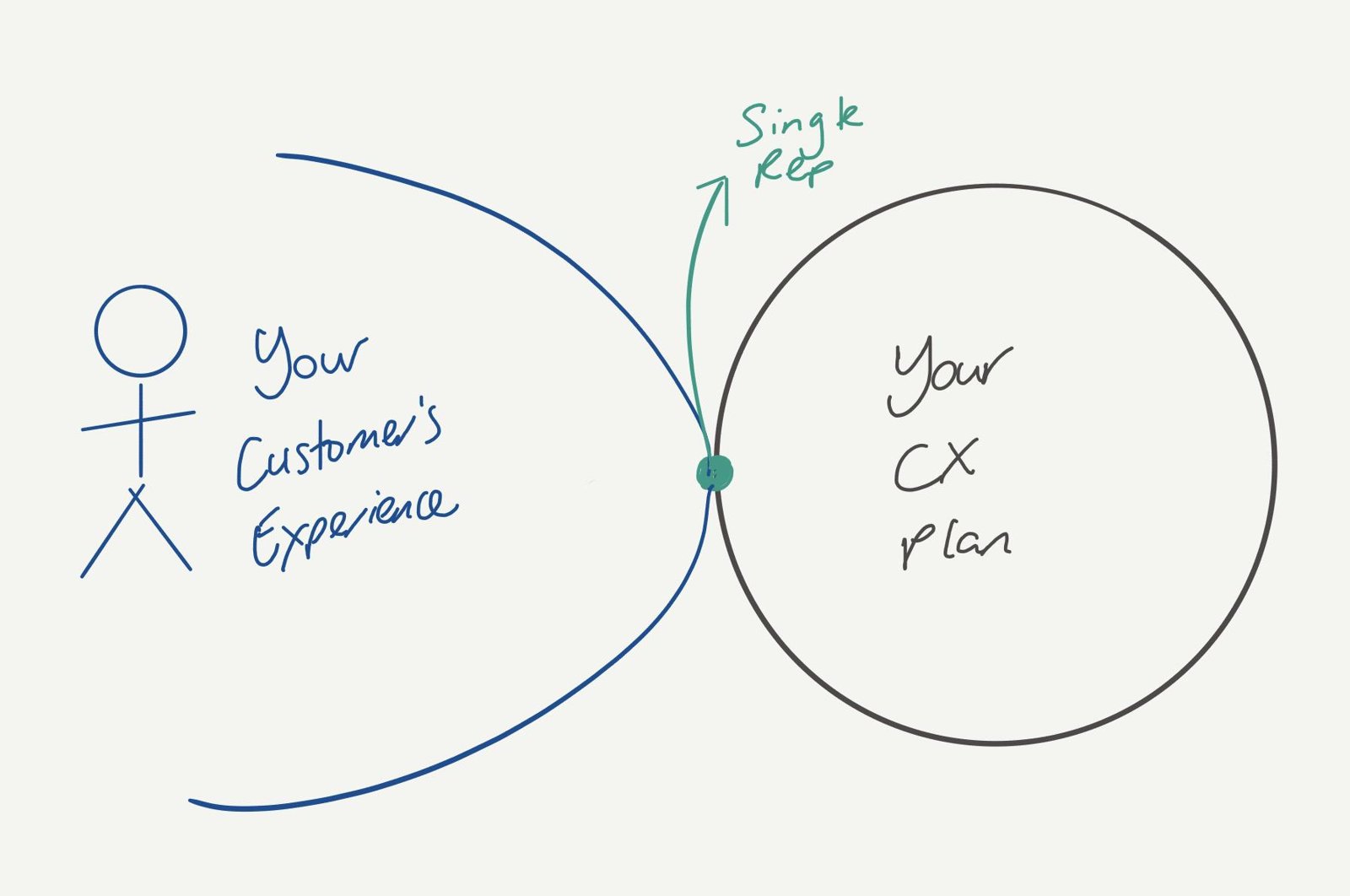
Your Customer’s Experience is only as good as the weakest link in their interactions with your company. One bad interaction with a poorly-trained team member can change how a customer perceives a business.
This is why Marketing is so interconnected to Sales, Product and Customer Success.
If you bring in a good- fit, qualified prospect through demand gen, it’s your responsibility as a marketer to ensure the other functions deliver a great experience to that customer.
That is not to say that you need to own those efforts.
It’s more to say that Marketing’s accountability extends beyond bringing in the lead and washing its hands clean.
Even if the leads are converting at a high rate, customer experience improvements can be huge growth levers because they drive loyalty, retention, expansion and referrals.
As stewards of the business, Marketers need to think more about loyalty, retention, expansion and referrals.
That’s how you connect Marketing to the bigger picture of the overall business.
Drawing 81
Sales Response Time
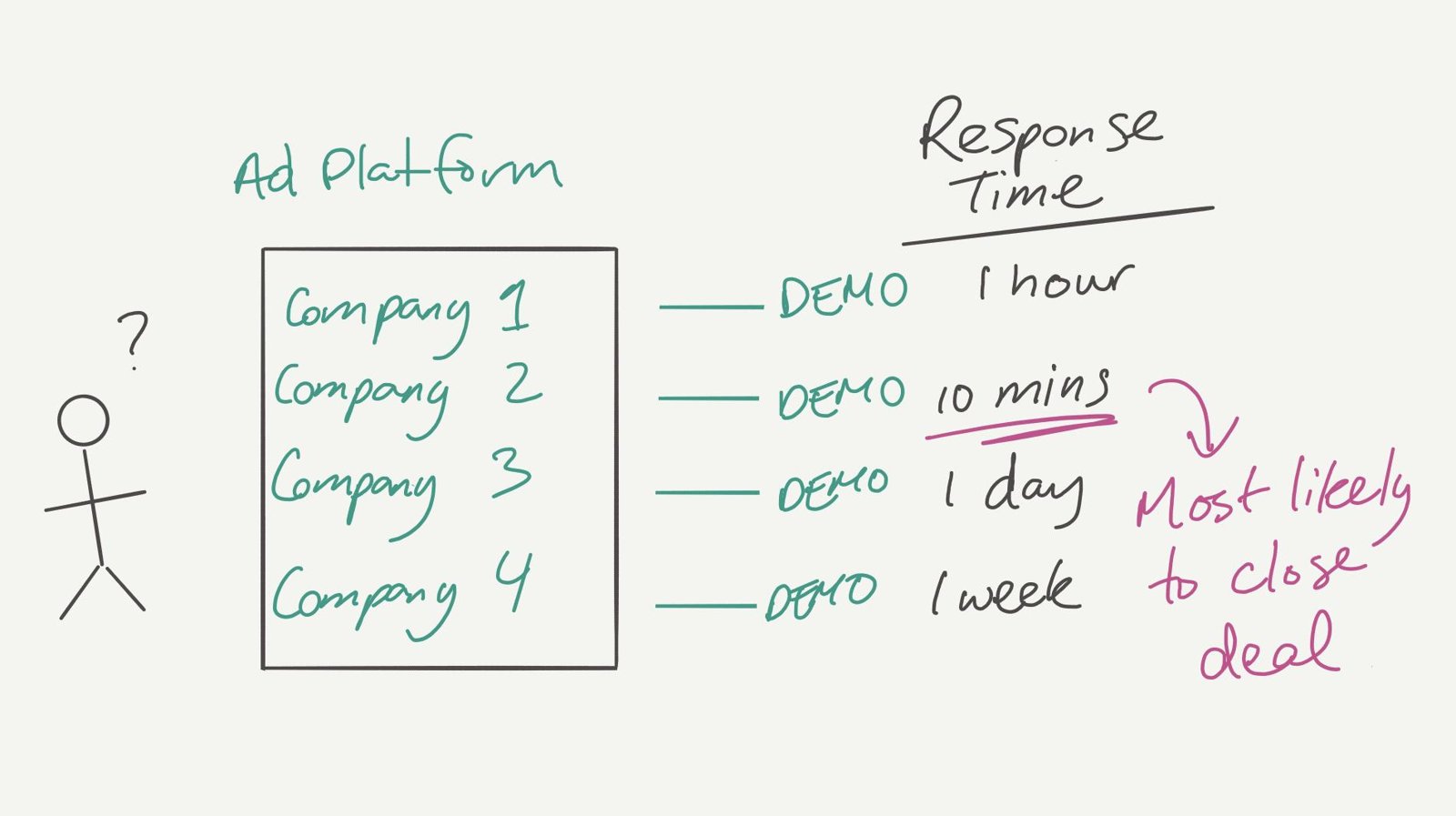
Your sales response time is critical to the effectiveness of your marketing programs. In many instances, prospects book a demo with you and your competitors at the same time (especially if they did research online).
The person who contacts the prospect the fastest has a huge opportunity to set the right frame for the sales conversation.
Not only that but you get a chance to speak to the person while they’re actually trying to resolve their pain.
Each hour/day that passes before the first contact lowers your odds of closing the deal.
If you take a week, you're likely putting that lead into the "No response" category.
Bad follow-up can be the reason why a good growth channel is overlooked.
Act accordingly.
Take a look at the next drawing, Demand Gen Efficiency vs. Sales Call, to learn how marketers need to get involved with the sales process.
Drawing 82
Demand Gen Efficiency vs. Sales Call
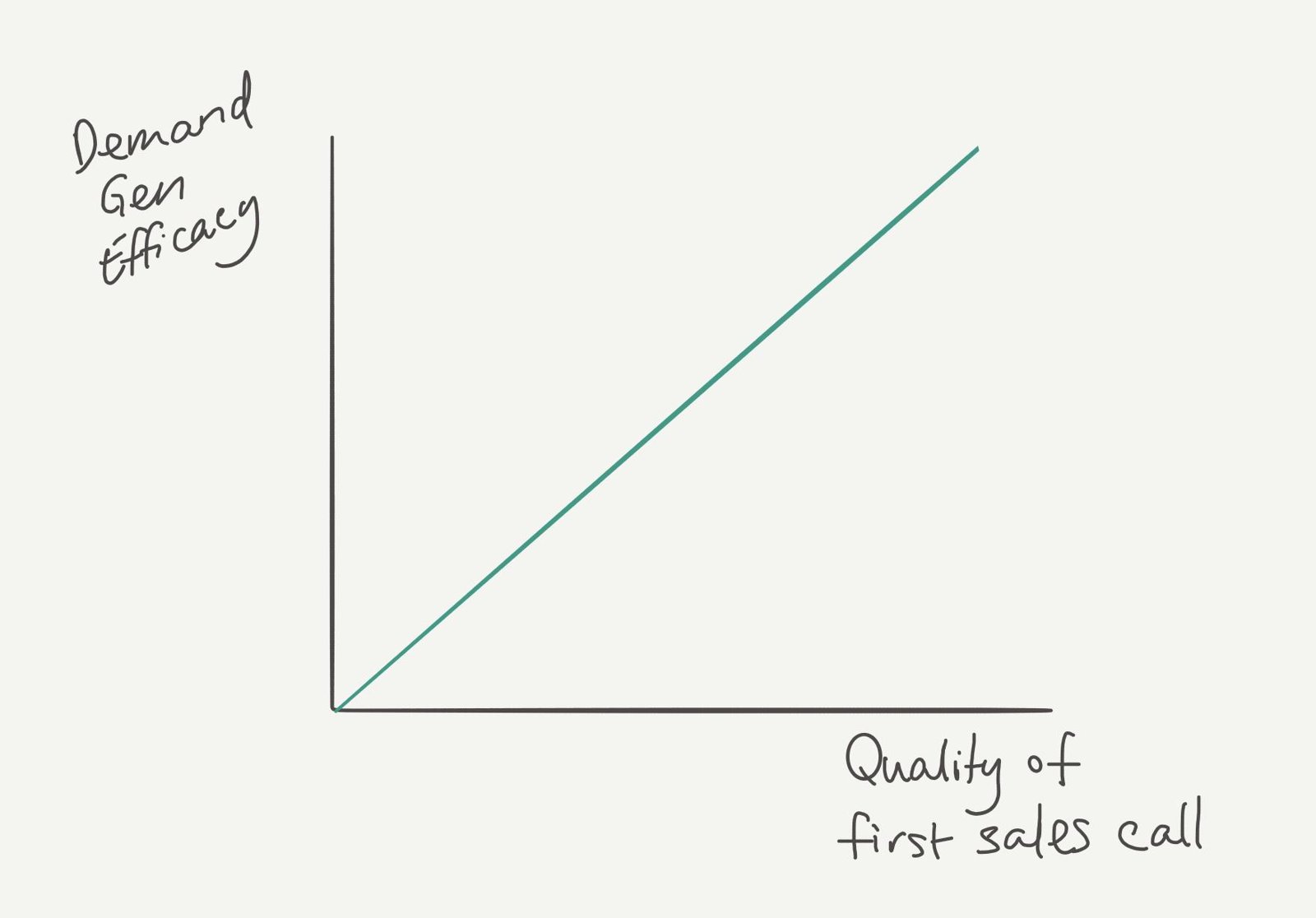
The first sales call can make or break your demand gen efforts. Even great-fit leads will drop away if they have a negative experience with Sales.
That's why marketers need to pay attention to how good the sales process is:
- Did Sales call the prospect in 10 minutes? 10 hours? 10 days?
- Did the call break the experience of the buyer in any way?
- How was the quality of the interaction?
- Was the sales rep adequately prepared to handle the call?
Good marketers do this work: they extend their efforts to fine tune conversions beyond what happens on a webpage.
This means doing things like:
- Listening to recordings of sales calls.
- Being a part of how sales reps are on-boarded and trained.
- Communicating with sales reps on the importance of logging sales call info into the CRM. This intel can help you to improve campaigns.
- Changing broken processes to improve the experience. For example, why is the prospect called by an SDR who is not allowed to answer basic questions?
This requires a paradigm shift and putting an end to the Marketing vs. Sales battle. Marketing is Sales. Sales is Marketing.
Drawing 83
SDR Demo
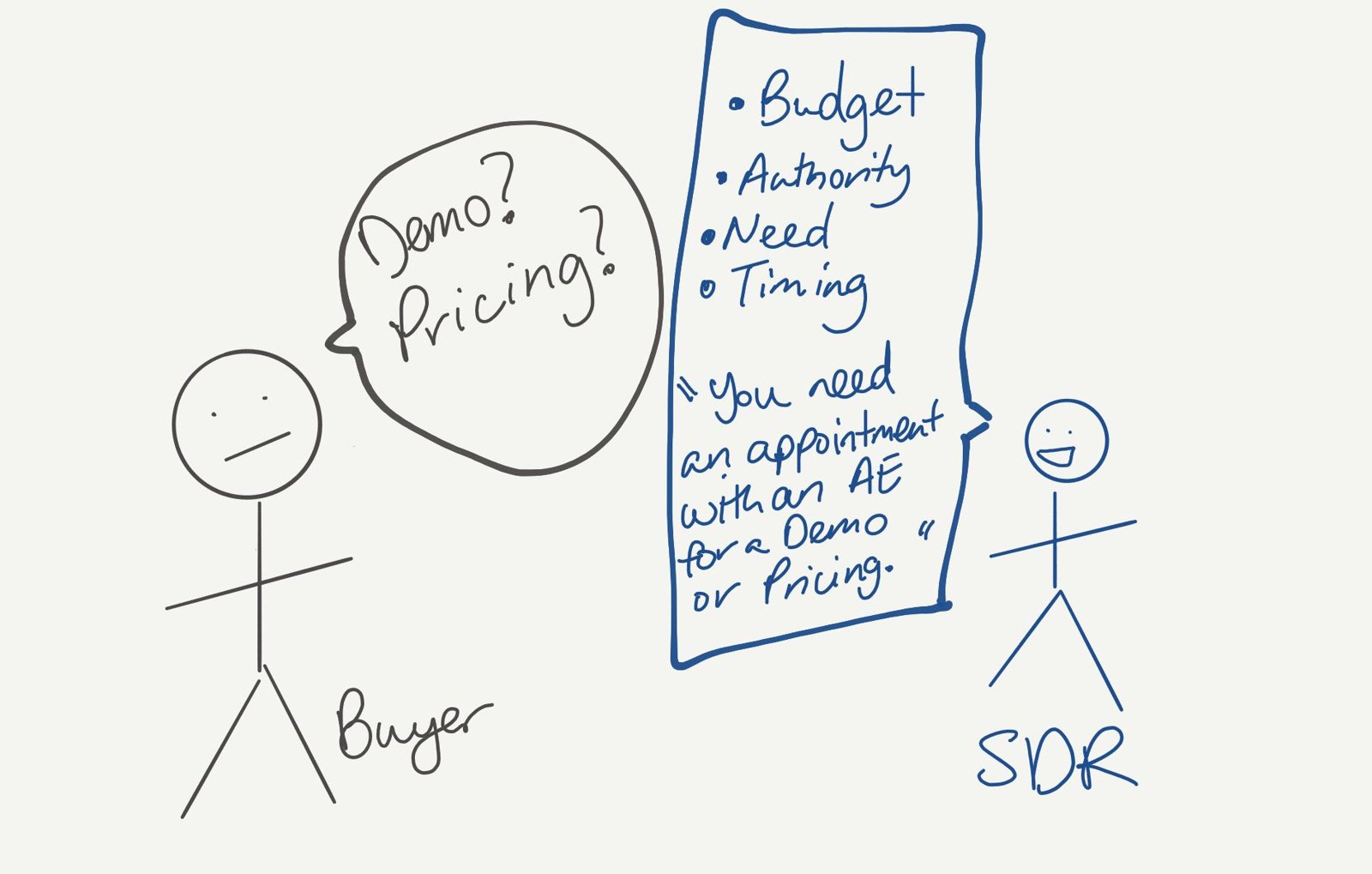
Somewhere along their journey, companies decide to treat buyers like mice in a maze. Want a demo? Sure, you just have to:
- Fill out a form.
- Schedule a call with a Sales Development Representative (SDR).
- Wait.
- Talk to the SDR. They won't give you a demo but will ask you all their BANT (budget, authority, need and talent) questions and then book you call with an AE
- Wait.
- Talk to an AE — or just go jump off a cliff
Before you know it, 2-3 weeks have passed. The buyer has lost their urgency or has found someone else who engaged them more quickly in solving their problem.
This type of workflow also kills some demand gen programs. It might take a lot of effort to get the right prospect in the door, only to have them end up as Closed Lost due to a bad sales process.
Start with the buyer. Remove the hard lines between SDRs and AEs.
Drawing 84
Types of Reps
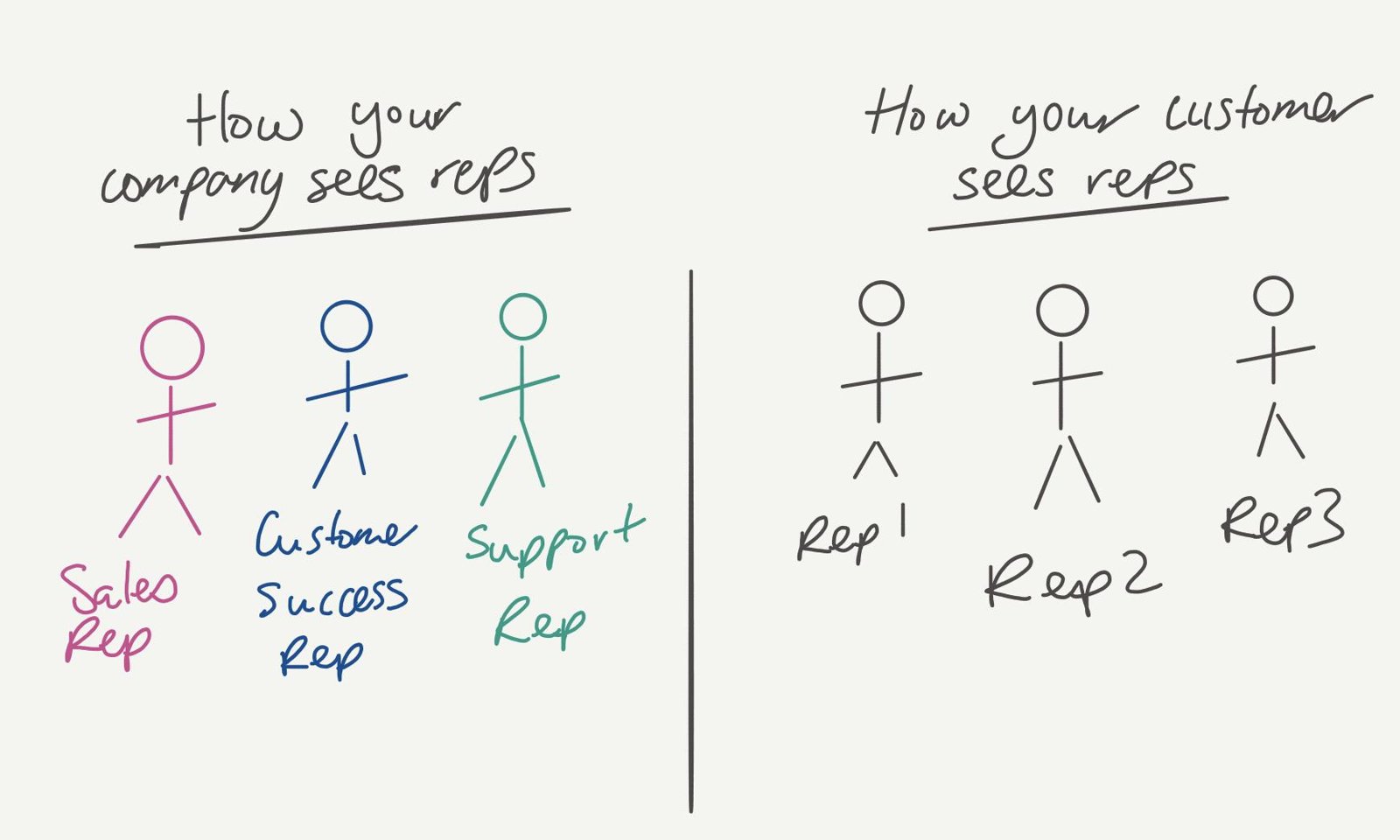
One of the most common ways companies ruin customers' experiences is by categorizing reps and limiting their ability to handle certain questions.
- Want a demo? SDRs can't help you. Talk to the AE.
- Want to be onboarded? AEs can't help you. Talk to the Customer Support (CS) team.
- Want support? Sales Engineers can't help you. Talk to the support team.
- Want to buy another product? Support reps can't help you. Talk to the farmers.
To your customer, one rep is an entry point to everything your company has to offer.
Each time you create an internal gate based on a job title, the customer has to jump through a hoop to get where they want to go.
You can create much better outcomes by empowering reps to address more inquiries at the first point of contact and deliver better experiences.
All your marketing efforts will be for nothing if the leads you generate leave out of frustration in the closing stages of the deal. First call resolution should be a sales metric just as much as it is a support metric.
Drawing 85
Price Transparency
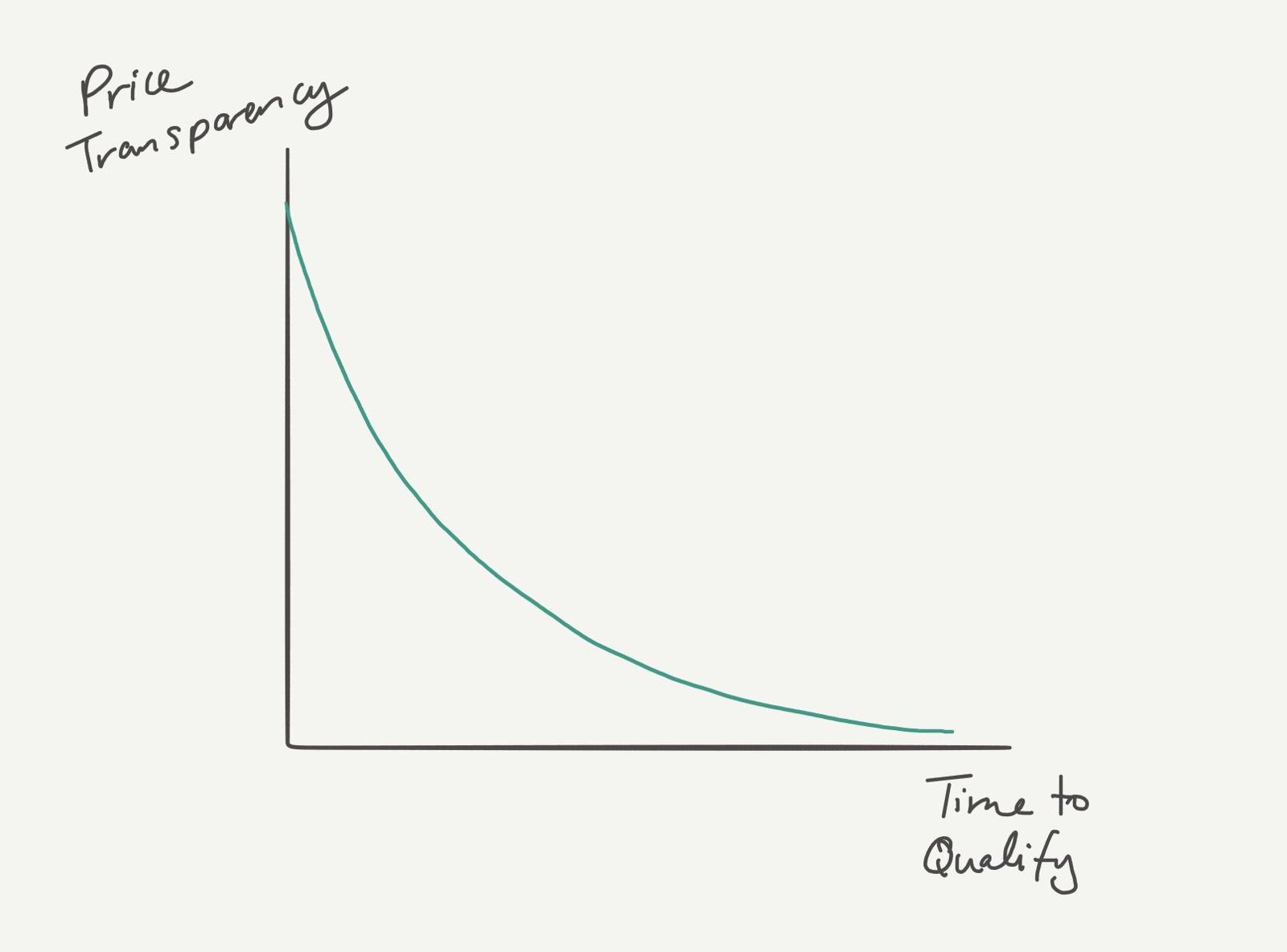
Increased price transparency helps everyone win.
- Customers win because they can self-serve and identify if a solution is a good fit for them.
- Sales wins because they have conversations with more qualified prospects who understand what they're in for.
- Marketing wins because all MQL thresholds include price education earlier in the buyer journey.
Most importantly, efficiency increases because you spend far less time having customers jump through hoops to get a pricing 1-pager they can’t afford.
Boldly put your starting price point on a pricing page for the world to see — even if you're a B2B enterprise company with a $100K offering.
Your whole Go-To-Market motion will improve and your buyers will trust you more.
Drawing 86
Discount vs. Close Rate
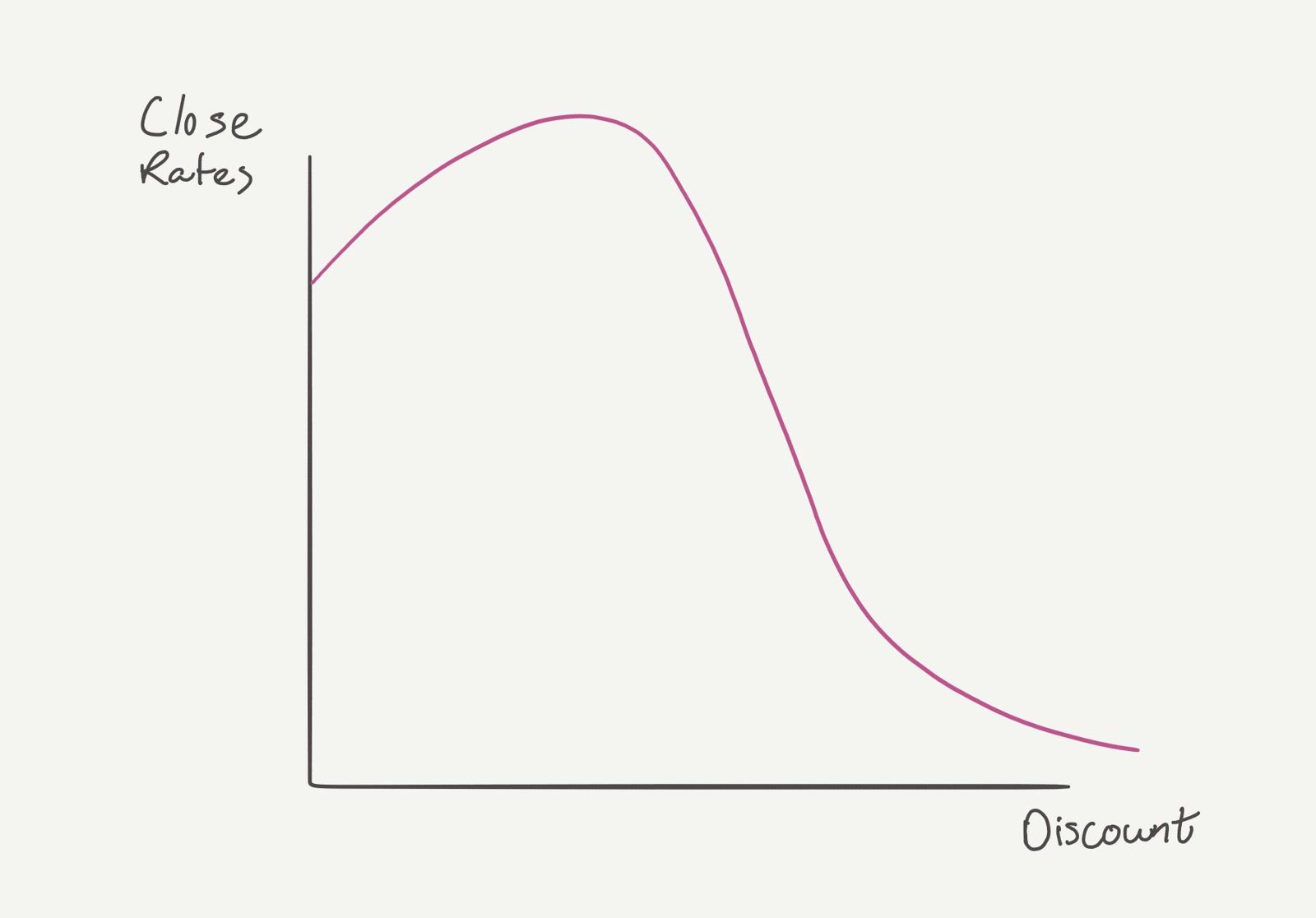
Discounts can be helpful when it comes to closing deals, but they're not nearly as helpful as a lot of salespeople think.
Your customer has a pain point that’s significant enough for them to look for a solution in the first place. Their willingness to pay for a solution is connected more to your ability to solve that problem and less to how much of a deal they can get.
Beyond a certain percentage, a discount destroys work done by Marketing and Sales to communicate the value of your solution.
Even if the customer ends up buying, the operating model around the deal will break over a certain threshold. The costs to deliver are the same — the margin just decreases.
Lower margin = lower access to resources = lower ability to deliver to customers.
This is why Marketing and Sales need to hold firm on pricing.
Discounts are fine as a small give. They should not be the reason deals close.
Drawing 87
Increased Sales Reveal Broken Processes
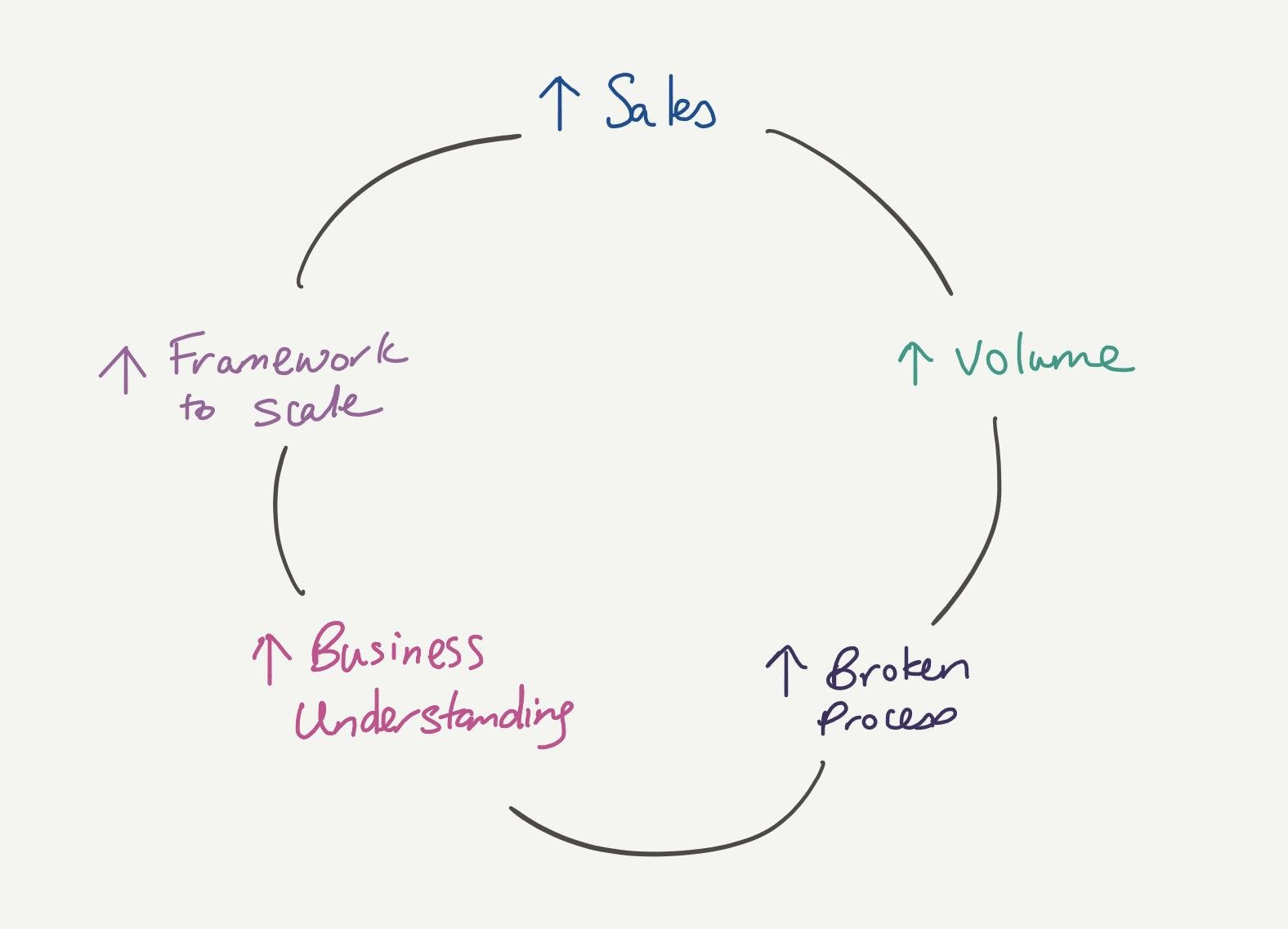
Increased sales volume breaks internal processes. As you close more deals, your organization has to figure out a way to deal with increased complexity.
Otherwise, internal mechanisms start breaking down and customers start having negative experiences. Maybe customer service wait times increase, or the Product team can’t keep pace with the updates customers are requesting. Some customers might leave; others might share their negative experience and warn people off.
To prevent this, questions like the following become increasingly important as your sales volume increases:
- How can we deliver faster?
- How can we increase automation across the business?
- How many people do we need to scale?
- What will our margin be as we scale?
- What is the core business we are in?
- Which opportunities should we say no to?
- What kind of operational framework will help us scale to the next level?
- What should our product focus on to help us scale even more?
- What are the bottlenecks to our scaling?
- Who do we need in which seats to scale?
These kinds of questions only become relevant and evident as sales volume crosses certain thresholds. This is one of the most undervalued contributions of sales. As you close more deals, the organization has an opportunity to examine key strategic questions that would otherwise remain unaddressed.
As you answer those questions, sales increase even further and the process repeats all over again.
Better pipeline closes more often and doesn't churn as quickly. It has lower acquisition costs and is more efficient. It's also how Marketing helps the business grow faster
Drawing 88
Voice of Market
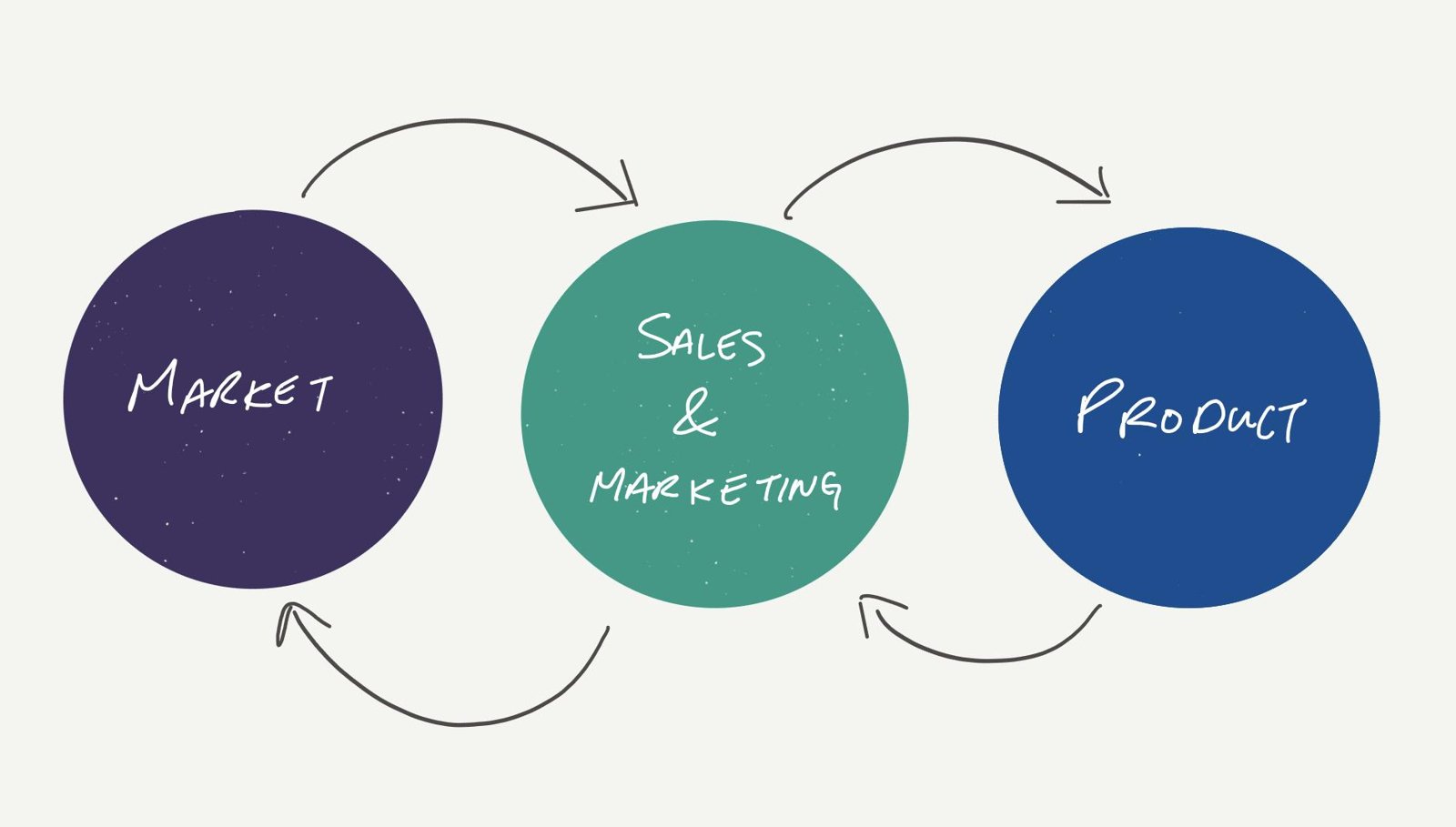
One of the biggest ways Sales and Marketing can make an impact on the business is by collecting feedback from the market and by communicating/championing that feedback to product teams.
Product teams working in isolation can easily slip into focusing on the features they are excited about, rather than what the market wants. The result? A product that can’t match up to competitors and falls short of customer expectations.
By connecting Product teams to market feedback, marketing leaders can help:
- Overcome major roadblocks in the sales process.
- Uncover critical missing features that impact close rates.
- Create ideal pricing structures in alignment with customer interests.
- Find growth opportunities, e.g. additional products and services requested by customers.
Having a formalized feedback mechanism that channels this input to product teams can create significant ROI on Marketing and Sales — well beyond the ROI on standard Go-To-Market activities.
Keep reading SaaS Marketing Simplified
Want to talk through how this applies to your business?
Book a time to speak with our team.