
SaaS Marketing Simplified · Chapter 5 of 10: Demand Generation
How do you build a demand generation engine that drives pipeline?
By Shiv Narayanan, Founder & CEO of How To SaaS
A demand generation engine compounds over time when it’s built on the right mix of channels, assets and budget. This chapter covers how to prioritize demand gen activities, measure their return and grow pipeline steadily.
Drawing 46
Hot Warm Cold
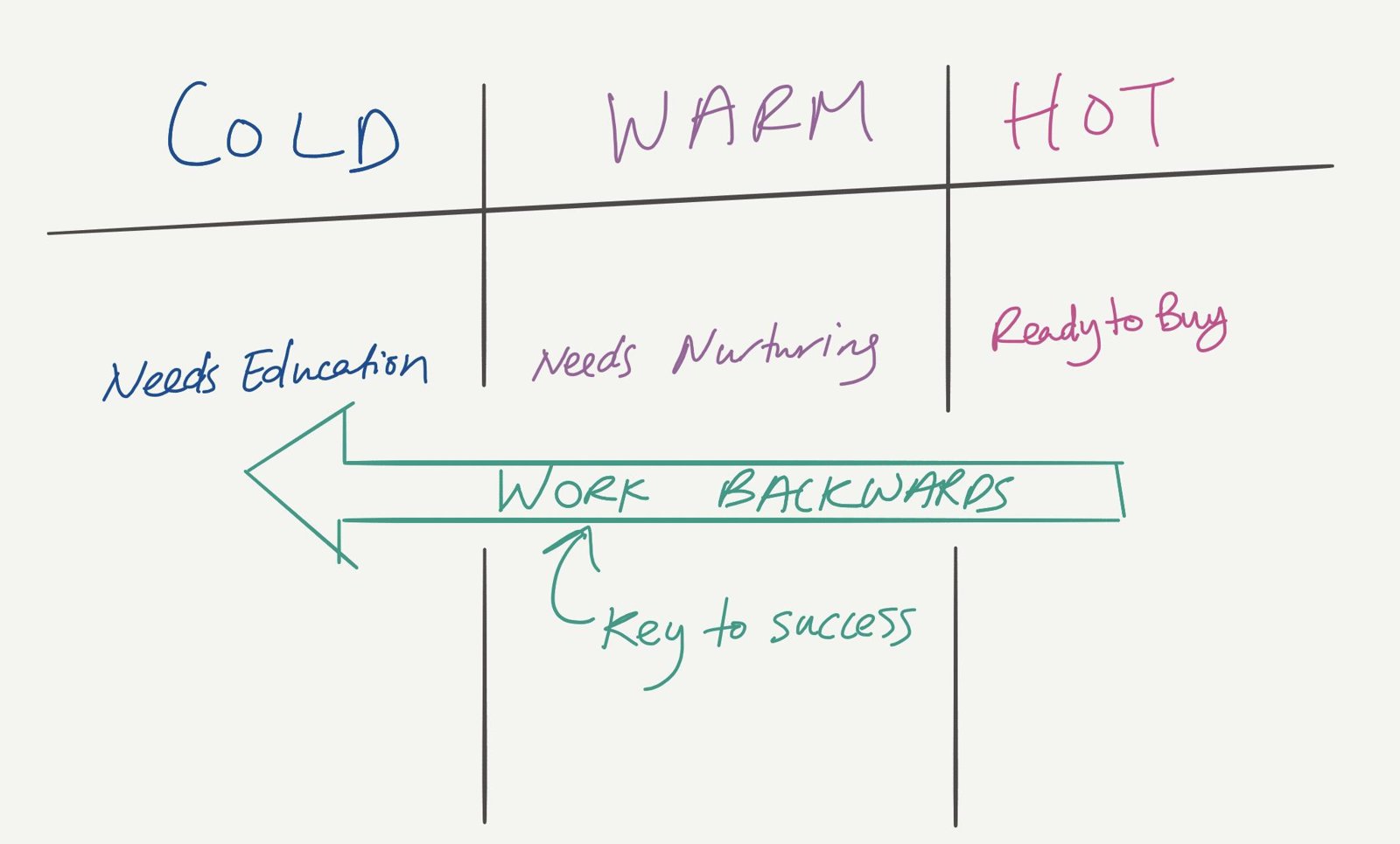
One of the biggest mistakes companies make is to start writing random blog posts before they put in place the core pillars of the marketing engine.
This can be a huge waste of your resources.
When you have a limited marketing budget, starting with people who are ready to buy today is the best way to generate quick wins. This might mean creating a competitor comparison guide or a pricing page.
Then, you can work backwards to people who are trying to solve a problem and need nurturing. Provide them with the resources they need to help make their decision, like an email nurture sequence or some case studies.
Only then should you finally arrive at people who have never heard of you and are not in a buying window. This is when it makes sense to create educational blog posts and social content.
This process takes time and patience. Over time, however, you end up building an engine that compounds upon itself and lets you go after cold audiences in a much more convincing way.
Drawing 47
ROI vs. Effort
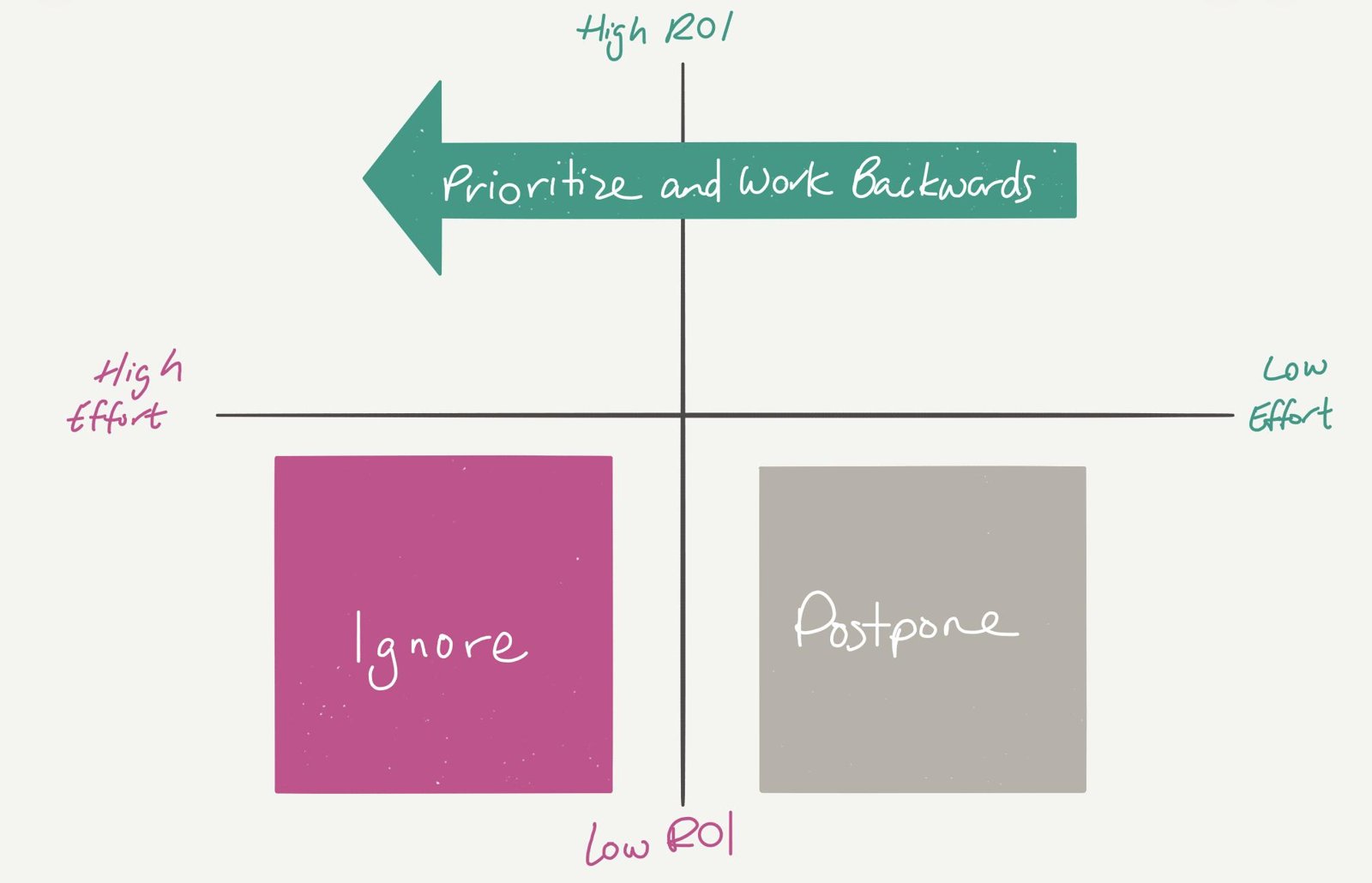
Mapping marketing opportunities against effort/investment tells you where you should really be focusing.
The key to success is balancing activities that are easy and have low barriers to entry (e.g. paid media) and activities that require more effort and have high barriers to entry (e.g. content).
You need to do both as you scale a business.
High ROI/low effort avenues often buy internal political capital. That's why doing them first is usually a good place to start — they help you get internal buy-in to do high ROI/high effort activities.
As the business matures, most of the enterprise value is created by high effort activities that generate high ROI because that's how you close more deals, grow faster and win over a market.
Drawing 48
Demand Generation Across Marketing
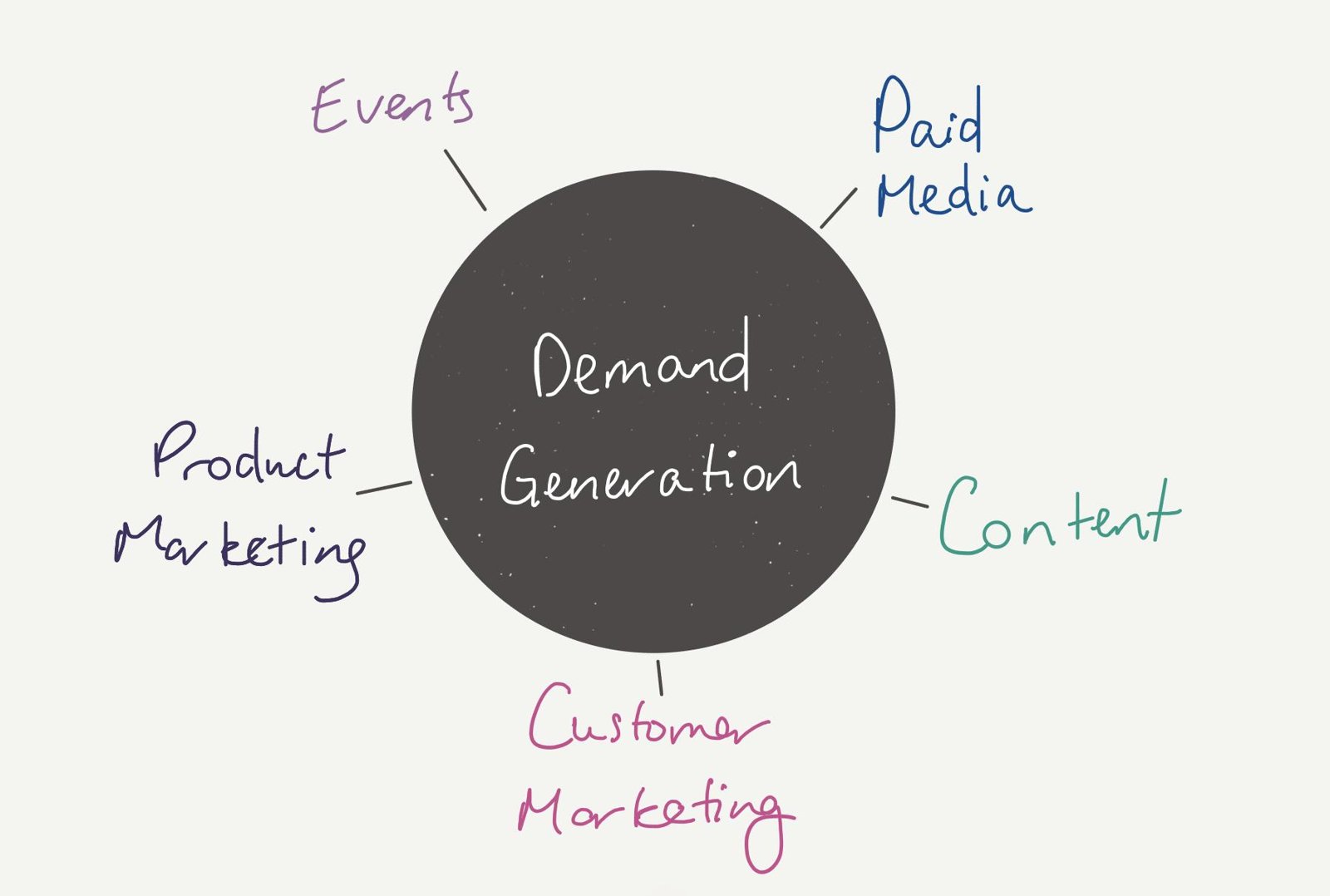
A common misconception inside companies is that demand gen purely refers to one subdomain of marketing — for example, paid media or ABM.
Some mistakes we see inside these companies:
- Content and demand gen teams are separated inside marketing and operate almost independently.
- Some activities get way more funding than others. This is why some companies over-index on events while spending nothing on paid media.
- The team lacks the skill sets to deliver on other areas of demand gen — e.g. SEO, customer marketing or product marketing.
- The team is not revenue-driven. It’s constantly distracted by the organization’s needs for other activities (e.g. sales enablement or corporate comms) that do anything but drive demand.
What this way of thinking misses is that demand gen is the overall outcome of all kinds of marketing activities coming together.
ABM alone is not demand gen. Paid media alone is not demand gen. SEO alone is not demand gen. Nurture content alone is not demand gen
Demand gen holistically brings the sub-functions of Marketing together to drive buying interest and intent from the market, prospects and customers.
Drawing 49
Dividends From Marketing Assets
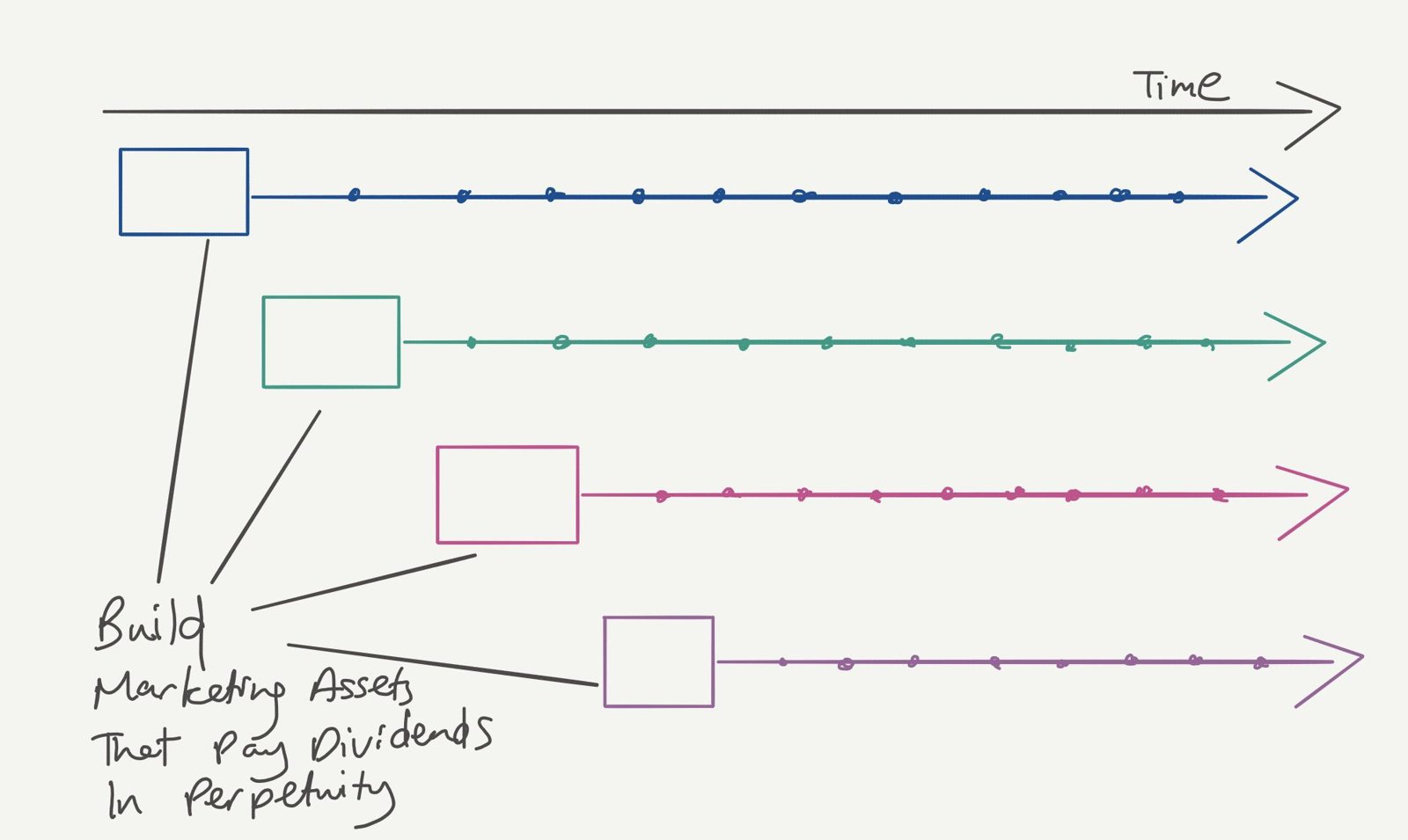
Build marketing assets that pay dividends in perpetuity. One-off programs require repeated effort to sustain and just don't scale.
That's how you keep your marketing spend, CAC and team small and your contribution to revenue big.
Drawing 50
Budget vs. Performance
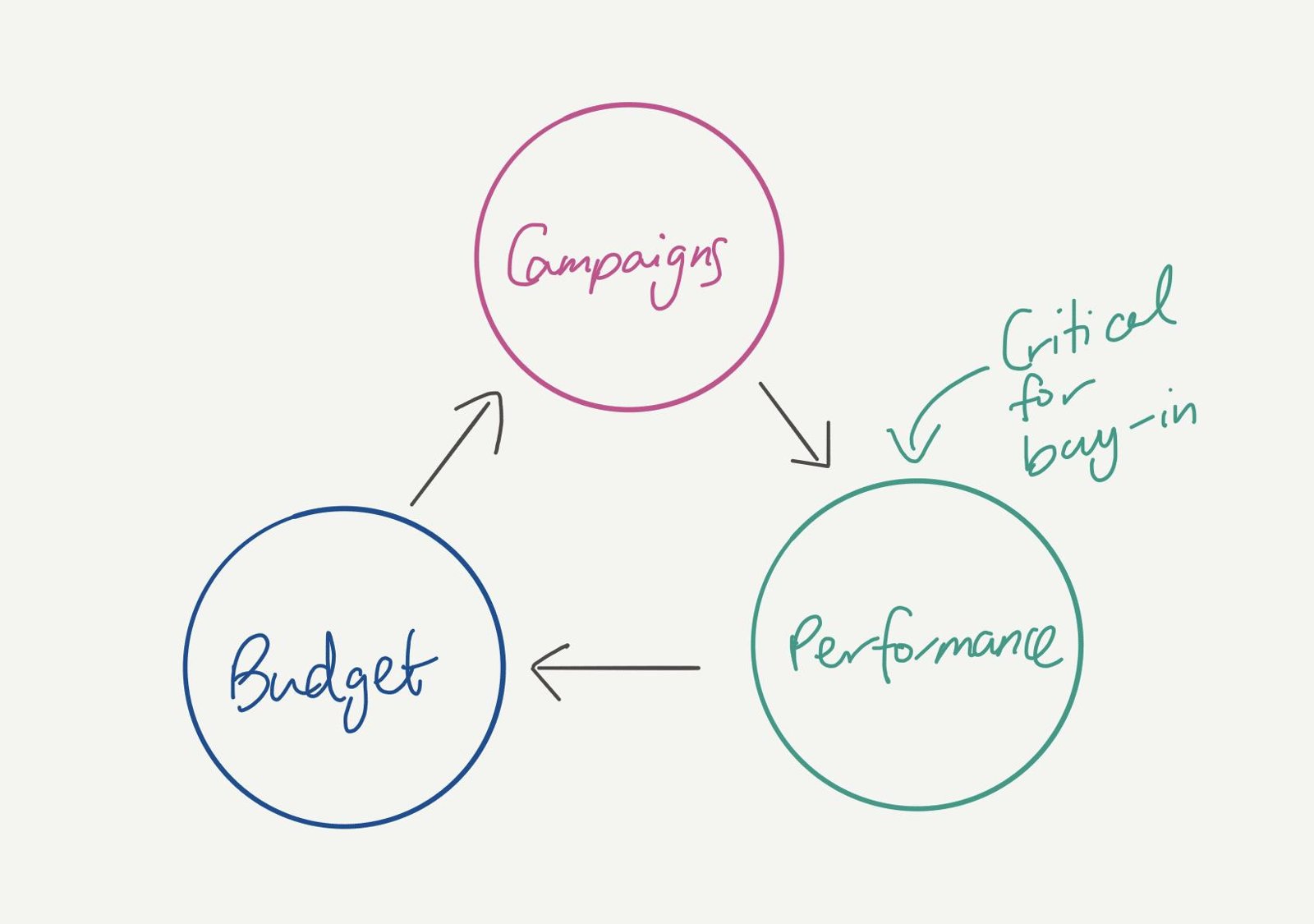
One of the most common complaints from marketers is that their CEO/board won't give them more budget.
While it is true that some CEOs don't value marketing as much as others, all CEOs would happily allocate more budget to an area that is helping the business grow faster.
If you're starting with a small budget, as a marketer, it is on you to figure out how to deliver value from that budget.
More than that — it’s on you to show the impact on the business of that limited budget.
Then, ask the CEO/board for more budget by pointing to the potential to scale performance even more.
There’s virtually a 100% success rate if you follow the above process.
Drawing 51
Pipeline Growth Over Time
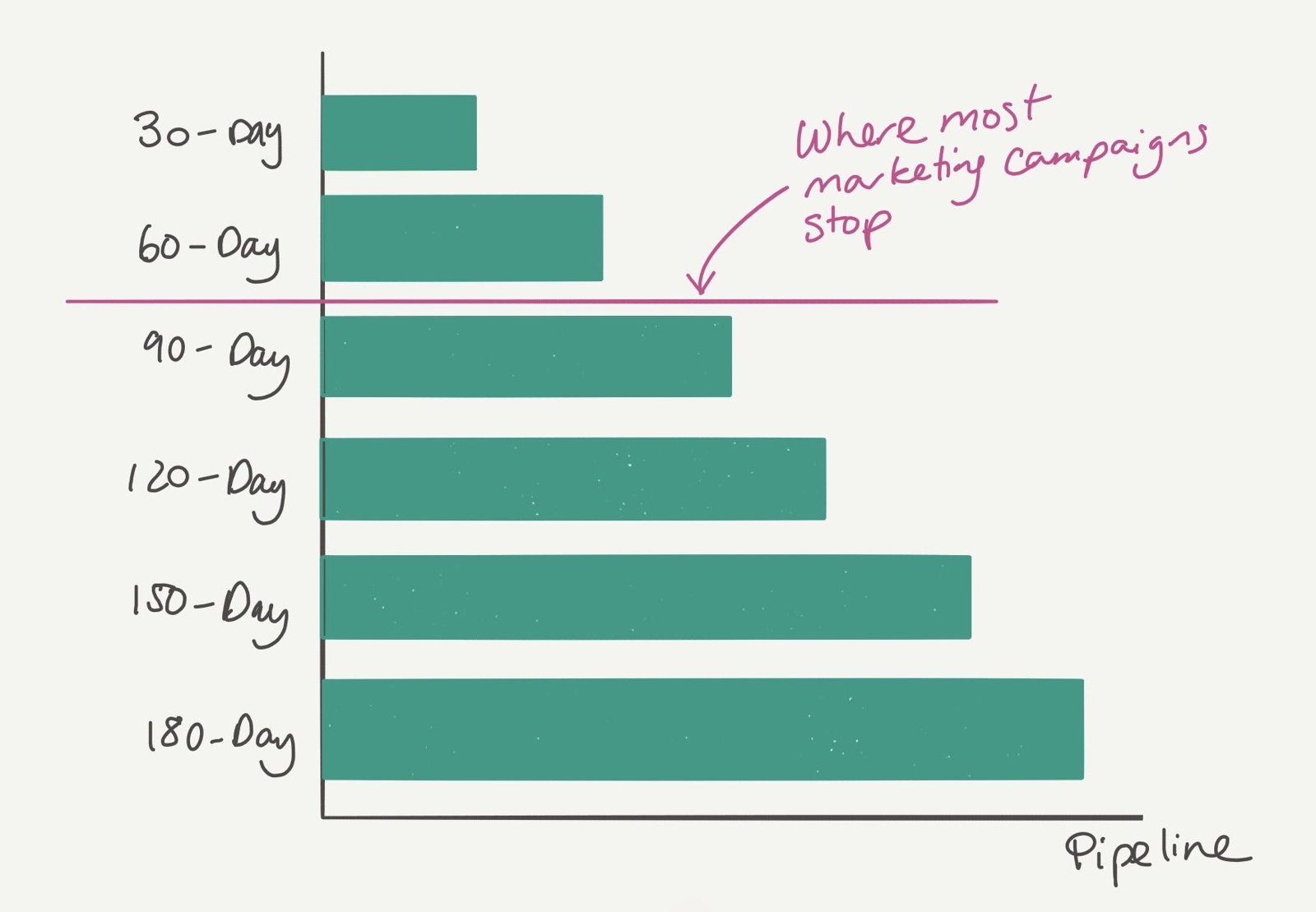
Most marketing campaigns stop getting funding well before their true pipeline value is understood.
Why?
Because marketing leaders are constantly being asked for an immediate return on their efforts.
Unrealistic pipeline growth expectations from CEOs and boards lead to the exact opposite result of what they’re hoping to achieve.
Pipeline growth takes time. You need to:
- Develop marketing assets
- Build ongoing processes to scale
- Get the right people to execute on the plan
Meanwhile, the potential of channels and campaigns is judged on their first iteration.
This is why you hear things like:
- "Facebook ads don't work for us"
- "This is a relationship-based business, so we have to go to events"
- "Why would I give more money to Marketing when I can hire two more sales reps?"
- Etc.
Similarly to how sales reps become more valuable after a full ramp up, training and pipeline building, marketing becomes more valuable after experimentation, better distribution and better messaging.
Giving Marketing less than a quarter or two to prove out its full value is setting the function up for failure. It's also setting up the business to fail to meet bookings projections long term.
Drawing 52
Your Market is Not Just on One Channel
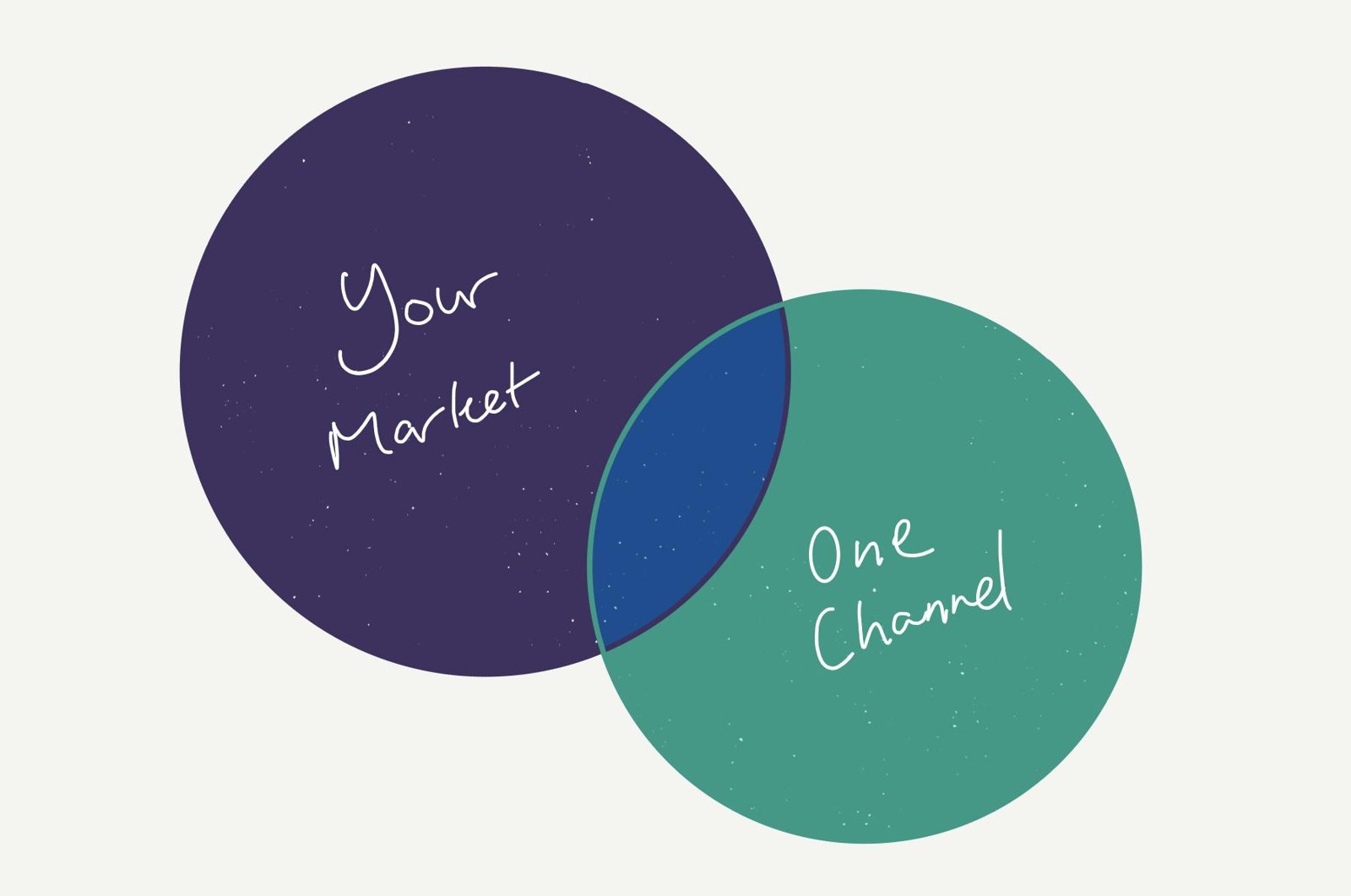
Your market is not just on one channel. Too many companies over-index on one channel and one set of activities — e.g. SEO, LinkedIn, or Google Ads. While these are all good standalone channels, they are also just one place to find your ideal customer.
If you fixate on one channel, you’ll miss out on reaching all the variations of your ICP. You will find different subsets of your customers in different channels. Having a presence in each of those channels is more than half the battle.
So:
- Go to trade shows
- Invest in paid search
- Rank for your SEO terms
- Create thought leadership content
- Host webinars
- Create ABM plays to your target accounts
- Run ads on Facebook/LinkedIn
- Do PR/comms
The companies that are best at marketing do it all. They also have higher marketing budgets for this reason.
Drawing 53
Creative Demand Gen
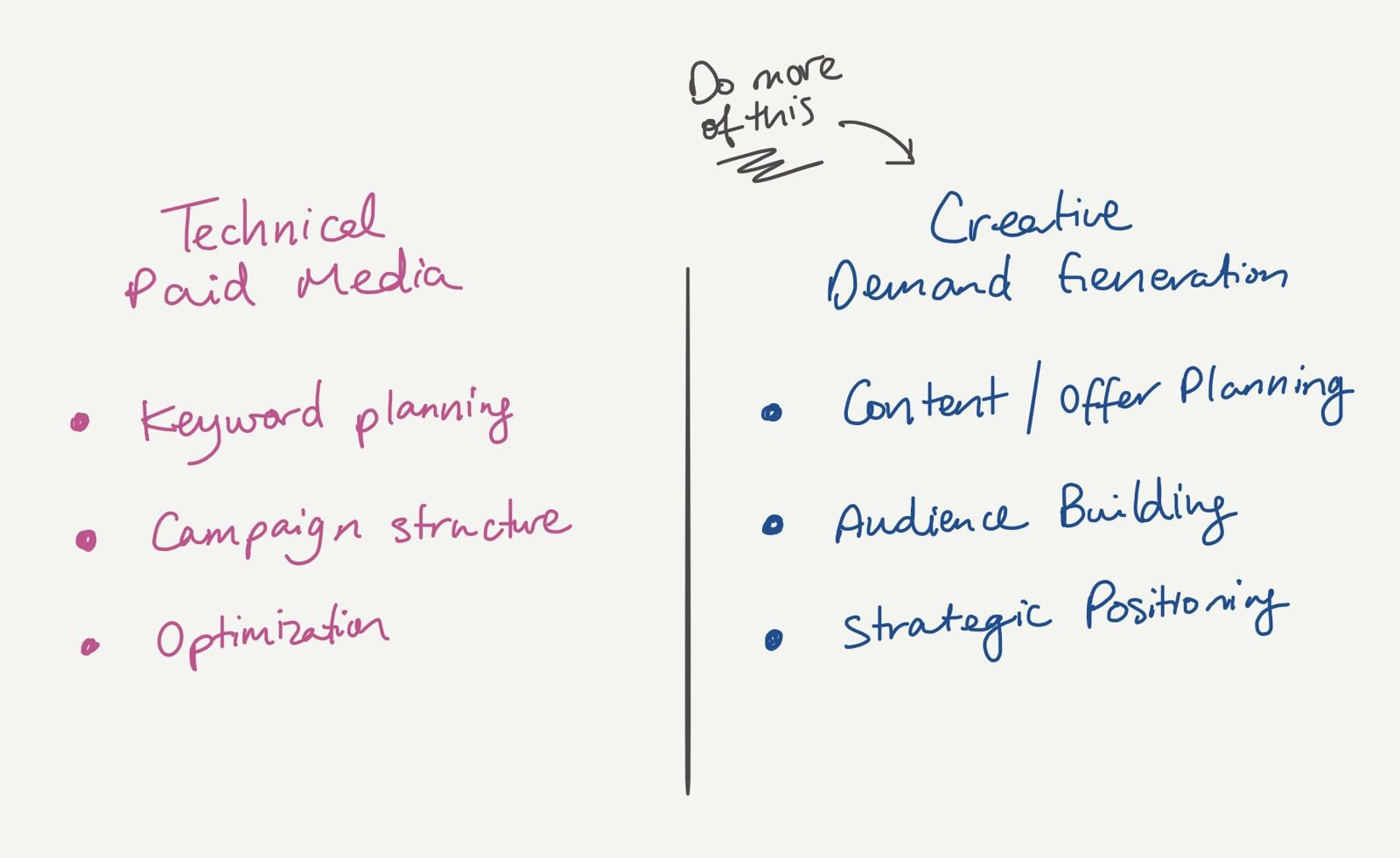
Companies often mistake technical paid media work for creative demand gen work. Here's the difference.
Technical paid media work focuses on platform knowledge. This includes things like:
- Knowing the technical ins and outs of a platform
- Being able to set up a correct structure for campaigns
- Optimizing issues inside platforms
This is what most agencies/partners/internal resources focus on. While this work has value, it is not the core of where demand is generated.
Instead, creative demand gen focuses on:
- Audience pain points and frustrations
- Building compelling content and the right offers to attract the right audience
- Growing a community/building an audience
- Creating a strategic and narrative position in the marketplace to differentiate from competitors
This is the work most marketers fail to do in a lot of markets. That presents a blue ocean opportunity for the marketers that choose to focus on it.
This is also the work that creates the most enterprise value for a business.
Drawing 54
Content Demand Cycle
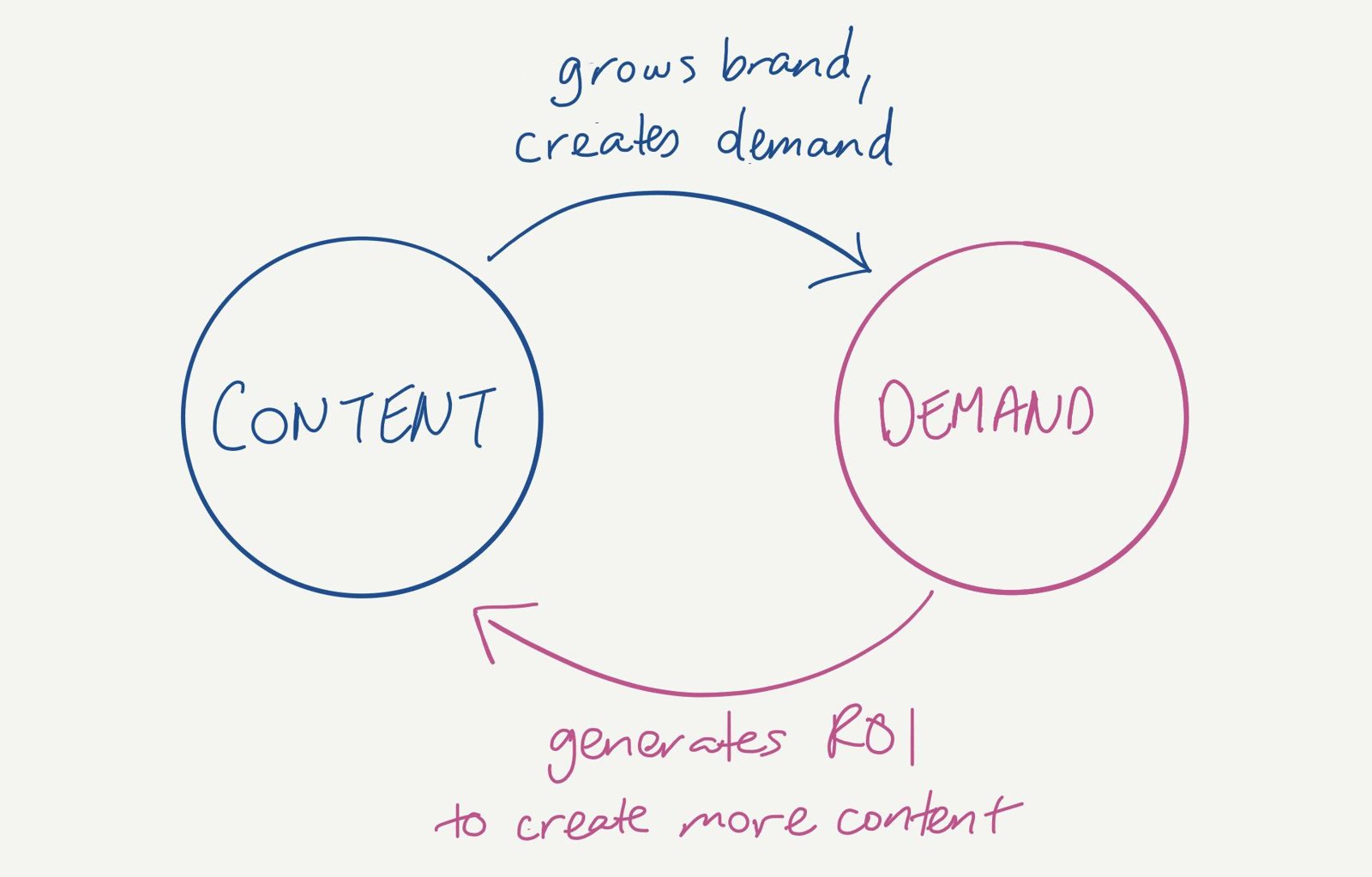
Content and demand are deeply intertwined. That’s why both need investment.
Content builds the brand over time and can create entirely new categories. As you produce more content, demand inevitably increases.
Either there’s more overall demand in the category because of the content or the content positions you to capture more of the existing demand.
As you generate more demand, you can be more cash-flow positive. Each additional deal increases the ROI of content and demand gen campaigns. And each deal impacted by content lowers your CAC.
This gives you the ability to reinvest dollars more efficiently and confidently into content, and to grow the category and brand over time.
This is the flywheel of good marketing. The best companies in the world understand it.
You only need to be patient enough to start investing in it.
Drawing 55
Content vs. Brand Value vs. Demand
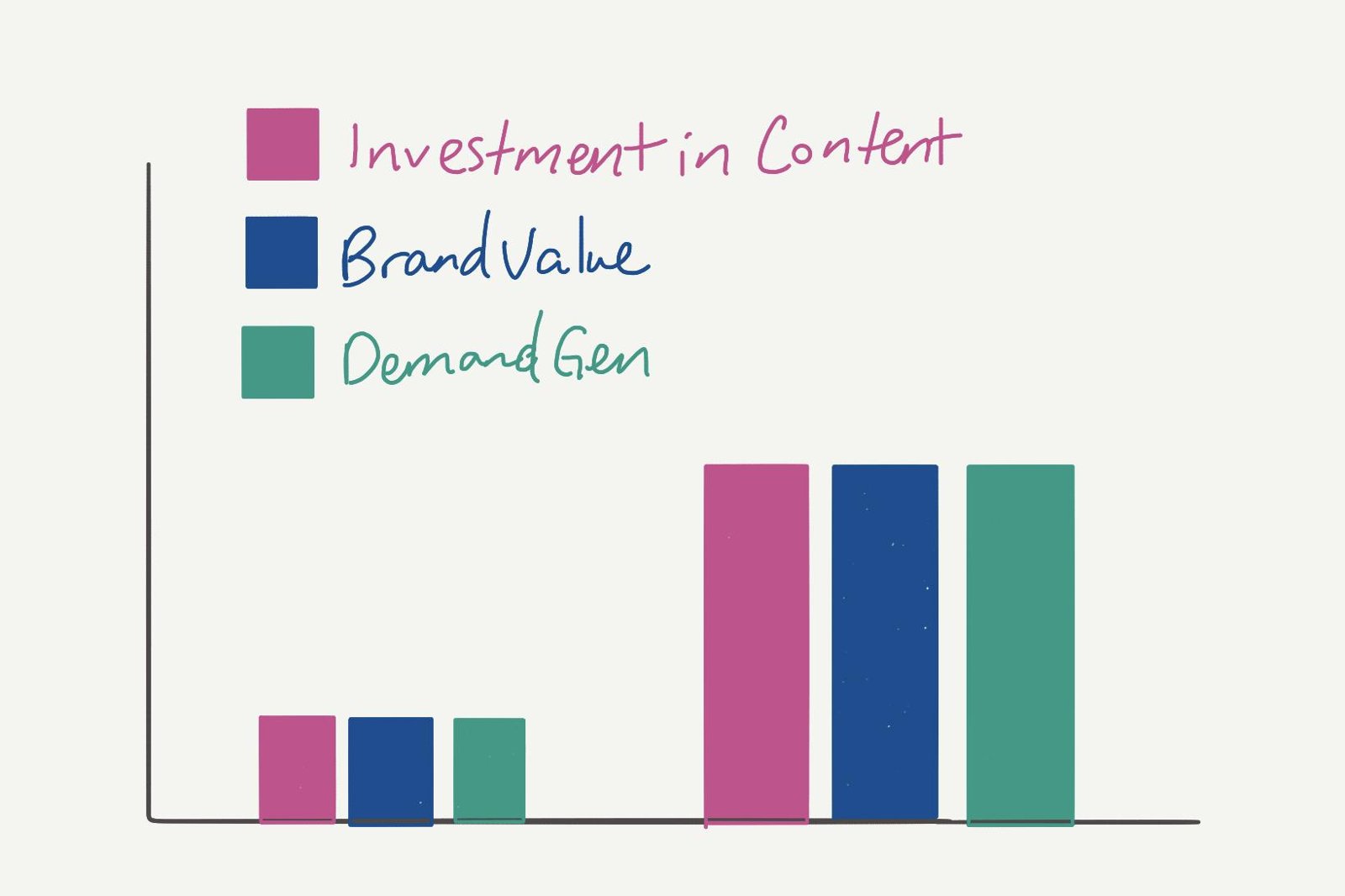
Struggling with low demand? A low level of content investment could be to blame.
There is a direct correlation between how much you invest in content, your brand value and how much demand you create.
More content that gives value to your audience/ICP/TAM leads to more brand value with that audience/ICP/TAM. In turn, that leads to more demand gen overall because more people search for your brand or choose your brand over others.
Show me a company with a great demand gen engine and I guarantee the company has a significant content engine as well.
It’s a simple concept, yet grossly underestimated by many companies.
Drawing 56
Inelastic Demand
Pricing is one of the biggest growth levers inside any business. It adds significant expansion revenue and grows total customer value without additional costs to acquire that revenue.
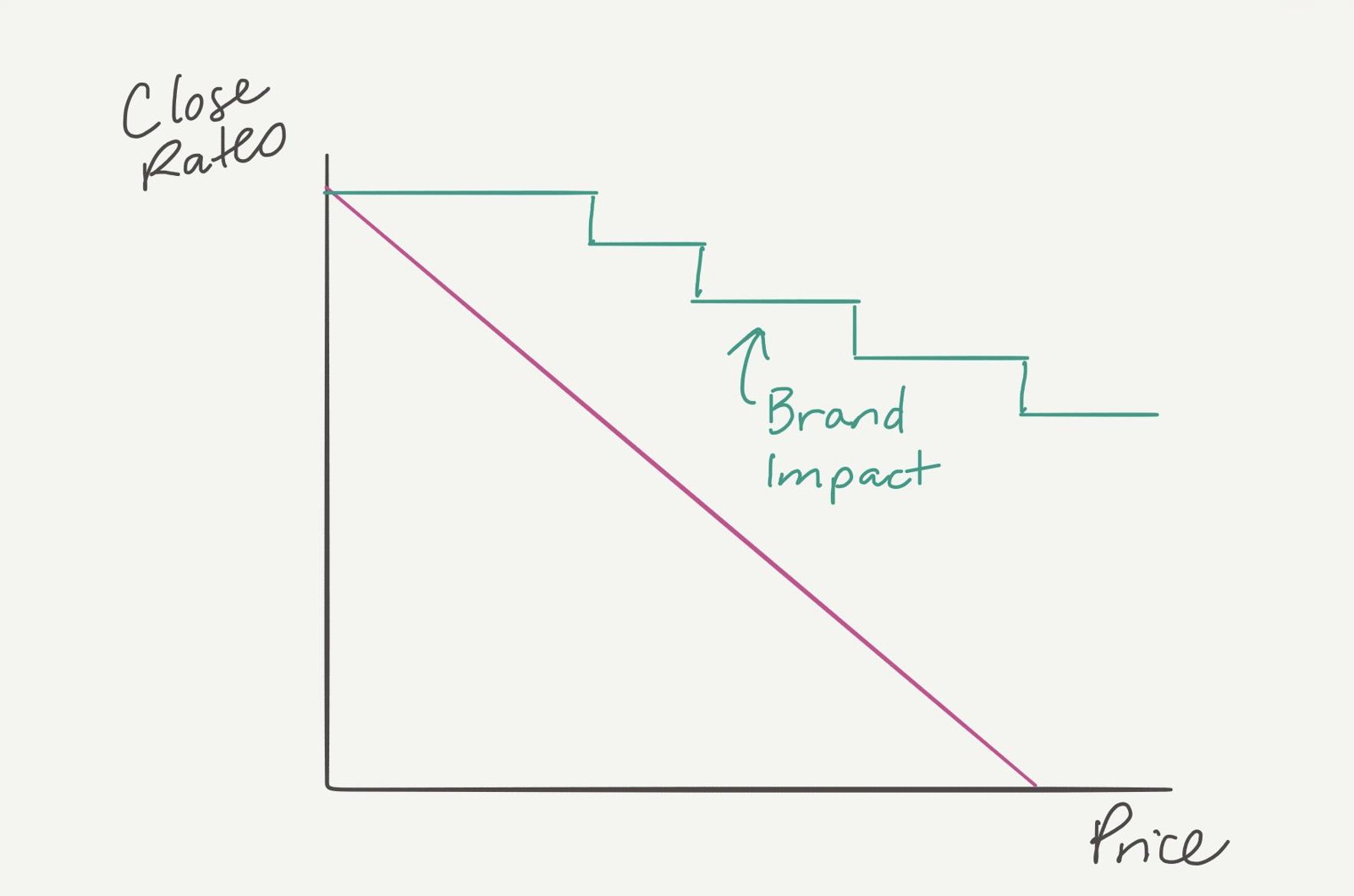
In terms of economics, demand for most products is elastic: most businesses can only increase their price a limited amount before demand begins to decline.
One of the major benefits of building a brand is that it makes demand more inelastic, so even as pricing increases, demand remains the same.
This is where Marketing builds tremendous enterprise value: it enables inelasticity in demand for your business.
Stronger brand = higher price for same demand = higher margins.
This is why brand-building activities like content can't be just measured by things like the number of page views, emails captured, MQLs or even pipeline.
The full business value is much greater.
Keep reading SaaS Marketing Simplified
Want to talk through how this applies to your business?
Book a time to speak with our team.