
SaaS Marketing Simplified · Chapter 2 of 10: Marketing’s Accountability
What should B2B SaaS marketing be held accountable for?
By Shiv Narayanan, Founder & CEO of How To SaaS
Marketing earns budget, trust and a seat at the table when it is accountable for revenue, not activity. This chapter of SaaS Marketing Simplified covers why sourced pipeline and revenue should be marketing’s core metrics, how to tell where a team sits on the accountability continuum, and what has to be in place before demand generation can drive growth.
Drawing 11
CMO’s most important metric
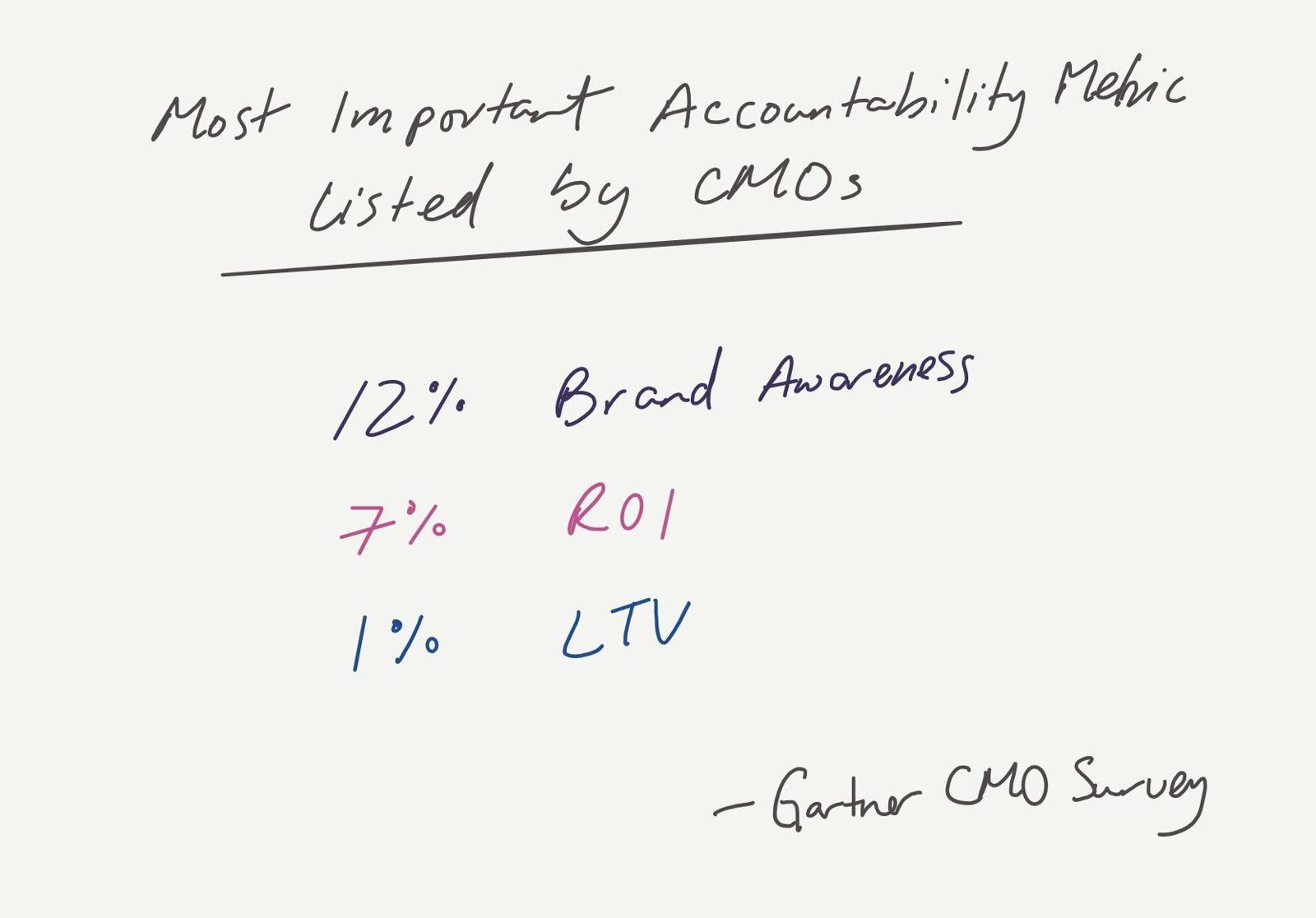
When polling CMOs on their most important accountability metric, Gartner found that 12% listed brand awareness, while only 7% listed ROI and 1% listed customer lifetime value (LTV).
It's not that brand is not important. It's that the lack of focus on ROI by marketers is heavily impacting how much budget they receive and how much impact they make on an organization.
This is why data needs to be at the heart of how Marketing measures itself. The right data is a tool to succeed. The wrong data, insufficient data, or (worst of all) no data at all puts a ceiling on what marketing can do.
Drawing 12
Lack of Accountability
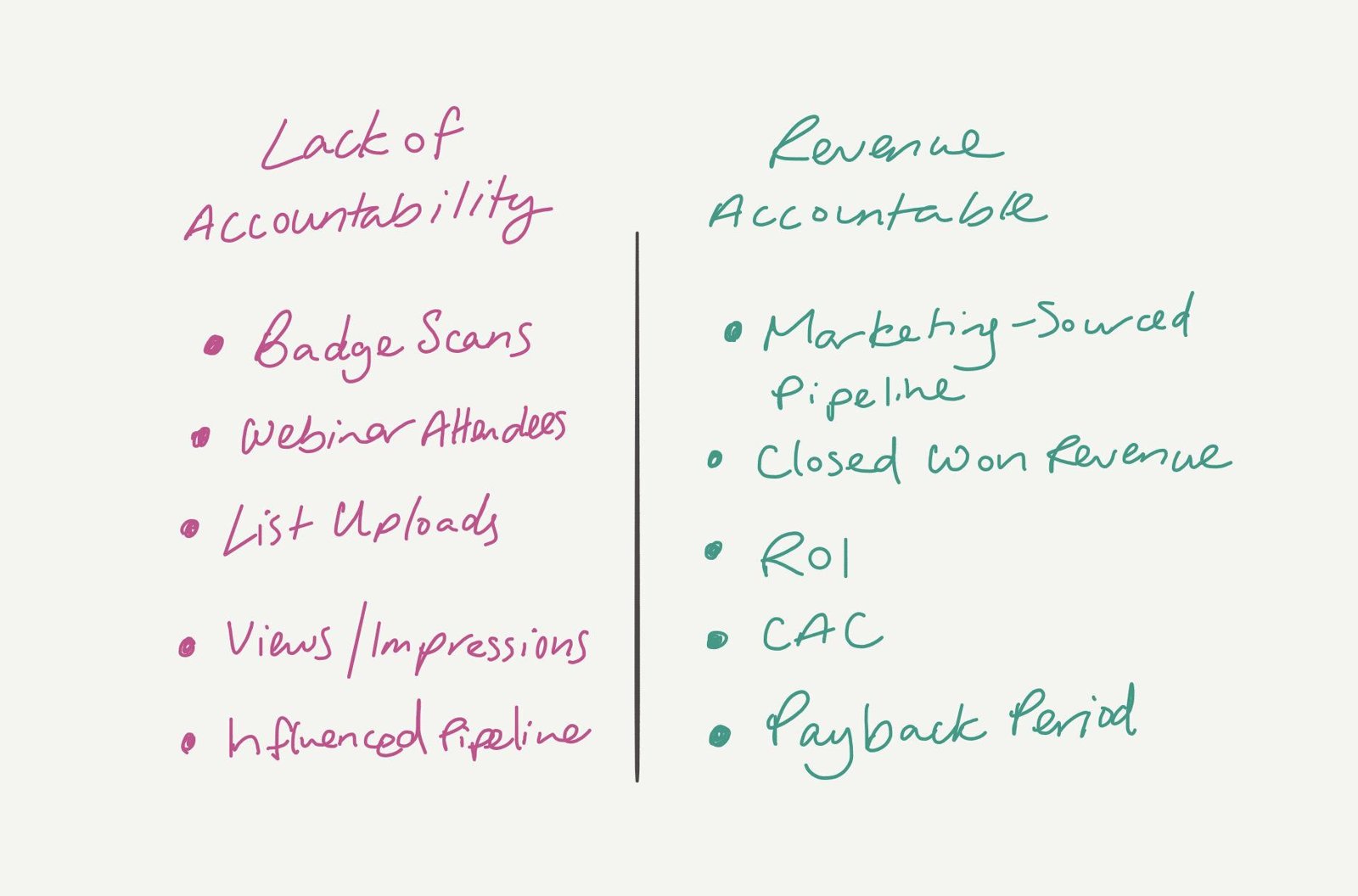
Too many marketers spend time defending Marketing efforts and their impact on the business when asked about their contribution. This is where conversations shift to:
- How many badges you scanned at a conference
- How many registrations and attendees a webinar has
- How many contacts you uploaded and contacted via cold outreach
- How many views and impressions the blog/videos/other content had
- How much pipeline you influenced that the sales team ultimately closed
Discussing these numbers overlooks an important truth: none of it matters if there is no revenue to show for it. This is why mature marketers focus their efforts on being revenue accountable. They talk about:
- Marketing-sourced pipeline
- Closed Won revenue
- ROI
- Customer Acquisition Cost (CAC)
- Payback Period
These are scary metrics to hold yourself accountable to, but doing so shows maturity, experience and capability. It also builds incredible amounts of trust with your CEO and board because you’re aligned with them on expectations.
That's how you get more room to operate as a marketing leader and make a much bigger impact.
Drawing 13
Continuum of Marketing Accountability
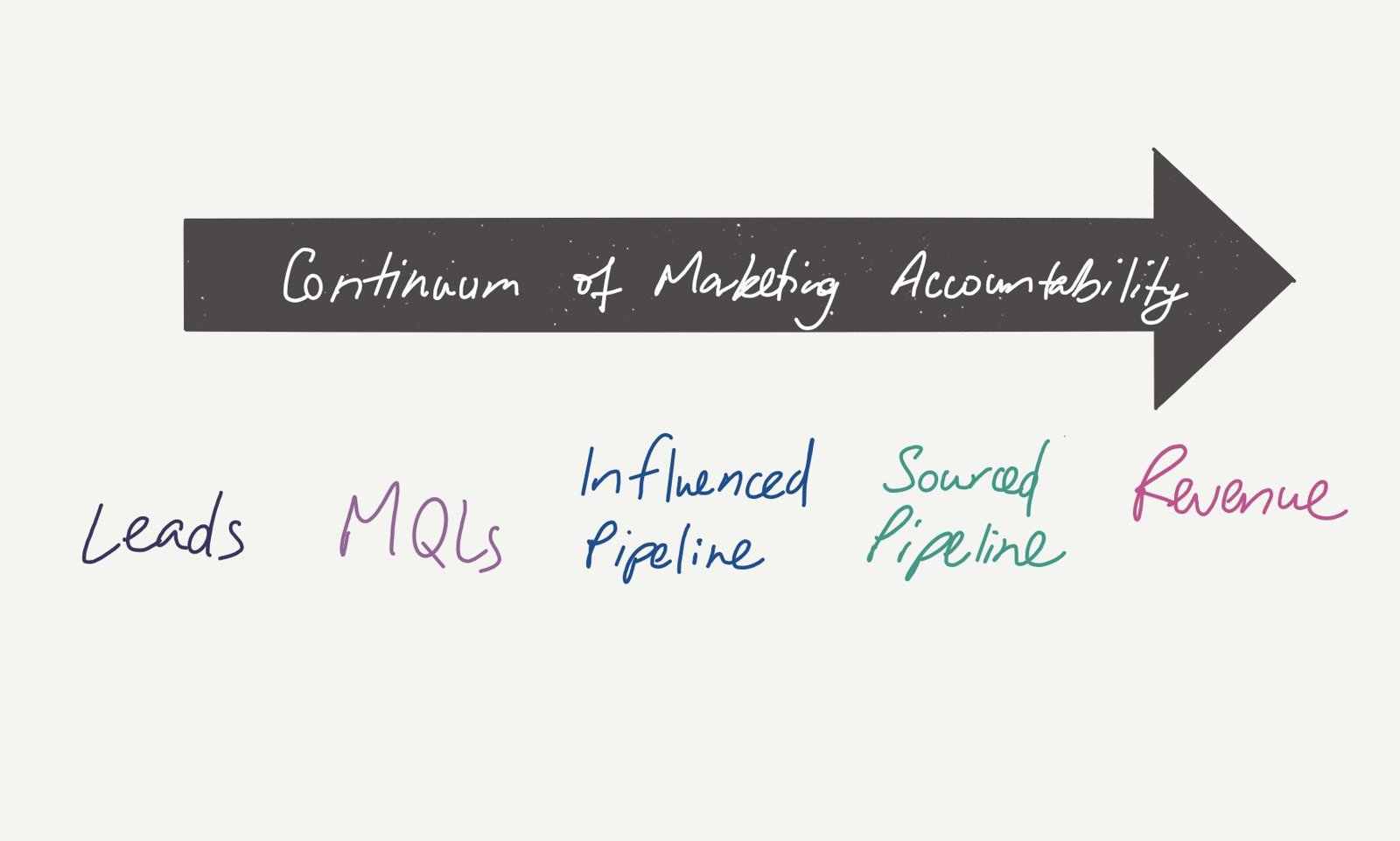
The quickest way to measure the maturity of Marketing within an organization is to look at its core accountability metric.
In less mature organizations, marketing teams report on leads generated, MQLs and even influenced pipeline as their ultimate accountability. These metrics stop short of connecting Marketing’s efforts to actual sales success. You could be spending thousands of dollars on a campaign that delivers dozens of MQLs but zero dollars from Closed Won deals.
In more mature organizations, sourced pipeline and revenue are the ultimate accountability metrics.
A good way to figure out where on the continuum a company's marketing team sits is to ask what reporting they have.
If they have:
- Connected marketing spend at the top of funnel to sourced pipeline and revenue
- Analyzed ROI by channel, campaign and cohort
- Established baselines for acceptable cost per lead (ACL) by channel and campaign, based on conversion to opportunity dollars and pipeline
Then they are on the more mature side of the spectrum.
If they don’t have this level of reporting, the organization likely needs a cultural transformation to shift revenue accountability from just Sales to both Marketing and Sales.
Drawing 14
Marketing’s Credibility
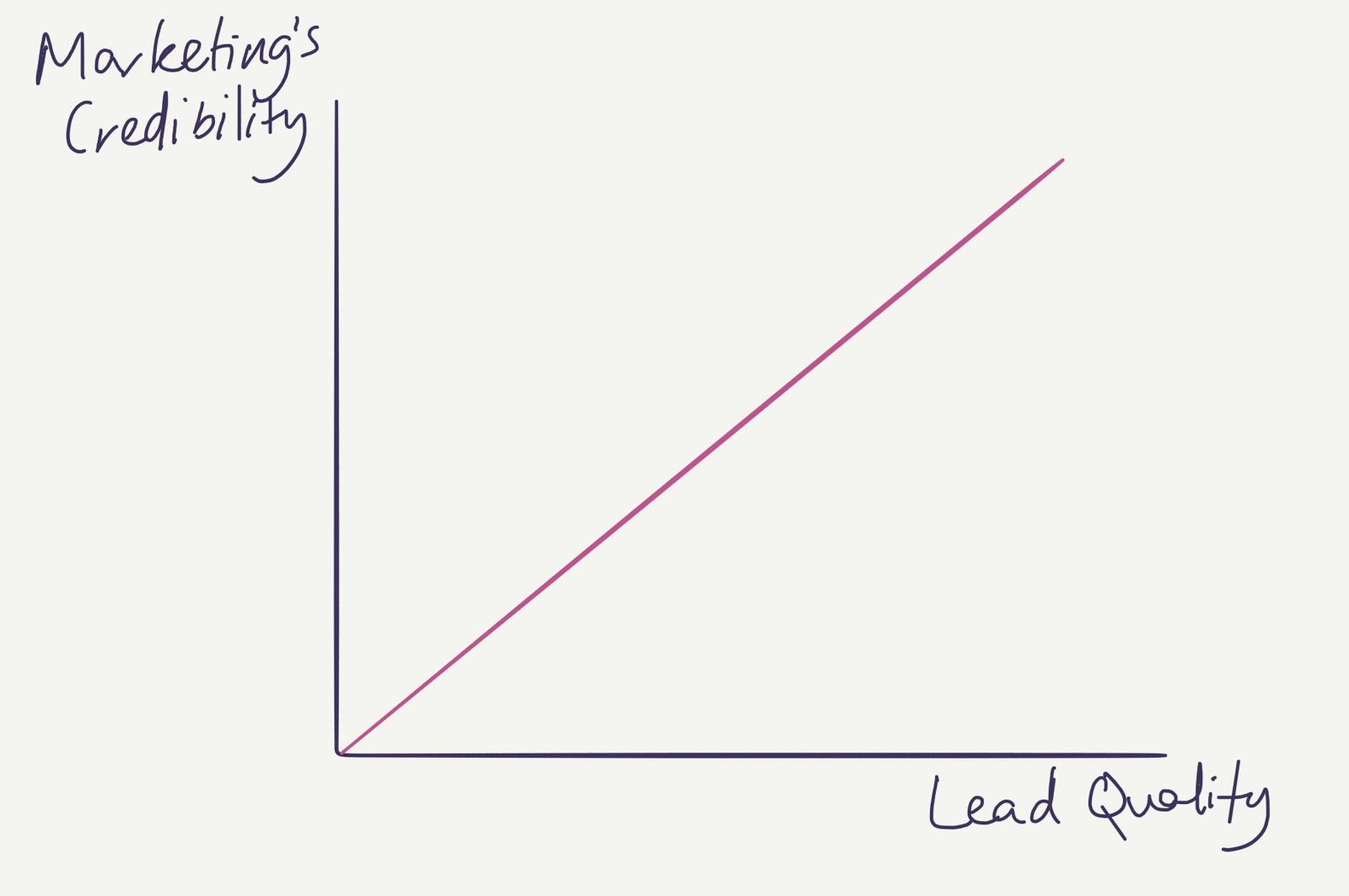
Each time Marketing brings in a lead that is a bad fit or a waste of time, Marketing loses credibility with Sales.
When Marketing doesn’t adjust its spend away from campaigns and channels that bring in those bad leads, Sales begins to assume this is the norm, and that Marketing can only do so much.
Over time, this creates a culture where Sales feels like it needs to carry the revenue load. This is how Sales-led organizations emerge where Marketing doesn't have a seat at the table.
To change this, marketers need to stop worrying about vanity metrics like the number of MQLs they brought in and look at the quality of those leads instead. An effective Marketing organization can bring in fewer leads but impact revenue more.
That's the shift that needs to happen. The accountability needs to change.
Drawing 15
Marketing Generated Pipeline Maturity

Most B2B companies find themselves relying on Sales to generate the bulk of their pipeline.
In such companies, Marketing doesn't have enough budget and doesn’t provide nearly enough coverage to drive revenue.
These are the companies where cold calling, events, relationships are what grow the business. These are also the companies where Sales reps miss quota more often than not.
The key is to get marketing generated pipeline into a healthy range (at least at 30%). In some cases, this number can be as high as 70-80%.
That's how you know buyers are coming inbound to your company when they need to solve a specific pain point. They're aware of you, they've read your content and they trust you as an authority and resource.
It's also how you know your brand has enough value in the marketplace to win business that doesn’t depend on you dialing for dollars.
Drawing 16
Marketing vs. Sales Quota
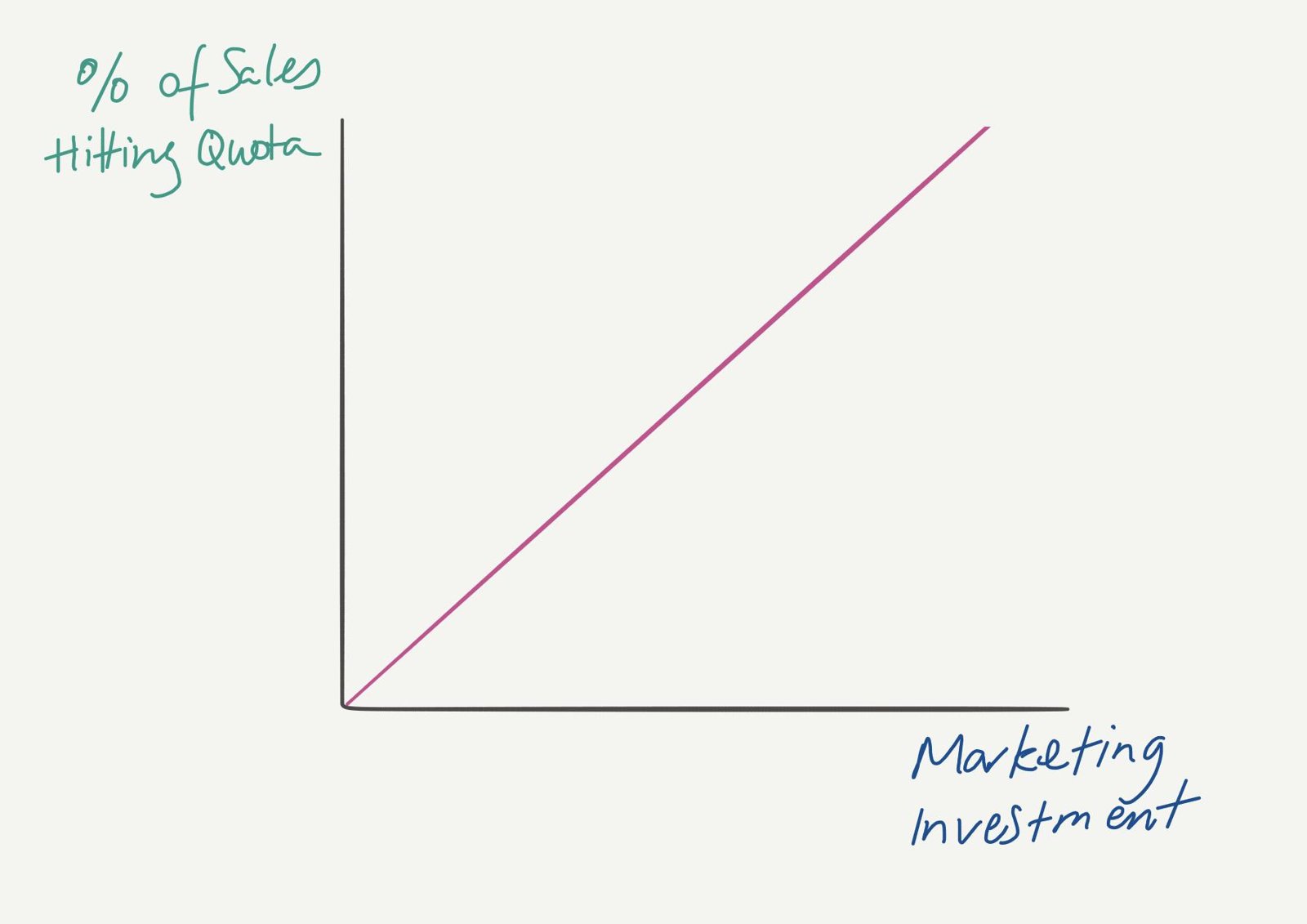
Over 50% of sales reps miss quota.
What companies don't realize is that this number is not just an indicator of how good a sales team is.
Yes, a better sales team will hit quota more. But show me a better sales team and I can show you a better marketing engine that has:
- Better brand
- Better positioning
- Better demand gen
- Better content
If your sales investment outweighs your marketing investment by 4:1 or 5:1 (which it does in a lot of companies), expecting sales reps to always hit quota is unfair.
Hitting quota and marketing investment go hand in hand.
Drawing 17
Marketing Pyramid to Sophistication
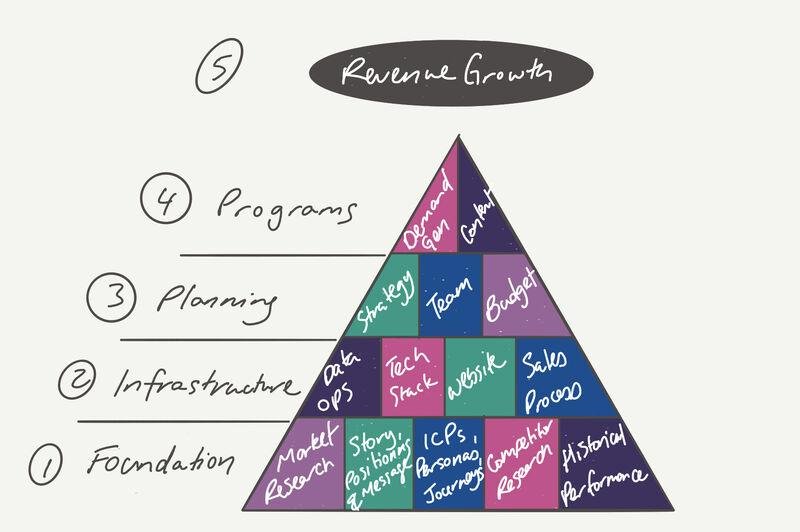
Revenue growth is the ultimate objective for Marketing.
Lots of marketing departments try to skip straight to the demand gen campaigns that they hope will get new leads into the pipeline. But without the right structure and resources to support them, those campaigns are unlikely to be successful.
In order to make revenue growth possible, several elements need to come together:
- Foundational
- Understand your market, customers and competitors.
- Build the right story, positioning and message.
- Analyze the historical context and performance of the business.
- Infrastructure
- Create the right data ops model for marketing and sales.
- Have the right tech stack in place.
- Build a website that converts.
- Have a Sales process that successfully converts leads.
- Planning
- Build the right Marketing strategy and mix of channels.
- Hire and onboard a team capable of executing on the strategy.
- Secure the right amount of Marketing budget.
- Programs
- Create compelling content that resonates with your audience.
- Launch demand gen programs to scale outreach.
The ultimate goal of all this is to drive revenue growth. Given how many components are involved, growth leaders need the patience to build all the building blocks and not just rush to lead gen campaigns.
Time is critical to building a marketing engine that drives revenue growth.
Keep reading SaaS Marketing Simplified
Want to talk through how this applies to your business?
Book a time to speak with our team.