
SaaS Marketing Simplified · Chapter 8 of 10: Revenue Operations
How do you measure marketing’s impact on revenue?
By Shiv Narayanan, Founder & CEO of How To SaaS
You can’t scale what you can’t measure. This chapter covers revenue operations, attribution, pipeline sources and the data foundations that connect marketing to business results.
In this chapter
Drawing 89
Revenue Ops
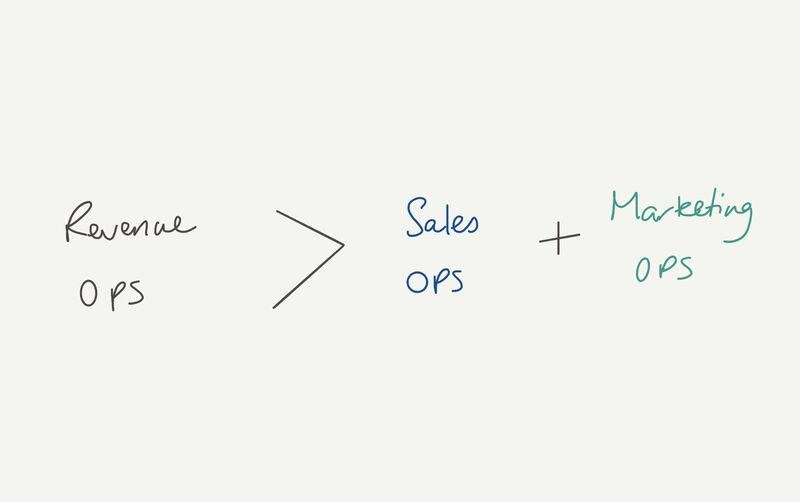
Separating out Sales Ops and Marketing Ops makes little sense when you realize that Sales and Marketing are both accountable for revenue.
Separating these ops functions means Sales and Marketing won’t be speaking the same language. Not only is this inefficient in terms of your tech stack and spend, it also makes it harder to track performance through your funnel and to ensure leads don’t fall between the cracks.
Every company needs an overarching Revenue Ops plan that covers:
- Architecture
- Systems and technology stack
- Process
- Data governance
- Definitions and routing
- Feedback loops
Both Sales and Marketing should speak the same language on all of these. When it’s time to make budgeting decisions, Sales and Marketing should be referencing the same data models and outputs.
Thinking about ops and data together is one of the key ways to align Sales and Marketing.
Drawing 90
Marketing Operations
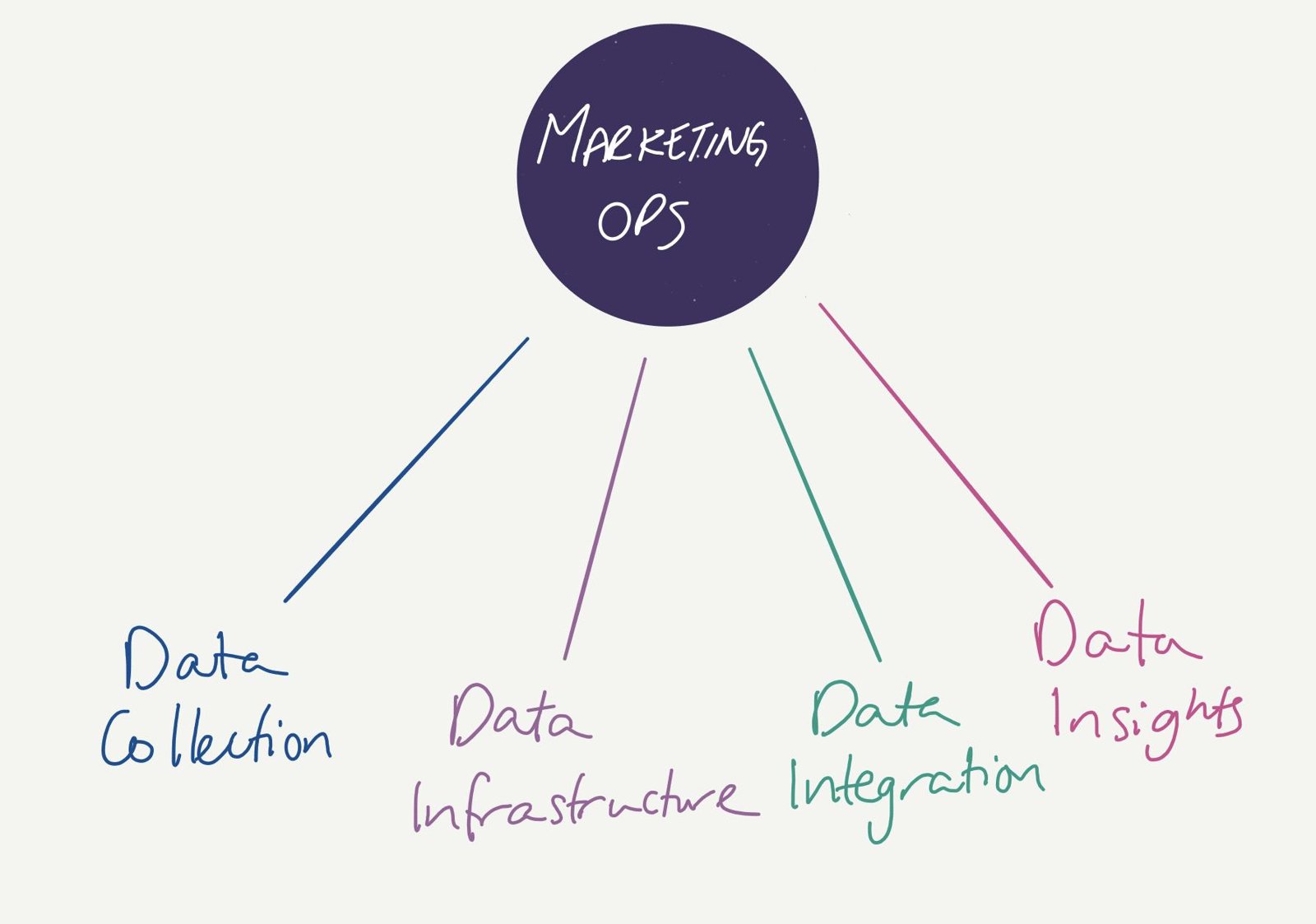
One of the most underrated roles on Marketing teams is the Ops person. In many companies, this role isn’t even filled (which is crazy).
If you don’t have someone overseeing your marketing ops, chances are that you’re not using data to its full potential. For example, how much more accurate would your forecasts be if you had instant access to detailed historical data?
Marketing Ops is an enablement role. It enables Marketers to spend money while giving them the insights they need to make better decisions.
To get those insights, however, there is a whole lot of data collection, infrastructure and integration work that needs to happen. These are skills that marketing teams usually lack.
Find yourself a marketing ops person if you don’t have one already. And if you have a good one, do everything you can to hold on to them.
Drawing 91
Attribution Complexity
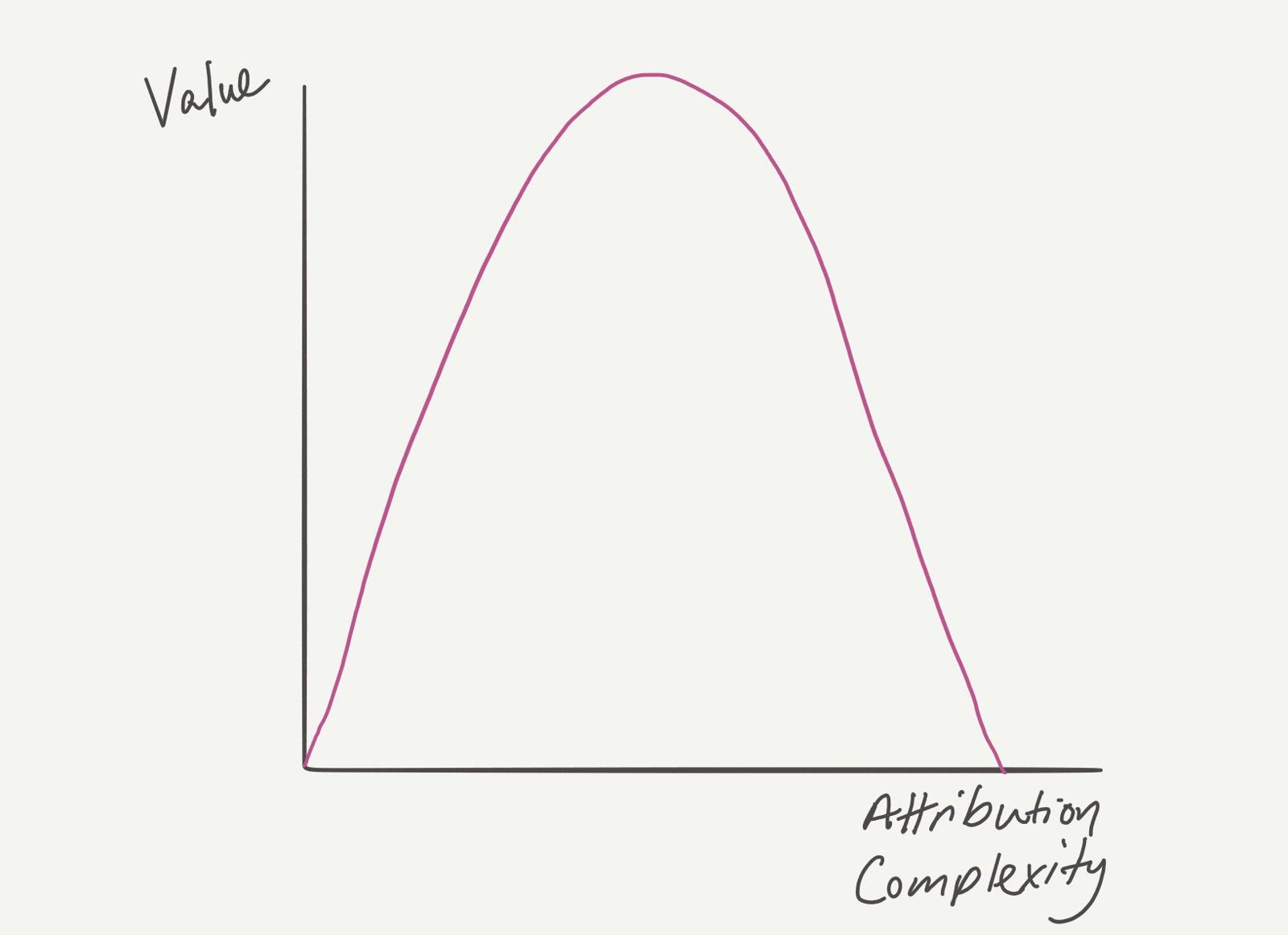
Obsessing over attribution eventually becomes counterproductive.
There are marketing departments that won't invest in channels because the ROI isn’t obvious. They can't sell the merit of the activity internally to get buy-in from other stakeholders (especially the CEO).
This is a huge mistake: you are certainly losing out on the chance to reach more of your market.
When you're going from 0 (where you’re not tracking anything) to 1 (where Marketing is tracking contribution to revenue), attribution can be incredibly valuable.
Yes, you want to know how the marketing dollars you invest are leading to a return in Closed Won bookings.
It's just that some marketing activities create an environment that buyers make their way through to buy your product. A lot of these activities cannot be measured.
Content is a lot like that. Social media is a lot like that. Building a brand is a lot like that.
You can measure some of the metrics around these activities, but you can't measure them all.
But if you stop those activities simply because you can't measure the revenue impact, you stop creating an environment that helps customers.
Instead, use data and attribution models to help you triangulate the truth. From there, just have some trust in the environment you've created for your customers.
Drawing 92
Attribution vs. Value
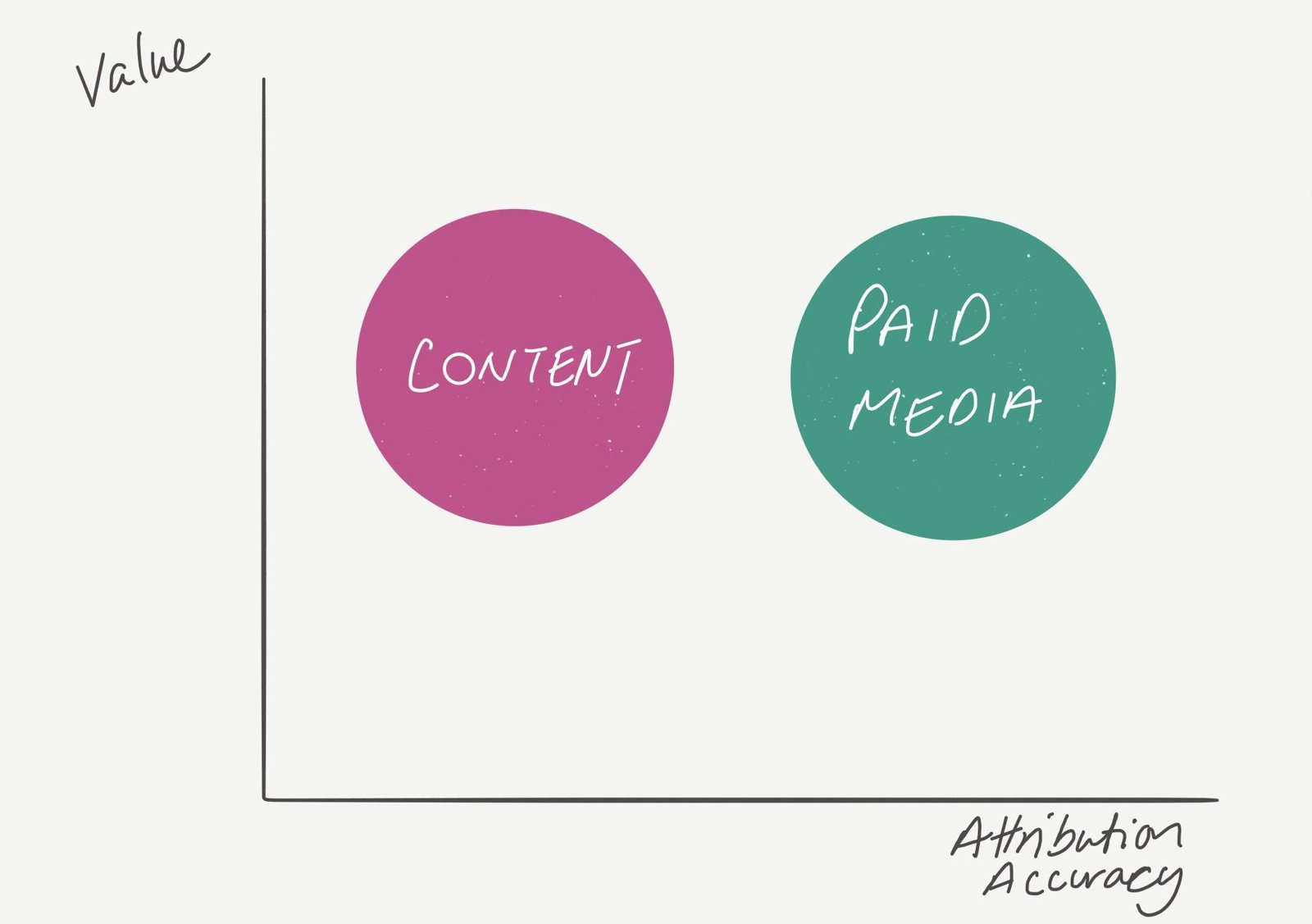
Just because a channel is easier to track does not mean it is the more valuable channel.
Some companies over-index on channels like paid media simply because it’s a lot easier to connect investment to ROI.
Meanwhile, channels that are equally valuable (such as content) don’t get as much investment because the attribution is unclear at times.
It’s the same reason why some companies ignore more traditional channels (e.g. TV, radio), channels that don't have clean attribution (e.g. podcast advertising, influencers) or building a brand through thought leadership (e.g. books, podcasts, YouTube).
A lot of this pressure to track is driven by management, who want clean reports on all marketing activities.
The solution? Educate internally on the value of a model that blends channels that are easy to track with ones that aren't, so you're building the best marketing engine.
If you become obsessed with marketing reporting, you'll eventually be limited to paid search and paid social as your only channels.
Don't over-index on reporting.
Drawing 93
Correlation vs. Attribution
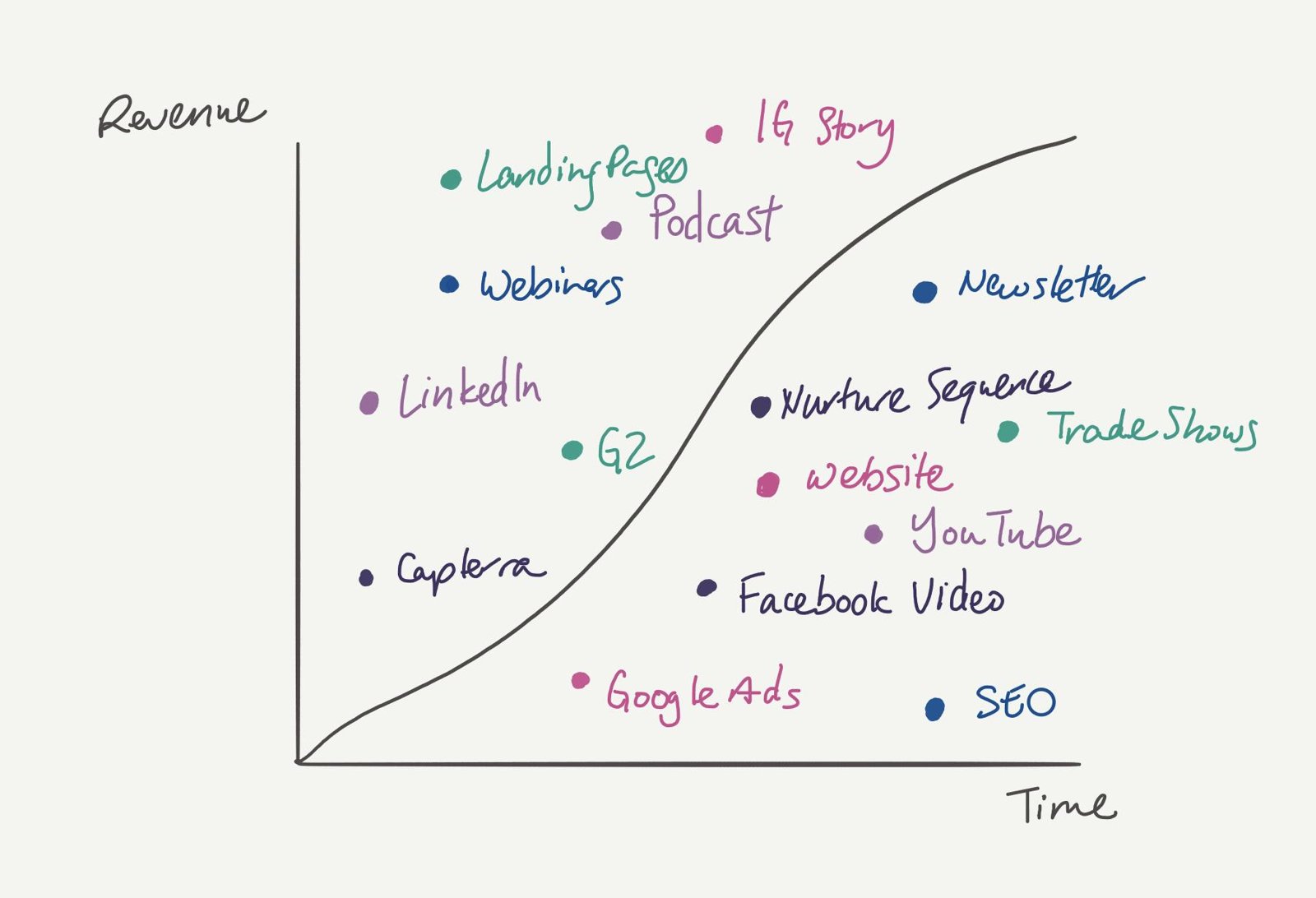
The problem with marketing is that some channels are easy to attribute through to revenue, while others are not. Some marketers, under pressure from their CEO to produce a dollar value for everything they do, end up avoiding high-value channels because they don’t have clear attribution.
This is why "correlation" is, in many cases, more important than "attribution".
To understand this concept, you need to understand how buyers are really behaving.
If you think your buyers are making decisions only by searching on Google, a lot of your marketing activity will seem irrelevant. This is why attribution tools don't tell the full story for non-linear channels.
It's easy to say if a lead from Google Ads became an opportunity. It's hard to talk about the value of a Facebook video view or a podcast download or a YouTube channel subscriber.
This is why correlation is more important than attribution — especially for activities related to content.
The environment you create for buyers across all marketing activities is what impacts conversions. If you pull one thread at the channel level, you may end up impacting revenue on the other end.
You just won't be able to directly attribute it.
Drawing 94
Pipeline Sources
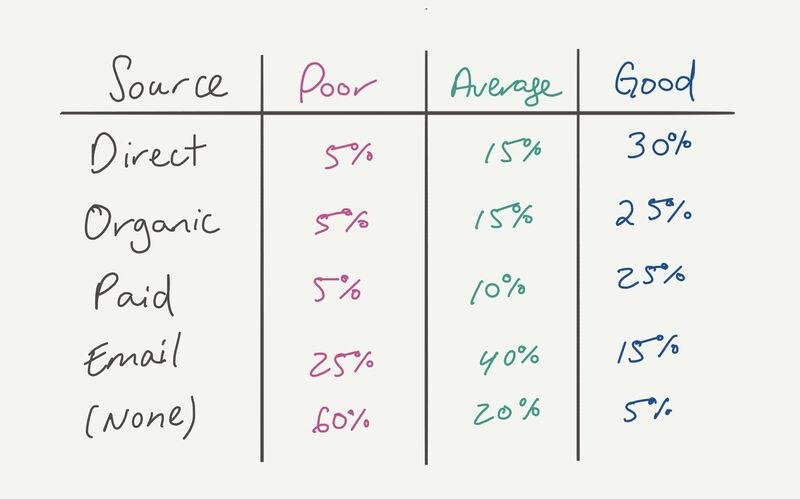
Breakdowns of pipeline sources reveal a lot about a company's marketing maturity.
Companies at earlier stages of maturity:
- Have an abnormal proportion of pipeline sourced to the (None) category.
- Do not get enough pipeline coming in via Direct/Organic sources (indicating that not enough people know about the brand).
Companies with some maturity:
- Have better distribution across sources.
- Still don’t have enough contribution from Direct/Organic/Paid.
- Have a contribution from email that’s too high as most marketing efforts are focused on emailing existing customers/traditional activities.
Companies at a good level of maturity:
- Generate significantly higher pipeline from Direct/Organic/Paid sources.
- Have far better data tracking in place to avoid large numbers in the (None) category.
Drawing 95
Data Integration Between Platforms
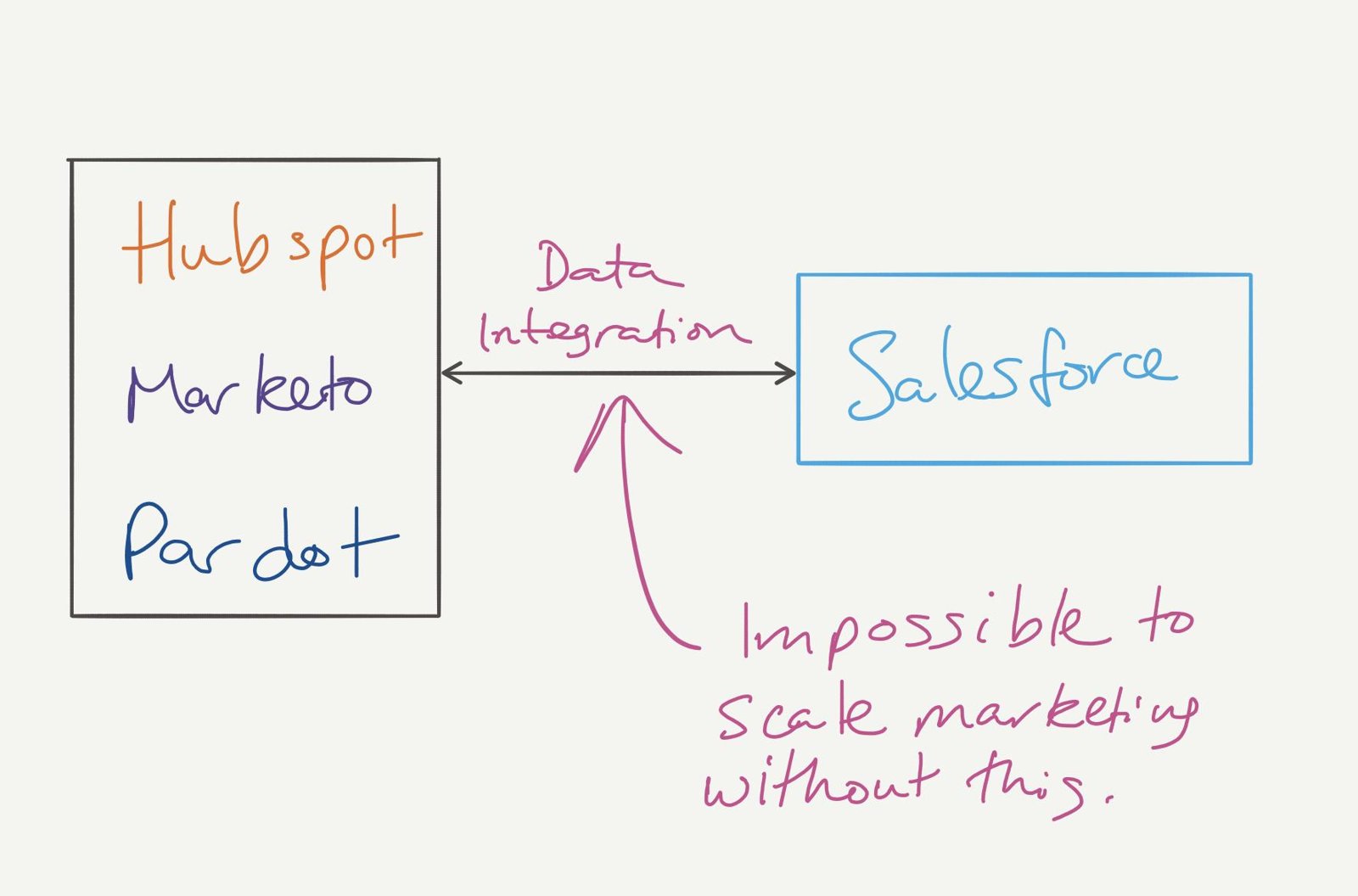
Without connecting the data in your marketing platform and CRM, it's impossible to know where to invest marketing dollars with confidence going forward.
You need to know the impact of your marketing spend, by campaign and channel, all the way through to Closed Won.
When you do that, some of the data will surprise you. For example, you may find that 20 of the 50 trade shows you go to every year don't generate any revenue at all. Or you may find that half your $1.5M paid media budget is going to campaigns with a CAC Payback Period of 2.5 years.
The only way to get insights like this is if you connect the data.
Drawing 96
PQL Milestones
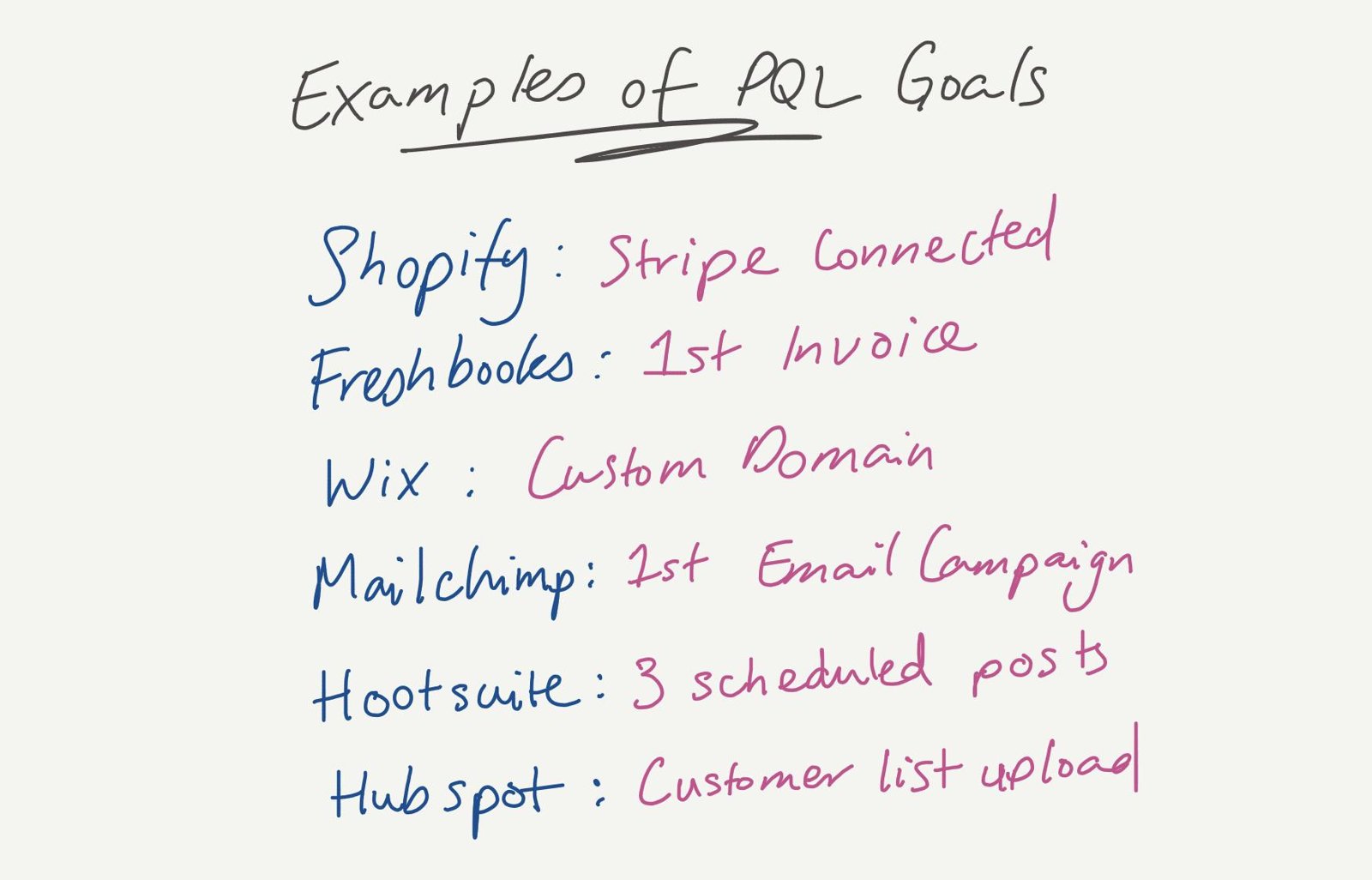
Product Qualified Leads are one of the most under-leveraged marketing data points, especially in low-touch sales models.
If you identify 4-5 key milestones, you can then track whether Marketing is bringing in people who take those actions.
Identifying the right milestones is critical.
For example: by analyzing product metrics, Shopify may know that people who connect their Stripe account are 200% more likely to become a paid customer (this is just a guess).
Some other examples:
- Freshbooks: Sending your first invoice
- Wix: Setting up a custom domain
- Mailchimp: Sending your first email
- Hootsuite: Scheduling 3 posts
- Hubspot: Uploading your customer list
It could be that one milestone supersedes all others. It could also be a combination of milestones that causes a prospect to cross the PQL threshold.
These milestones highlight Marketing’s role beyond just interacting with Sales.
Marketing needs to connect with Product teams to gather these metrics and connect them to top of funnel activities. This allows you to target and find more prospects with a high likelihood of buying.
In blended models where the customer is in the product and there’s a sales team as well, Marketing can be a huge asset to the Sales team by adding product qualification to the sales pipeline stages.
Drawing 97
Closed Won and Lost Data
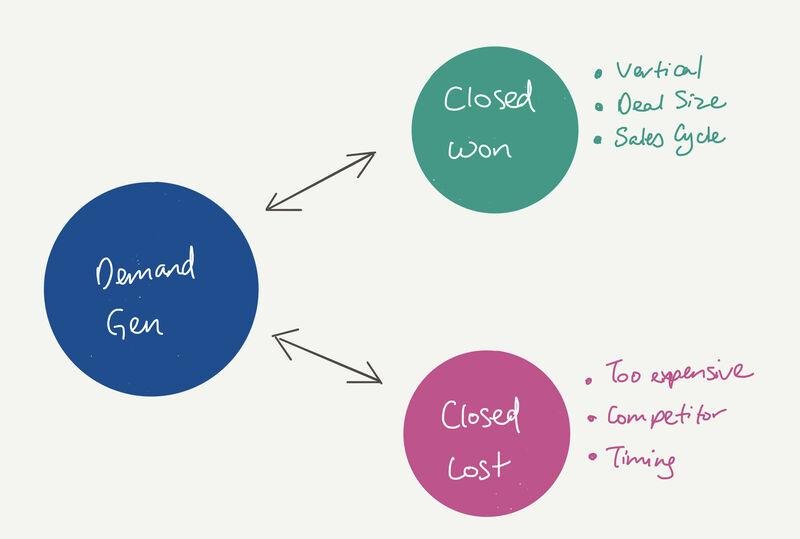
Not sure why your demand gen efforts are delivering plenty of leads but falling short on Closed Won deals? There is a gold mine of information for demand gen inside Closed Won and Closed Lost data.
Closed Won:
- Which verticals are you winning deals with?
- What are the average deal sizes for your different segments/markets/verticals?
- How long was the sales cycle and what touches were involved?
Closed Lost:
- Was your product too expensive for the right or wrong type of customer?
- Did they go with a competitor? Which one and why?
- Was the timing off or was your pitch not right for the stage they were at?
You need to feed the answers to all of these questions back into the demand gen engine. This data will help you refine and improve programs to generate better pipeline.
The key word there is: better pipeline.
Drawing 98
Operational Framework
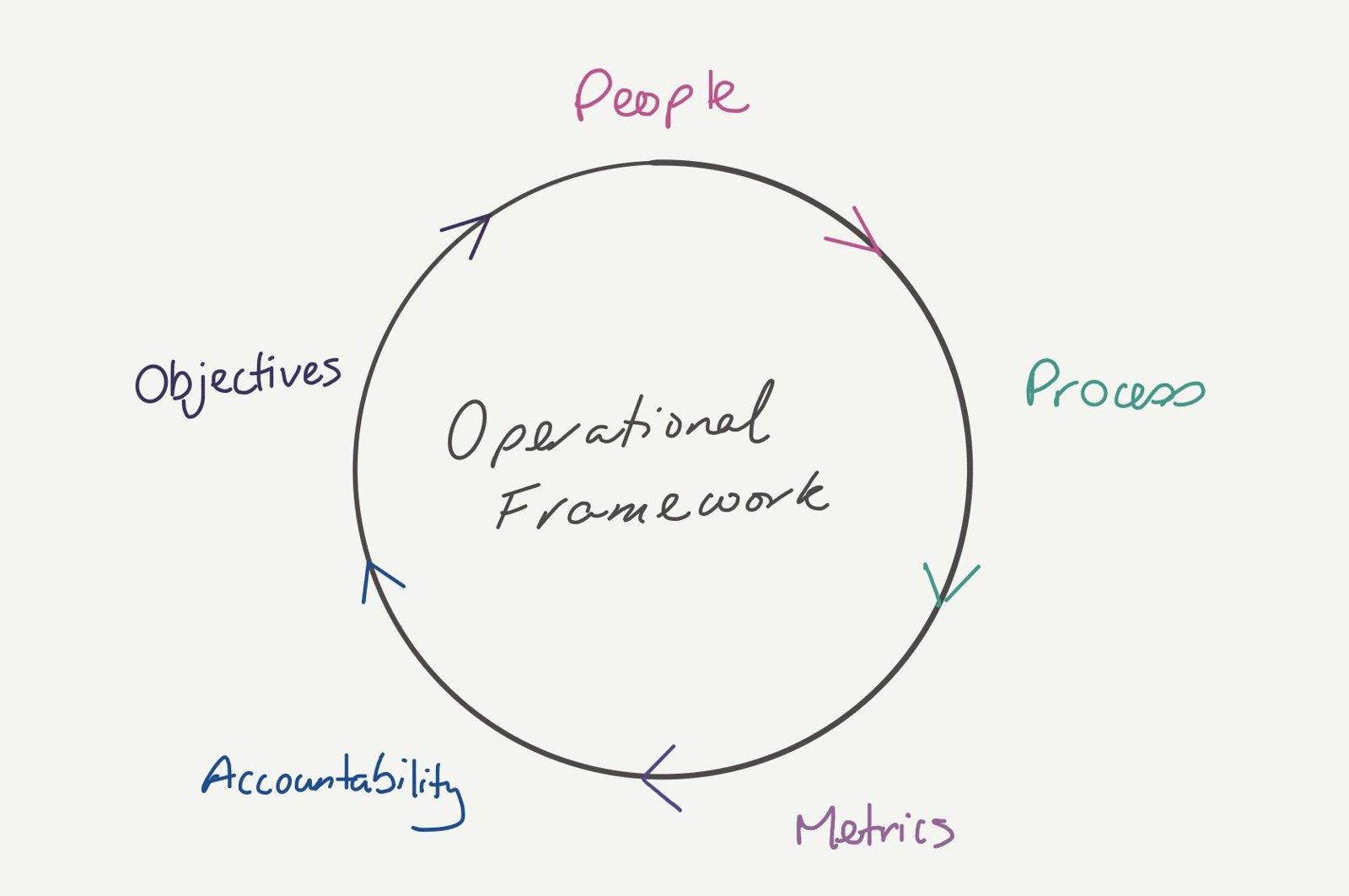
Even if you have the best growth strategy, the structure and processes behind it will limit how much the business can really grow. Your growth engine is only as good as the operational framework of your business. Key components of an operational framework:
1. Objectives
- What is the overall strategic direction of the business?
- What financial/revenue targets are you working towards?
2. People
- Who are the right people to get the business where it wants to go?
- What's the right organizational structure to achieve objectives?
3. Process
- What are the repeatable systems and frameworks you need to execute on the strategy?
- Who will do what?
4. Metrics
- How will you measure performance of key initiatives and activities?
- What's working and what's not working?
5. Accountability
- What do you need to adjust in terms of objectives, people, process and metrics to deliver going forward?
- What feedback loop needs to inform future objectives?
Marketing leaders should constantly be looking out for limitations and potential improvements in the operational framework of their function. The ongoing culture of deploying this operational framework is how teams continue to deliver and scale past ambitious expectations.
Drawing 99
Connecting Marketing to Business Results
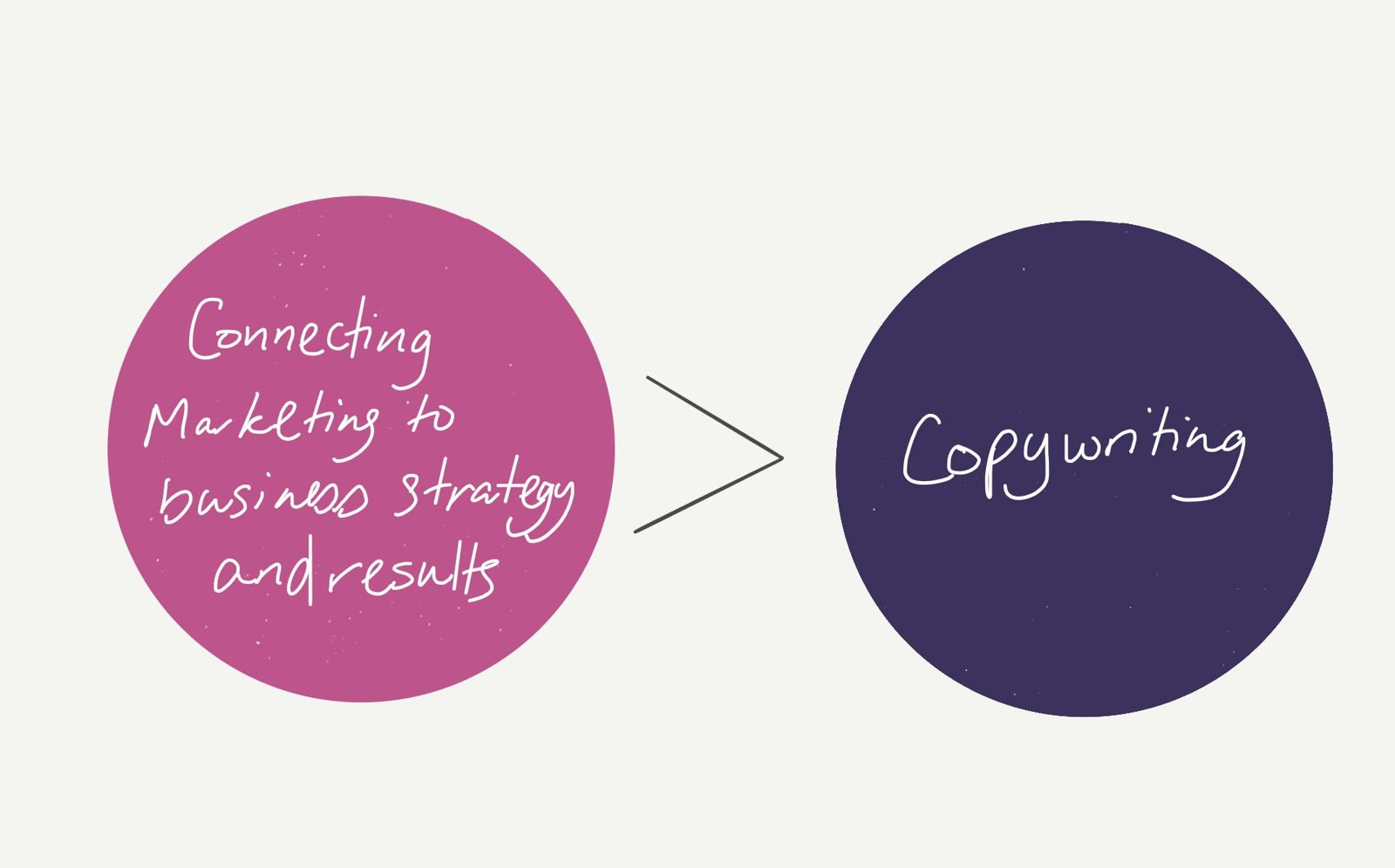
If your team is focused on creating great copy above all else, you need to hear this.
Copywriting is not as important as everyone will tell you.
Copy is not what separates good marketers from great ones. Things that are far more important:
- Connecting Marketing's efforts to the overall business strategy and results.
- Interfacing with other functions and roles, e.g. product, sales, customer success, engineering.
- Being finance-literate. It would help a lot of marketers to look at an income statement and balance sheet or know what EBITDA means.
- Understanding the strategic growth levers of the business and how Marketing plugs into those levers.
A lot of people will try to sell you on the idea that copy is your biggest growth opportunity as a marketer. While it will help you get an entry level job, you will eventually hit a ceiling.
Understand the above 4 opportunities and your career as a Marketer has no limits.
Don't miss the forest for the trees.
Drawing 100
Data-Centric Leadership
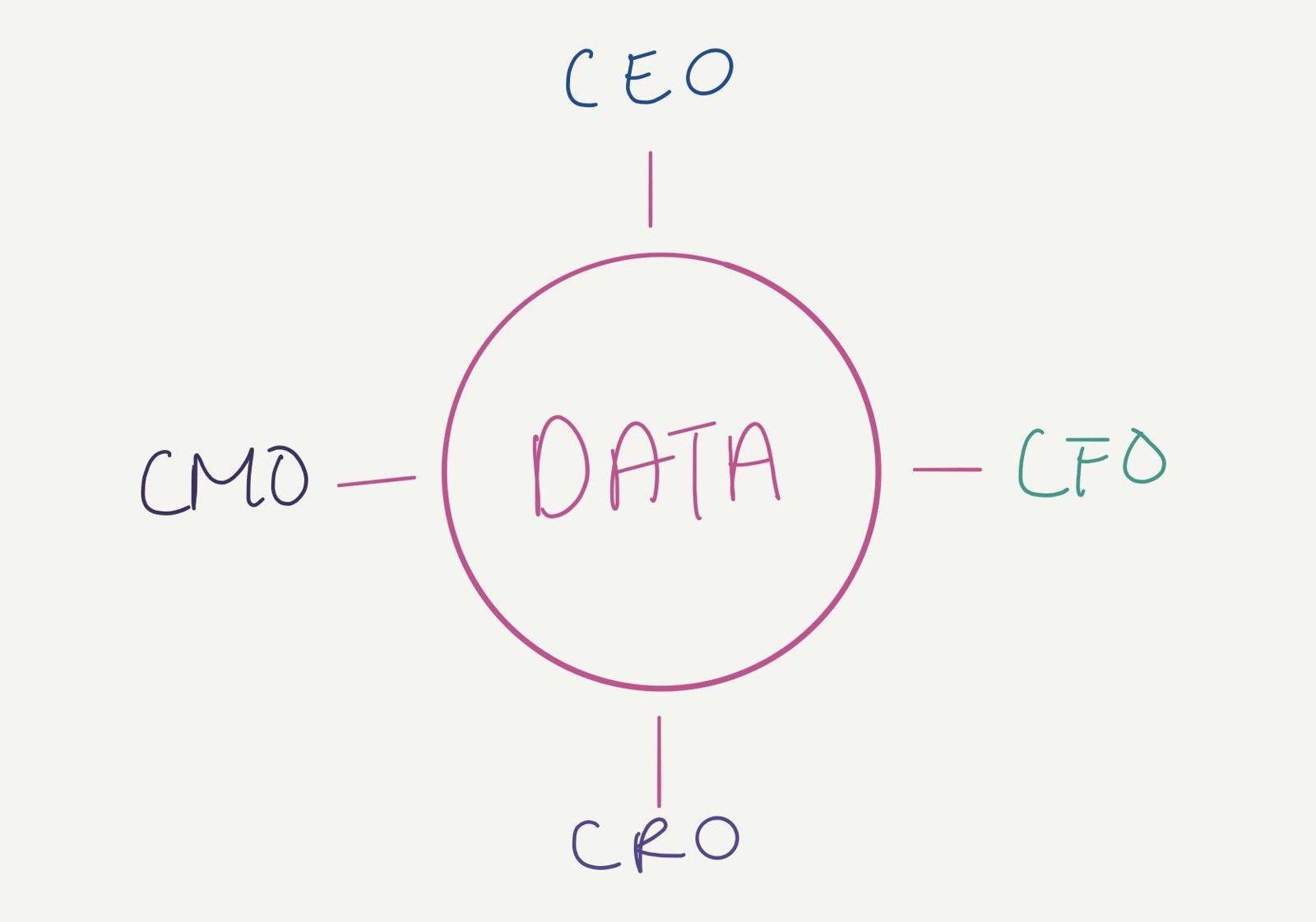
Alignment (or lack of it) is talked about a lot. As it should be: misalignment between departments is responsible for far more missed revenue opportunities than it should be.
The great thing about data is it can unify an organization objectively, without politics, power dynamics or cultural biases.
You have to start by making data a priority:
- Capture it from all entry points.
- Track and measure all activities with KPIs.
- Establish internal agreements on which metrics are core accountabilities of each department.
- Report on performance of each department based on those internal agreements.
- Adjust spend, focus and strategies based on what the data tells you.
It's not easy. It requires people, systems and tools to make it all work.
It's also the only way to build a data-centric organization.
Keep reading SaaS Marketing Simplified
Want to talk through how this applies to your business?
Book a time to speak with our team.